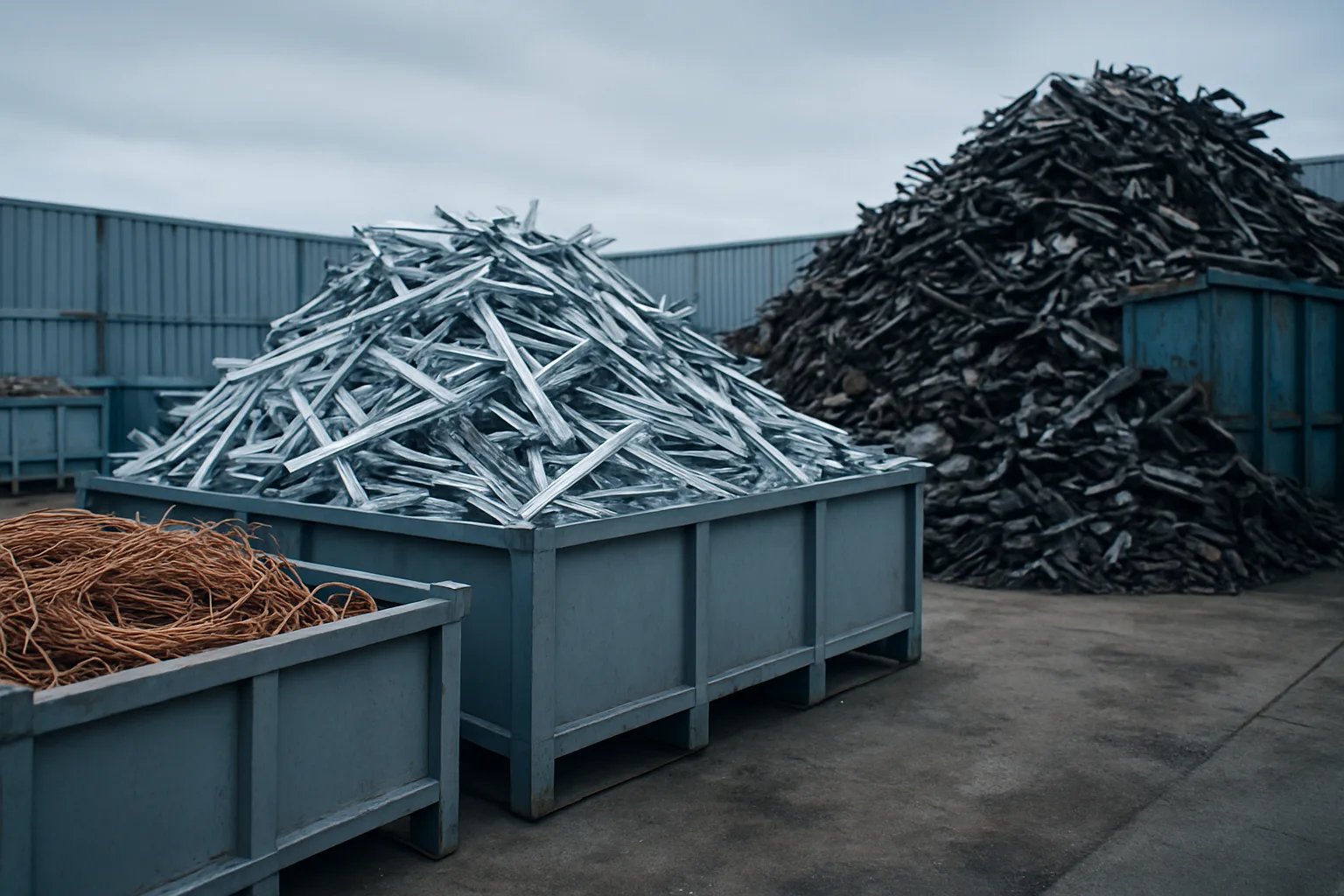
Most people leaving a scrap yard walk away thinking they got a fair deal. A lot of them didn't. Not because the yard cheated them — but because they didn't know which metals were worth chasing, which ones to separate, and how to get competitive pricing instead of a single take-it-or-leave-it quote. If you're doing scrap metal recycling in Barrie or anywhere across Ontario, knowing your metals is the difference between hauling and earning.
This guide breaks down the most profitable types of scrap metal to collect in 2026, what drives their value, and how to make sure you're not leaving money on the table when it's time to sell.
Why Metal Type Matters More Than Volume in Scrap Metal Recycling
A full truck of mixed steel pays a fraction of what a small box of clean copper wire earns. Volume matters, but metal type matters more. Scrap yards price metals based on global commodity markets, local demand, and how much processing the yard needs to do. The less sorting and processing your load requires, the better your price per pound.
That's the first lesson in profitable scrapping: separation pays. Mixed loads get priced at the lowest-grade metal in the pile. Sorted loads get priced by grade. If you're hauling copper mixed with aluminum mixed with steel, you're giving money away. Take the extra time at the source — your pockets will thank you.
For anyone doing Barrie scrap metal services, this is especially relevant. The region has a solid industrial and construction base — plenty of non-ferrous metal flowing out of job sites, HVAC teardowns, and vehicle recycling. Knowing what to grab and how to prep it makes a real difference to your payout.
Copper: The Highest Value Metal in Your Load (Copper Scrap Prices Barrie)
Copper consistently sits at the top of the non-ferrous value chart. In 2026, copper remains in strong demand globally — driven by EV manufacturing, electrical infrastructure upgrades, and renewable energy buildout. Every solar farm, every EV charging station, every grid modernization project runs on copper. That demand pressure keeps prices elevated relative to other common scrap metals.
When you're thinking about copper scrap prices in Barrie, the grade matters as much as the weight:
- #1 Bare Bright Copper: The cleanest grade — uncoated, unalloyed copper wire, 16 gauge or thicker. Top dollar, no exceptions.
- #1 Copper: Clean copper pipe, bus bar, clippings. No paint, solder, or fittings. Pays close to bare bright.
- #2 Copper: Copper with solder, coatings, or light contamination. Still valuable — just slightly lower per pound.
- Insulated Wire: Price depends heavily on copper recovery percentage. Strip it if you have time. Sell it insulated if you don't — just know the recovery rate eats into your payout.
Where to find copper: HVAC equipment, plumbing teardowns, electrical panels, old appliances, construction waste, and automotive wiring harnesses. If you're working in the trades around Barrie, you're sitting on copper every day.
Aluminum: High Volume, Consistent Demand, Good Returns
Aluminum isn't copper — but it's everywhere, and the grades add up fast. For scrap metal recycling, aluminum is one of the most reliable metals to work with because the supply never stops. Cans, wheels, extrusions, sheet, cast — aluminum shows up in almost every tear-down and clean-out.
Here's how aluminum grades break down for value:
- Aluminum wheels (rims): One of the better-paying aluminum grades. Clean, heavy, easy to sort. Cast alloy wheels pay differently than aluminum alloy wheels — know what you have.
- Aluminum extrusion: Window frames, door frames, structural sections. Clean extrusion pays well. Painted is slightly lower.
- Sheet aluminum: Roofing, flashing, siding. Moderate value — worth collecting in volume.
- Aluminum cans: Lower per-pound value but zero barrier to collection. If you're hauling other metals anyway, toss the cans in.
- Cast aluminum: Engine blocks, transmission housings, machine components. Solid weight, decent price per pound.
For anyone tracking scrap metal prices in Ontario, aluminum is a good baseline metal to watch. It moves with commodity markets but tends to be less volatile than copper, which makes it easier to plan around if you're collecting in bulk.
Platforms like SMASH Recycling — where verified buyers bid on your metal let you put aluminum loads in front of multiple buyers at once. Instead of calling one yard and accepting their number, you get actual market competition. That's how price discovery works when it's working for the seller.
Catalytic Converters: Small Parts, Big Payouts
Nothing in a junk vehicle punches above its weight like a catalytic converter. A single cat — depending on the make and model — can be worth anywhere from a modest amount to several hundred dollars. The spread is enormous. Why? Because cats contain platinum group metals (PGMs): platinum, palladium, and rhodium. These are some of the rarest and most valuable metals on earth, and they're inside that ceramic honeycomb you're looking at.
The key to maximizing cat value is identification. Not all cats are equal. A domestic V8 truck cat pays very differently than a small four-cylinder import cat. Foil cats vs. ceramic cats. OEM vs. aftermarket. Grade identification using VIN lookup and serial number tracking can significantly change your payout.
This is exactly where platforms like SMASH earn their value. SMASH's serial tracking and VIN lookup tools help identify exactly what you have before you sell. That documentation gives buyers more confidence — and more confidence from buyers means better bids. You're not guessing. You're presenting verified inventory to vetted buyers who know what they're looking at.
If you're doing auto recycling or pulling parts from end-of-life vehicles anywhere in Ontario, catalytic converters deserve their own sorting bin and their own sale process. Don't throw them in with your ferrous and hope for the best.
Steel and Iron: Lower Value Per Pound, but Don't Ignore It
Ferrous metals — steel and iron — won't pay like copper. But they make up the bulk of what most scrap collectors handle. The value is in the volume, and when you're hauling regularly, ferrous adds up.
Key ferrous categories to know:
- Heavy melt steel (HMS): Structural steel, I-beams, heavy plate. Pays per ton, not per pound. Move it in volume.
- Shredded steel: Cars, appliances, mixed steel. Convenience pay — lower rate, but yards accept anything shred-ready.
- Cast iron: Radiators, bathtubs, engine blocks (iron, not aluminum). Dense, heavy, lower per-pound than steel but worth sorting separately.
- Stainless steel: Bridge between ferrous and non-ferrous value. 304 and 316 grades pay significantly better than carbon steel. Test it with a magnet — stainless is weakly magnetic or non-magnetic depending on grade.
For anyone focused on best scrap metal prices in Ontario, sorting your stainless from your carbon steel is one of the easiest upgrades you can make to your payout. Same load, better separation, better cheque.
How to Get the Best Scrap Metal Prices — Barrie, Ontario and Beyond
Knowing your metals is step one. Getting paid fairly for them is step two — and that's where most people leave money behind. The traditional approach is to call one yard, get one price, and take it or leave it. That's not price discovery. That's guessing.
The better approach: get your load in front of multiple vetted buyers and let them compete. That's the model that platforms like SMASH are built around. No subscription fees. No locked-in contracts. You only pay when your load sells — because SMASH only wins when the seller wins.
If you want to sell your scrap metal at fair Canadian prices, the starting point is documentation. Know what you have. Separate your grades. Use photo documentation and serial tracking when dealing with high-value items like cats and non-ferrous loads. Documented inventory gives buyers more confidence, and more confident buyers bid more aggressively.
Whether you're in Barrie hauling construction copper, across Ontario pulling cats from a fleet of end-of-life vehicles, or selling scrap aluminum wheels by the pallet — the approach is the same. Identify, separate, document, and sell competitively.
Ready to stop guessing and start earning what your metal is actually worth? Get a fair price for your scrap today and find out what happens when more than one buyer wants what you're selling.
You can also explore scrap metal selling guides to go deeper on specific metals, grades, and strategies for getting the most out of every load.
If you're serious about scrap — whether you're just starting out or running a full-time operation — the fundamentals don't change. Know your metal. Sort it properly. Sell it competitively. That's how you turn scrap into a real income stream, not just a one-time payout.
Prices fluctuate based on global commodity markets, local demand, and metal grade. Always check current rates before selling. The spreads between grades and between buyers can be significant — which is exactly why competitive selling beats single-buyer pricing every time.
Frequently Asked Questions
Q: What is the most profitable scrap metal to collect in Barrie?
Copper consistently pays the highest rate per pound, making it the top target for scrap collectors in Barrie and across Ontario. Catalytic converters can also deliver strong payouts due to their platinum group metal content. Focus on separating and identifying your metals before selling — grade matters as much as weight.
Q: How do I find out current copper scrap prices in Barrie?
Copper prices move with global commodity markets and change regularly. The best way to get an accurate current price is to contact local yards directly or use a platform like SMASH that puts your load in front of multiple buyers so you can see what the market actually offers — not just what one yard decides to quote you.
Q: Can I sell scrap metal online in Canada?
Yes. Platforms like SMASH allow you to list scrap metal loads online and connect with vetted buyers across North America. This is especially useful for non-ferrous metals, catalytic converters, and larger loads where competitive pricing makes a meaningful difference to your payout. It's straightforward to get started with no subscription fees.
Q: Do I need to sort my scrap metal before selling it in Barrie?
Sorting isn't required, but it almost always pays to do it. Mixed loads get priced at the lowest-grade metal in the pile. Separating copper from aluminum from steel — and separating grades within each metal — means each material gets priced at its actual value. Even basic sorting can meaningfully improve your payout.
Q: What should I know about selling catalytic converters in Ontario?
Catalytic converters contain precious metals and are high-value items that require proper identification to price accurately. Using VIN lookup and serial tracking tools helps establish what you have before you sell. In Ontario, regulations around cat sales continue to evolve — always work with reputable, vetted buyers and keep documentation of your inventory.
Follow SMASH on LinkedIn for scrap metal market updates, industry news, and practical insights for sellers and buyers across North America.