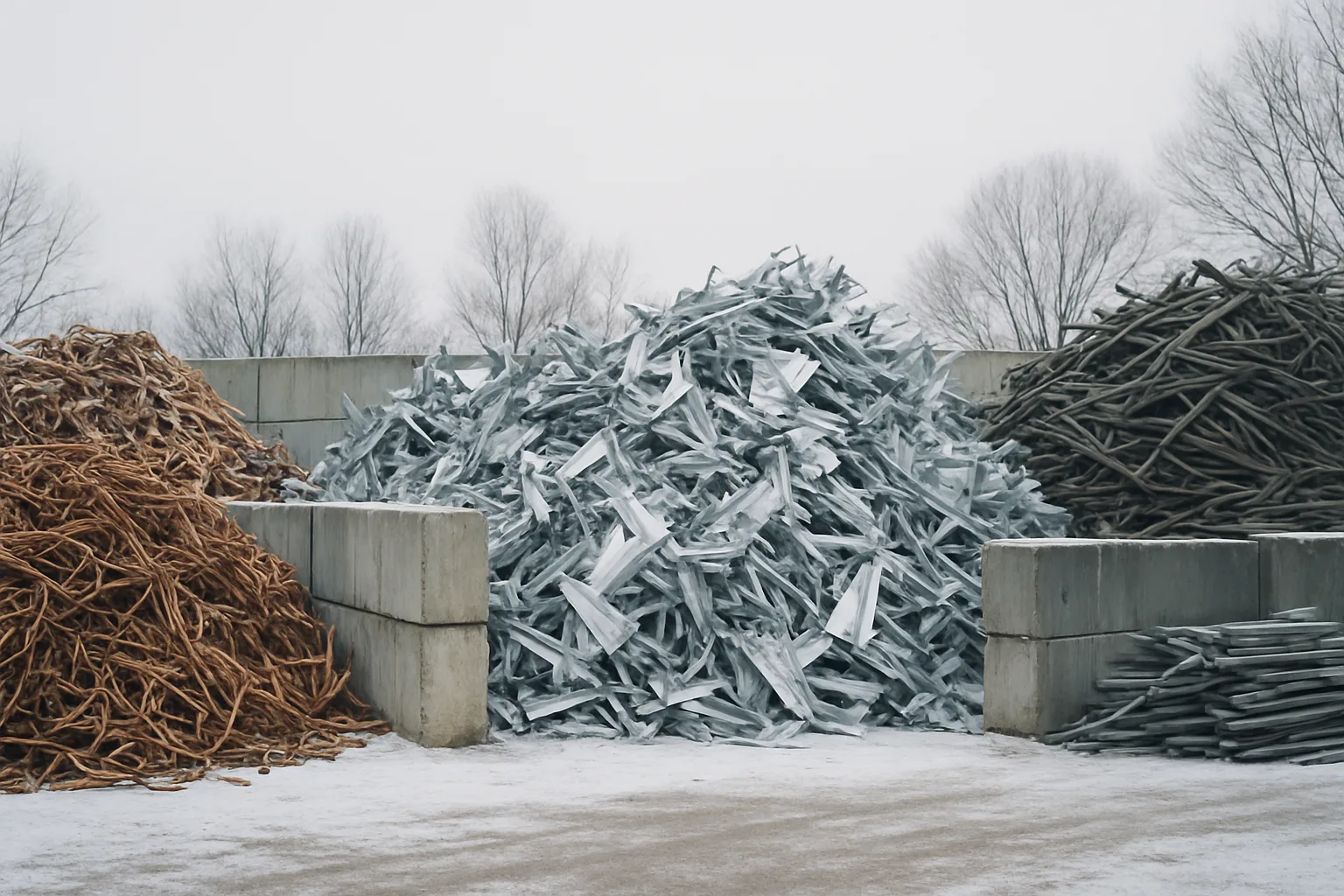
Construction sites are sitting on a goldmine most contractors never fully cash in on. Every demolition project, every renovation teardown, every structural upgrade leaves behind material that has real dollar value — if you know what you're looking at and how to move it. Scrap metal prices today make it worth paying attention. Copper, aluminum, structural steel, and specialty metals come off job sites every single day across Canada, and too much of it ends up in bins headed to a single buyer who sets the price on their own terms.
This guide breaks down exactly what metals you're generating, how to sort and document them properly, and how platforms like sell your scrap metal on SMASH Recycling put competition back in your corner instead of the buyer's.
---The Volume of Scrap Metal That Construction and Demolition Sites Actually Produce
Most people underestimate how much metal comes off a job site. A mid-size commercial demolition can produce tens of thousands of kilograms of recoverable metal. Even a residential gut-renovation strips out wiring, plumbing, ductwork, and structural fasteners that add up fast.
Here's what's typically coming off active construction and demolition sites in Canada:
- Structural steel — beams, columns, rebar, angle iron, and steel decking
- Copper wire and tubing — electrical systems, plumbing rough-ins, and HVAC connections
- Aluminum — window frames, curtain wall systems, soffits, ductwork, and conduit
- Stainless steel — commercial kitchen equipment, industrial piping, and hardware
- Cast iron — radiators, pipe, and drainage fittings from older structures
- Brass — valves, fittings, and fixtures, especially in pre-1990s construction
- Catalytic converters — off equipment and vehicles on heavy demo sites
In Quebec, demolition volume stays high. Cities like Gatineau and its cross-river counterpart Ottawa see constant infrastructure renewal, legacy building teardowns, and municipal project cycles. That means consistent scrap metal availability for contractors who know how to capture it properly.
How to Identify and Sort Scrap Metal on a Job Site
Sorting at the source is the single biggest thing you can do to increase what you get paid. Mixed loads get discounted hard. Buyers price mixed material at the lowest-value metal in the mix — that means a load of aluminum conduit mixed with steel fittings gets priced like steel. That's money left on the table every single load.
Set up a basic sorting system before demo starts:
- Ferrous vs. non-ferrous — use a magnet. If it sticks, it's ferrous (steel, iron). If it doesn't, you're likely dealing with copper, aluminum, brass, or stainless.
- Copper grades — bare bright copper wire, #1 copper tubing, and #2 copper (with paint or solder) each carry different prices. Don't mix them.
- Aluminum grades — cast aluminum, extruded aluminum, and sheet aluminum price differently. Ductwork, frames, and structural pieces belong in separate bins.
- Stainless and specialty metals — keep these separate from mild steel. A small amount of stainless mixed into a steel load loses its premium entirely.
- Catalytic converters and cores — serial tracking matters here. Document each one. This protects you and gets buyers more confident bidding on the load.
If you're running a larger site, bin labeling and a simple paper or digital log saves arguments later. Platforms like SMASH use photo documentation and serial tracking to give buyers confidence in what they're bidding on — and more buyer confidence typically means more competitive bids.
What Drives Scrap Metal Prices Today for Construction and Demolition Material
Prices move. That's just the reality of commodity markets. Scrap metal prices today reflect a combination of global demand, domestic processing capacity, energy costs, and currency exchange. Copper is especially sensitive to manufacturing activity in Asia and North America. Steel follows construction indexes and tariff environments. Aluminum tracks smelter output and automotive demand.
For contractors in Quebec and across Canada, a few things directly affect what you'll receive at the gate:
- Material cleanliness — sorted, stripped, and contamination-free loads command better prices
- Load size — larger loads have more negotiating leverage than small pickups
- Buyer competition — a single phone call to one buyer means that buyer sets the price. Multiple buyers competing in an auction format creates real price discovery.
- Documentation — weight certifications, packing lists, and photo records give remote buyers the confidence to bid aggressively
- Timing — selling into a rising market versus a soft market can mean meaningful price differences
The old way of selling construction scrap — one buyer, one call, one price — doesn't serve the seller. It's a price you accept, not a price you negotiate. That model works great for the buyer. Not so much for you.
Want to see how the market actually values your material? get a fair price for your scrap today and let competition do the work.
Why Documentation Matters More Than Most Contractors Think
Paper trails aren't just about compliance. They're about price. A well-documented load of catalytic converters with serial numbers, photos, and a verified count is worth more than an undocumented bag of cats — because buyers take on less risk when they know exactly what they're buying.
The same principle applies to copper lots and mixed non-ferrous loads. When a buyer can see clear photos, an itemized count, and a consistent grade description, they can price it accurately. Inaccurate guessing on their end always results in a lower bid as a buffer. Remove their uncertainty and you improve your return.
In Quebec, scrap dealers and secondary processors are increasingly asking for documentation on larger loads — especially for catalytic converters and copper. Bill of lading (BOL) requirements, packing lists, and weight certifications are becoming standard practice at commercial scale. Getting ahead of that is smart business.
SMASH's platform builds this documentation process directly into the workflow. Serial tracking, photo uploads, and inventory tools create the paper trail automatically. You're not doing extra admin work — you're building a better auction listing that buyers can actually trust.
Using an Auction Platform to Sell Construction Scrap Metal in Gatineau and Across Quebec
Here's the practical question: once you've got sorted, documented loads of steel, copper, and aluminum coming off your demo site — how do you actually sell it well?
The traditional path is to call your usual buyer, maybe get a second quote if you remember to, and accept whatever comes back. That works fine when prices are stable. It works poorly when the market is moving or when you're sitting on a higher-value load that deserves competition.
A scrap metal auction platform changes the dynamic. Instead of one buyer setting the price, multiple vetted buyers compete for your material. The seller sets the terms. Buyers bid. The market reveals the price — not one person's margin calculation.
For contractors in Gatineau and across Quebec running commercial demo or large renovation projects, this model makes real sense at scale. When you're moving significant volumes of copper wire, structural steel, or aluminum curtain wall systems, the difference between one buyer's offer and a competitive auction can be material. Literally and financially.
Platforms like sell your scrap metal on SMASH Recycling connect sellers with vetted buyers across North America. No subscription fees. No guessing. The platform takes a commission only when a sale happens — so if the load doesn't sell, you don't pay. SMASH only wins when you win.
Practical Steps: From Demolition Site to Sold Load
Getting from job site to sale doesn't have to be complicated. Here's a repeatable process that works for construction and demolition operations of most sizes:
- Plan your sort early — set up bins before demo starts. Changing the sort after the fact is expensive in labor.
- Tag and photograph as you go — quick phone photos of each bin when it's loaded saves time later and supports your documentation.
- Weigh at the site or at a certified scale — if you can get a weight ticket, it adds credibility to your listing.
- Separate catalytic converters and high-value non-ferrous — these deserve their own listings and their own buyers.
- List on a platform that brings multiple buyers to your material — don't call one number and accept the first offer.
- Review bids and accept the best one — you're in control of the decision.
Whether you're a general contractor in Gatineau running municipal teardowns, or a demolition crew working industrial sites across Quebec, this process applies. The goal is the same: capture more of the value your site is already generating.
If you're not sure where to start, sell your scrap metal at fair Canadian prices and get connected with a process that takes the guesswork out of it. When you're ready to explore scrap metal selling guides, there's no shortage of practical advice to dig into.
Your demo site generates real value every day. The only question is whether you're capturing it properly — or leaving it in someone else's pocket.
---Frequently Asked Questions
Q: What scrap metal prices today can I expect for copper wire from a demolition site?
Copper prices fluctuate daily based on global commodity markets. The grade of your copper matters significantly — bare bright wire prices higher than insulated or painted #2 copper. Always check current rates before committing to a sale, and get multiple quotes or use a competitive auction to confirm you're getting fair market value. Prices referenced here are general; always verify current rates before selling.
Q: Where can I sell scrap metal near me in Gatineau?
Gatineau has local scrap yards that handle ferrous and non-ferrous material, but local options may not always offer the best price discovery — especially for larger loads. Platforms like SMASH connect sellers in Gatineau and across Quebec with vetted buyers competing for their material, which can reveal stronger market pricing on significant volumes.
Q: Is scrap metal recycling in Quebec regulated?
Yes. Quebec has provincial regulations around scrap metal dealers, particularly for catalytic converters, copper, and other high-theft-risk materials. Sellers are typically required to provide identification and documentation for certain metal types. Keeping solid records of where your material came from is both a legal best practice and a selling advantage.
Q: What's the best way to get the highest scrap metal prices for a large demo load?
Sort your material by grade before selling — mixed loads always price lower. Document what you have with photos and weights. Then use a competitive auction platform rather than a single buyer quote. More buyers competing for your load means better price discovery and more of the market value ends up in your hands.
Q: Does SMASH handle scrap metal from commercial construction sites?
Yes. SMASH works with yards, contractors, and demolition operators across North America. The platform supports inventory documentation, VIN and serial lookups for catalytic converters, photo uploads, and auto-invoicing — tools built for the volume and variety that commercial demo sites produce. There are no subscription fees; SMASH earns only on completed sales.
---If your construction or demolition site is generating scrap metal — and it is — it's worth making sure you're selling it the right way. Sell your scrap metal at fair Canadian prices and find out what your sorted loads are actually worth when more than one buyer is at the table.
Follow SMASH on LinkedIn for scrap metal market updates, pricing insights, and industry news across Canada and North America.