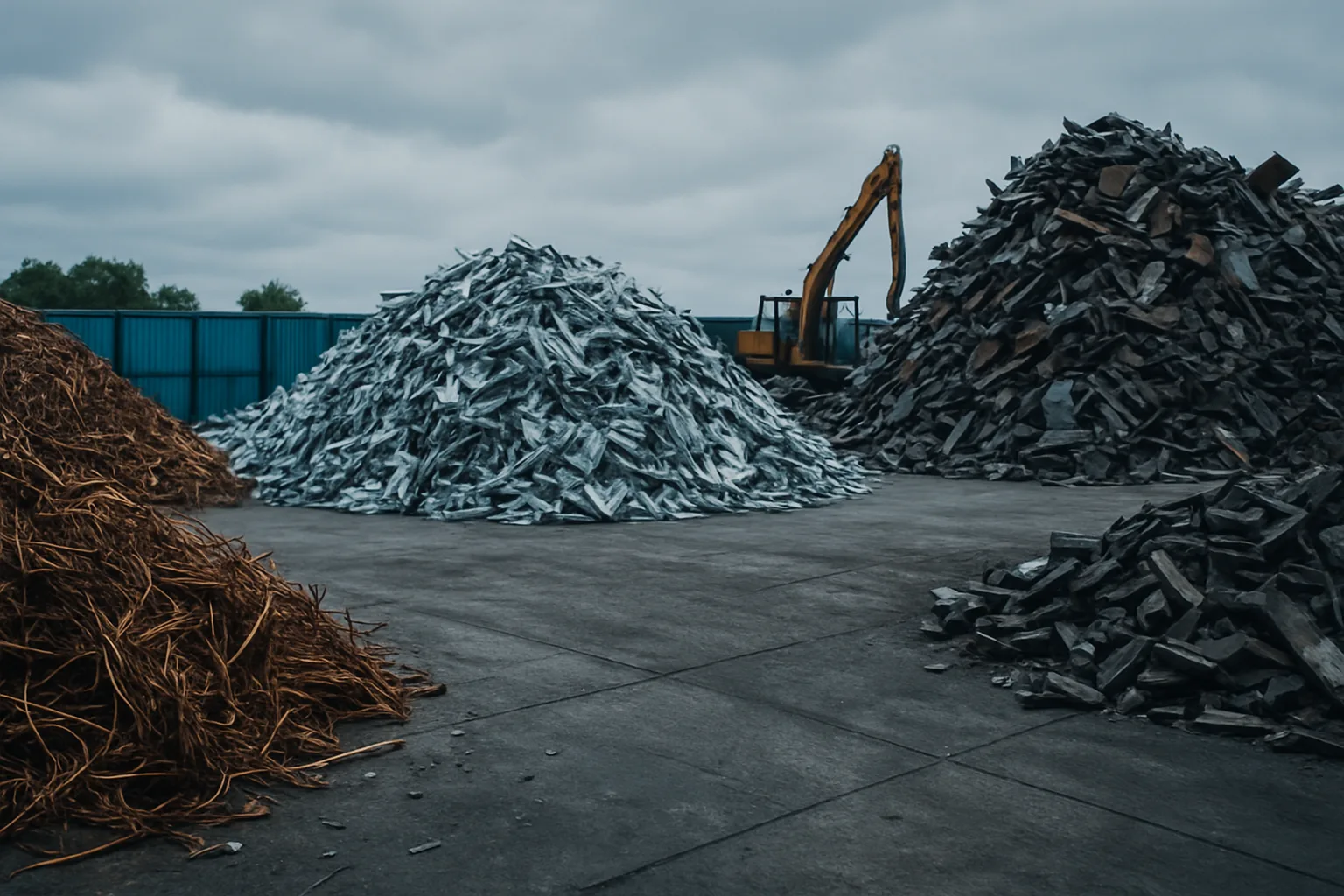
Steel vs. Iron Scrap: Why the Price Difference Matters When You Sell
Most people hauling metal to a yard treat steel and iron like they're the same thing. They're not — and that assumption is costing sellers money. If you're sitting on a pile of mixed metal in Yorkton and you want to get the best return, understanding the difference between steel scrap and cast iron isn't just academic. It directly affects what ends up in your pocket.
The scrap metal auction market rewards sellers who know their material. When you show up documented, sorted, and informed, buyers compete harder. That's the whole premise behind platforms like SMASH — more buyer competition means better steel scrap price today discovery, not just a number some buyer pulls out of thin air.
Steel and Iron Are Not the Same Metal
Here's the quick metallurgy lesson that matters for pricing. Iron is a base element. Steel is an alloy — iron combined with carbon and sometimes other elements like chromium, manganese, or nickel. That sounds simple, but the processing differences between the two drive very different scrap values at the mill level.
Cast iron — the heavy, brittle stuff you find in old engine blocks, wood stoves, radiators, and cookware — requires different furnace handling than steel. Mills that specialize in steel feedstock don't always want cast iron mixed in. Contamination affects their melt chemistry. Because of that, cast iron often trades at a lower per-pound rate than clean steel scrap, even though both are ferrous metals.
Common sources of each in the scrap stream include:
- Cast iron: Engine blocks, brake drums, radiators, pipes, old boiler parts, wood stoves, cookware
- Steel (structural/heavy melt): I-beams, angle iron, plate steel, heavy equipment frames
- Steel (light gauge / #1 or #2 HMS): Sheet metal, appliances, auto bodies, shelving, farm equipment panels
- Stainless steel: Kitchen equipment, food processing machinery, medical equipment — prices significantly higher
Knowing which category your material falls into before you contact a buyer is the first step toward getting paid fairly. Yards and buyers will grade it themselves, but walking in educated means you're less likely to accept a low offer on material that deserves better.
How Steel Scrap Price Today Is Set — And Why It Fluctuates
Steel scrap prices aren't made up at the yard level. They're tied to global steel production demand, North American mill activity, export markets, and the cost of alternatives like pig iron and direct reduced iron (DRI). When mills are running hard, scrap demand goes up and prices follow. When construction slows or auto production dips, scrap prices pull back.
In Saskatchewan, you're also dealing with regional freight realities. Yorkton is a real distance from major steel-consuming mills. That logistics factor gets priced in. A buyer in Hamilton or Chicago is closer to end-use facilities — which is one reason why sell scrap metal online through a platform like SMASH matters for Saskatchewan sellers. It puts your load in front of buyers across North America, not just whoever's within trucking distance.
A few things that move steel scrap prices week to week:
- Electric arc furnace (EAF) mill capacity utilization rates
- Export demand from offshore buyers (Turkey, India, Southeast Asia)
- Seasonal construction and manufacturing cycles
- Pig iron and DRI pricing as competing inputs
- Freight and logistics costs
Disclaimer: Scrap metal prices fluctuate constantly based on market conditions. Always check current rates before committing to a sale. The figures and trends discussed here are general in nature and not a guarantee of what your material will fetch today.
Why Sorting Your Scrap Before a Scrap Metal Auction Pays Off
Sorted material gets better bids. That's not a slogan — it's a market reality. When a buyer sees a well-documented, separated load, they don't have to price in uncertainty. A mixed pile of ferrous metal with unidentified grades forces buyers to assume the worst and price accordingly. Your well-sorted load of heavy melt #1 steel shouldn't be penalized because someone else mixed in light gauge and cast iron.
This is one of the core arguments for listing through a scrap metal auction platform. SMASH's inventory tool lets you categorize material properly — steel grade, estimated weight, condition, photos, even BOLs and packing lists if you have them. Buyers bidding on that load know exactly what they're getting. That confidence shows up in their bids.
Before you list or haul a load from Yorkton, here's a practical sorting checklist:
- Separate ferrous from non-ferrous — use a magnet. If it sticks, it's ferrous (iron or steel). Non-ferrous metals like copper, aluminum, and brass should always be kept separate.
- Identify cast iron vs. steel — cast iron is typically thicker, more brittle, and found in older industrial or engine components. Steel is more ductile and widely found in structural and automotive applications.
- Grade your steel — heavy melt (#1 and #2), light iron (HMS), and stainless are distinct categories. Don't let them get commingled.
- Remove attachments — rubber, plastic, and non-metal attachments reduce the value of a load. Strip what you can.
- Document with photos — especially for large loads. A photo record supports your listing and builds buyer confidence in a SMASH auction.
Sellers who do this work upfront consistently see stronger buyer interest. It's not about jumping through hoops — it's about removing the reasons for a buyer to discount your load.
Selling Scrap Metal from Yorkton: What to Know About Your Local Market
Yorkton sits in the middle of agricultural Saskatchewan, which means the local scrap stream is heavy on farm equipment, old steel bins, machinery frames, and vehicle metal. That's actually a strong position — agricultural steel is often heavy melt grade or better, and there's usually volume to work with if you're aggregating from multiple sources.
The challenge for sellers in Yorkton and across Saskatchewan is that local buyer options can be limited compared to a major metro. A single local buyer with no competition sets the price. You take it or you haul the load somewhere else — which costs money and time. That's exactly the problem a scrap metal auction format solves.
When you list through SMASH, your Yorkton load reaches vetted buyers across North America. The buyer who wins isn't the only one who showed up — they won because they bid competitively. That's price discovery, not price-taking. For Yorkton sellers dealing with heavy ferrous loads from farm country, this difference can be meaningful. If you're ready to explore your options, Yorkton scrap metal services are available through the platform now.
You can also sell your scrap metal at fair Canadian prices without having to drive your load to a distant yard and accept whatever number you're handed at the gate.
Where SMASH Fits Into Your Scrap Selling Strategy
SMASH is built for yards and sellers who are tired of the one-buyer, one-phone-call approach to selling scrap. The platform brings vetted buyers to your load — not the other way around. You document your material, list it, and let competition do the work.
There are no subscription fees. SMASH only earns when a sale closes, which means the platform's interests are aligned with getting you a solid result. For a seller in Yorkton, Saskatchewan with a load of sorted steel or cast iron sitting in a yard, that's a fundamentally different dynamic than a cold call to a single buyer who already knows you don't have many options.
Features that matter for ferrous sellers specifically:
- Inventory categorization — list steel grade, weight range, and condition accurately
- Photo documentation — visual confirmation builds buyer trust and reduces post-sale disputes
- Vetted buyer pool — you're not dealing with unqualified tire-kickers
- Auto-invoicing — paperwork handled, including GST/HST handling for Canadian transactions
- Auction format — buyers compete, which supports better price discovery than a single negotiation
Ready to see what competitive bidding can do for your ferrous load? Get competitive bids for your scrap in Canada and find out what your material is actually worth on an open market.
If you're still learning how the process works, explore scrap metal selling guides for practical advice on grading, sorting, and timing your sales in the Canadian market.
Steel and iron scrap aren't the same, and the market doesn't treat them that way. The sellers who understand that distinction — and document their loads accordingly — consistently put themselves in a better position. Whether you're moving one load or aggregating a season's worth of farm steel in Saskatchewan, knowing your material and using the right platform makes a real difference. Get a fair price for your scrap today — and stop guessing what your metal is worth.
Frequently Asked Questions
Q: What's the price difference between cast iron and steel scrap in Saskatchewan?
Cast iron typically trades at a lower per-pound rate than steel because mills have to handle it differently during the melt process. The exact gap varies with market conditions, but in most Canadian markets, clean steel scrap — especially heavy melt — will outprice cast iron. Always check current rates before you sell, as prices fluctuate week to week.
Q: How does a scrap metal auction work for ferrous loads in Yorkton?
You document your load — material type, grade, estimated weight, and photos — and list it through a platform like SMASH. Vetted buyers then submit competitive bids. The highest qualifying bid wins. You don't negotiate with a single buyer; you let the market set the price. For sellers in Yorkton and across Saskatchewan, this opens the buyer pool well beyond local options.
Q: Can I sell scrap metal online if I'm located in rural Saskatchewan?
Yes. Platforms like SMASH are built specifically for situations where local buyer competition is limited. You list your load digitally — with photos and documentation — and buyers across North America can bid on it. Logistics and pickup arrangements are coordinated after the sale closes. It's a practical option for rural Saskatchewan sellers with volume to move.
Q: How do I know if my metal is steel or cast iron before I sell?
Both are ferrous and will stick to a magnet, so that test won't separate them. Cast iron is typically thicker-walled, more brittle (it will crack rather than bend), and found in older components like engine blocks, radiators, and stoves. Steel is more ductile and widely found in structural shapes, auto bodies, and farm equipment frames. When in doubt, describe what the metal came from — buyers and yard operators can usually grade it from there.
Q: Is there a subscription fee to list scrap through SMASH?
No. SMASH doesn't charge subscription fees. The platform earns when a sale closes, so there's no upfront cost to list your material. That structure keeps SMASH's incentives aligned with getting you a real result — not just collecting a monthly fee regardless of whether your load sells.
Follow SMASH on LinkedIn for Canadian scrap market updates, industry insights, and practical selling tips you can actually use.