Why Knowing Your Metal Puts More Money in Your Pocket
Most people leave serious money on the table when they sell scrap — not because they got a bad deal, but because they didn't know what they had. Copper mistaken for brass. Aluminum sold as mixed metal. A catalytic converter tossed in with the ferrous pile. If you're trying to get the best scrap metal prices Richmond has to offer, identifying your metal correctly before you sell is one of the smartest moves you can make.
This guide gives you two practical tools — your eyes and a magnet — to sort what you've got before you load the truck. No lab equipment. No metallurgy degree. Just field-tested methods used by recyclers across British Columbia every day.
Why Metal Identification Matters Before You Sell
Scrap yards price by category. Mixed, unsorted loads get priced at the lowest common denominator. That means if your copper wire ends up in a general mixed non-ferrous bin, you might walk away with a fraction of what clean copper would have earned. Sorting takes twenty minutes. The price difference can be substantial.
In Richmond and across British Columbia, the gap between sorted and unsorted loads is real. Buyers on platforms like SMASH Recycling — where verified buyers bid on your metal expect documented, categorized inventory. When your load is clearly identified and properly described, it attracts more serious bids. That's not theory — that's how competitive price discovery works.
- Sorted, identified loads give buyers confidence to bid higher
- Mixed or mislabeled loads get discounted to cover buyer uncertainty
- Clean, separated metal processes faster and commands better terms
The Magnet Test: Your First Filter
Before anything else, grab a strong magnet. A rare earth magnet from a hardware store works best — fridge magnets won't cut it. The magnet test splits your pile into two categories: ferrous (iron-based) and non-ferrous. That one step alone changes how you sort everything else.
If the magnet sticks: You're dealing with a ferrous metal — most likely steel or iron. These are the lowest-value category by weight but still worth selling in volume. Think car bodies, rebar, structural steel, old appliances.
If the magnet doesn't stick: You're into non-ferrous territory — copper, aluminum, brass, stainless steel, lead, or zinc. These metals are where the real price differences live. Non-ferrous loads are worth sorting carefully because the spread between, say, bare bright copper and mixed aluminum is significant.
One important exception: stainless steel. Some grades of stainless are non-magnetic or only weakly magnetic. If you've got something shiny, silver-toned, and the magnet barely grabs it, you likely have stainless. It's worth more than regular steel, so don't throw it in the ferrous pile without checking.
Visual Identification Guide: What Each Metal Looks Like
Once you've run the magnet test, your eyes do the rest. Color, weight, surface texture, and patina all tell you what you're holding. Here's a practical breakdown of the metals you're most likely to encounter if you're looking to sell your scrap metal at fair Canadian prices.
Copper
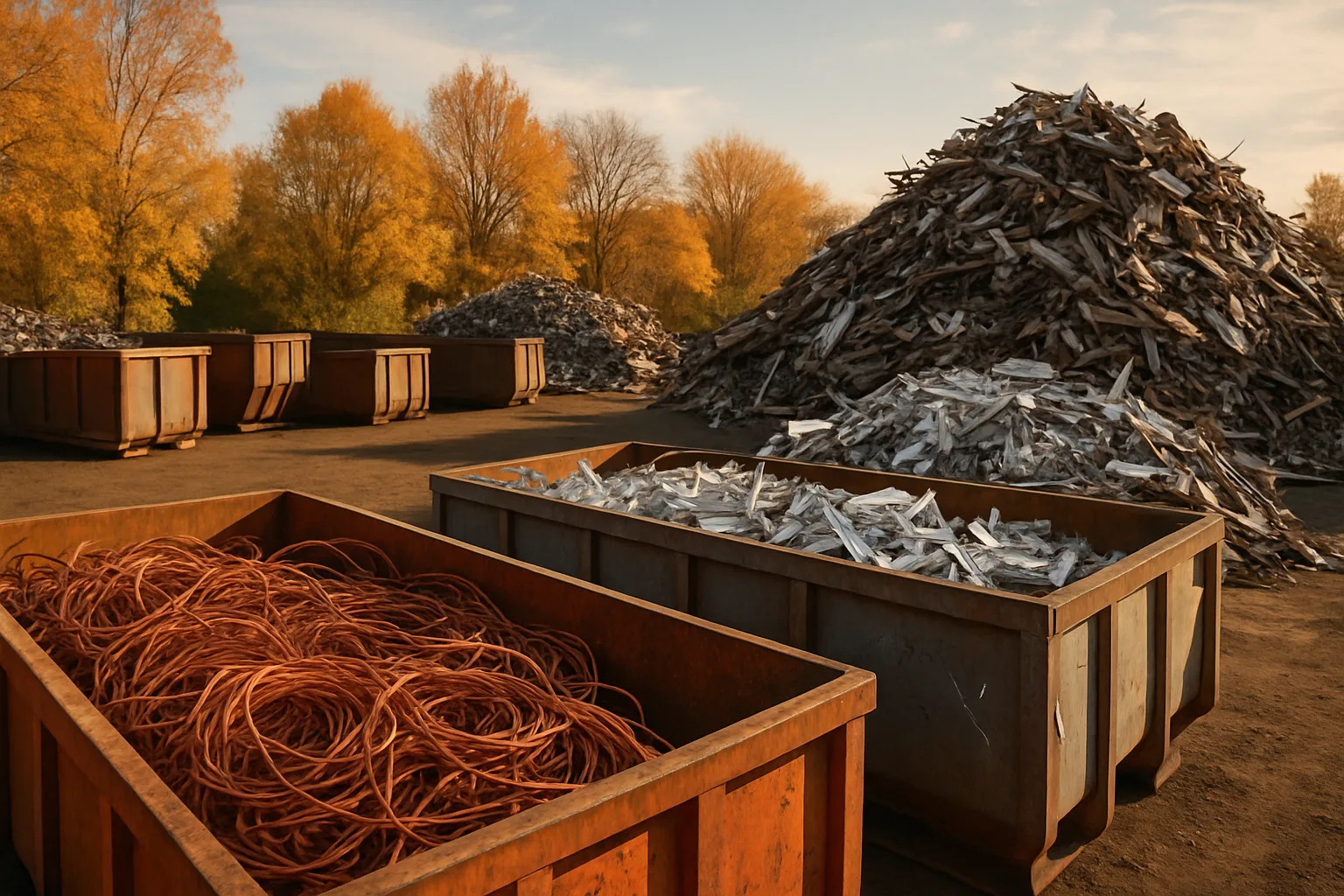
New copper is a distinctive reddish-orange — almost like a new penny. Aged copper goes green or dark brown (patina). It's dense for its size and bends without snapping. Copper shows up in electrical wire, plumbing pipe, motor windings, and roofing material. It's typically the highest-value common scrap metal per kilogram. Bare bright copper (stripped, clean wire) commands the top price. Insulated wire pays less because the plastic adds weight and processing cost.
Aluminum
Aluminum is lightweight and silver-grey. It doesn't rust — it oxidizes to a dull white powder, which is a key tell. If you've got something silver, lightweight, and the magnet doesn't touch it, you're almost certainly looking at aluminum. Common sources include window frames, siding, automotive parts, rims, and beverage cans. Grades matter: cast aluminum (engine blocks, wheels) pays differently than extrusion aluminum (frames, profiles).
Brass
Brass is yellow — not orange like copper, not silver like aluminum. It has a warm, golden tone. Common in plumbing fittings, valves, musical instruments, and older electrical components. Brass is heavier than aluminum and lighter than copper. It doesn't stick to a magnet. When you scratch the surface of something that looks like gold but feels too heavy, you may have brass. It pays well — better than aluminum, less than clean copper.
Steel and Iron
Steel sticks to a magnet. It's heavy, often grey or rust-coloured, and shows up everywhere — car frames, I-beams, sheet metal, pipes. Iron is similar but typically found in older cast forms like radiators, engine blocks, and weights. Steel is the bulk workhorse of scrap: lower price per kilogram but often available in significant tonnage. Don't ignore it — a full load of structural steel adds up.
Stainless Steel
Stainless is silver and shiny — similar to aluminum at first glance but much heavier. The magnet test is unreliable here; some stainless grades are weakly magnetic, others aren't. Look for a brighter, harder surface than regular steel. It often shows up in commercial kitchen equipment, medical tools, automotive exhaust systems, and food processing equipment. Worth separating from your regular steel pile — it pays noticeably more.
Lead
Lead is extremely heavy for its size and has a dull grey color that smears slightly if you drag something across it. It's soft enough to scratch with a fingernail. You'll find it in old wheel weights, fishing sinkers, roofing flashing, radiation shielding, and older plumbing. Not magnetic. Handle with care — lead is a regulated material in most jurisdictions, so check local requirements before you transport or get a fair price for your scrap today.
Catalytic Converters
Cats deserve their own category. A catalytic converter looks like a metal canister with honeycomb-style ceramic inside. They come off gasoline, diesel, and hybrid vehicles. The value is in the platinum group metals (PGMs) inside — palladium, platinum, and rhodium — not the steel shell. If you're selling cats, use a platform that provides VIN lookup and serial tracking. Documentation matters enormously with converters because grade identification directly drives price. Mislabeled or unknown cats get discounted. Known, documented cats sell for what they're actually worth.
Common Mistakes That Cost You Money at the Yard
Knowing what you have is step one. Avoiding these sorting errors is step two. Recyclers across Richmond — and across the broader B2B scrap metal marketplace — see these mistakes regularly.
- Mixing copper grades: Bare bright, #1 copper, and insulated wire are priced differently. Tossing them together drops everything to the lowest grade.
- Aluminum with steel attachments: Aluminum rims with steel valve stems, frames with steel bolts — these count as contamination and affect your price. Remove them.
- Throwing stainless with regular steel: You'll get paid steel prices for a metal worth significantly more. Always separate it.
- Unstripped wire: If the copper content is high and stripping is feasible, it's often worth the effort. Compare the stripped vs. insulated price before deciding.
- Unmarked catalytic converters: Cats with no identifiable serial or part number are harder to price. Document them before you sell.
How to Sell Sorted Metal for the Best Return in Richmond
Once you've sorted and identified your load, the next step is getting it in front of the right buyers. Walking into a single yard with a mixed load and accepting the first offer is the old way. The old way costs you money.
For anyone serious about recovering fair value — whether you're an individual clearing a property or a business generating regular scrap volume — a B2B scrap metal marketplace changes the equation. SMASH Recycling — where verified buyers bid on your metal connects sellers with vetted buyers who compete for your load. Documented inventory, photo evidence, and proper metal identification mean buyers bid with confidence. More confidence, more competition. More competition, better price discovery.
If you're in Richmond or anywhere in British Columbia looking to Richmond scrap metal services, starting with proper identification and working with a transparent platform puts you ahead of most sellers in the market. The work you do sorting at your yard directly affects what you walk away with. Treat your scrap like inventory, because that's exactly what it is.
When you're ready to move your load, explore scrap metal selling guides for more detail on pricing, pickup logistics, and how to document your inventory for auction. The more you know going in, the better the outcome when bids come in.
Disclaimer: Scrap metal prices fluctuate based on commodity markets, grade, and buyer demand. Always check current rates before committing to a sale.
Frequently Asked Questions
Q: How do I know if my metal is worth selling in Richmond?
If it passes the magnet test as non-ferrous — copper, aluminum, brass, stainless — it's almost always worth sorting and selling. Even ferrous steel is worth selling in volume. The key is proper identification so you get paid the right grade price. Richmond has active buyers for most common scrap categories.
Q: What gives me the best scrap metal prices in Richmond?
Sorted, clean, documented loads consistently return better prices than mixed, unsorted ones. Using a platform that brings multiple verified buyers into competition — rather than a single walk-in price — gives you real price discovery instead of a single take-it-or-leave-it offer.
Q: Can I sell scrap metal near me without a vehicle or large trailer?
Yes. Many pickup services operate across British Columbia, including Richmond, that will collect your load directly. Platforms like SMASH can connect you with buyers who arrange logistics. The key is having your load identified and ready — it speeds up the process and helps you get an accurate quote upfront.
Q: How are catalytic converters priced when I sell scrap metal?
Catalytic converter pricing is based on the specific PGM content, which varies by make, model, and year. Serial numbers and VIN information help identify the exact converter grade. Platforms that offer serial tracking and VIN lookup give sellers far more accurate pricing than a blind quote from a single buyer.
Q: Is there a difference between selling scrap metal as an individual versus a business?
Volume and frequency are the main differences. Businesses generating regular loads benefit more from a B2B scrap metal marketplace with documented transactions, auto-invoicing, and vetted buyer networks. Individuals with one-time loads still benefit from proper sorting and competitive bidding — the principles are the same, the scale is different.
---If you've got scrap to move, start with what you have, sort it properly, and put it in front of buyers who compete for it. That's how you recover real value. Ready to get started? Sell your scrap metal at fair Canadian prices and request a pickup at sell-scrapmetal.ca.
Stay current on scrap metal market shifts and recycling industry news — follow SMASH on LinkedIn for regular updates straight from the marketplace.