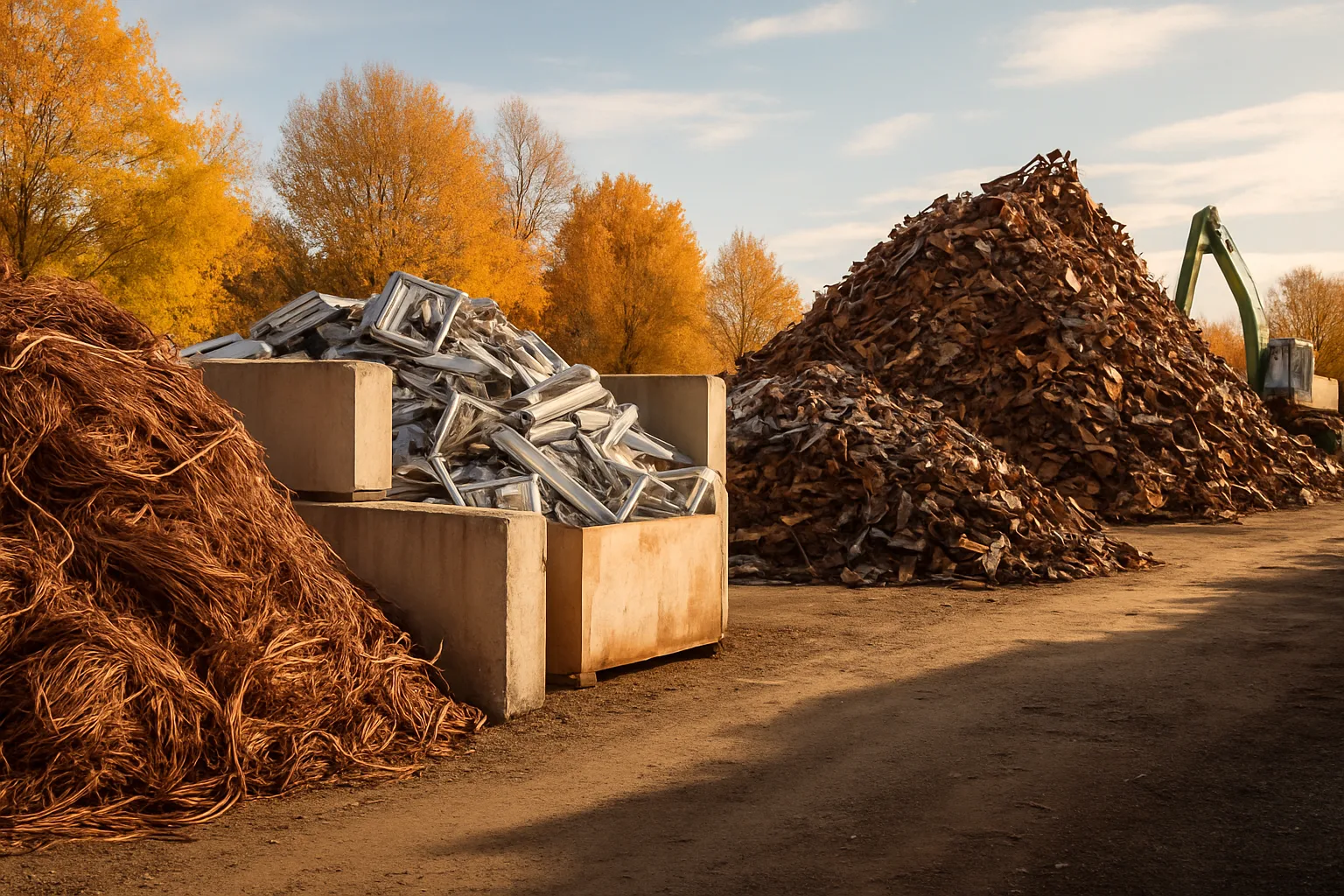
Scrap Metal Market Trends in 2026: What Every Canadian Seller Needs to Watch Right Now
The scrap metal market in 2026 is moving fast — and not always in a straight line. Global trade shifts, tightening environmental regulations, and volatile demand from steel mills and smelters are reshaping what recyclers and sellers can expect to earn. If you're sitting on copper, aluminum, or catalytic converters in Saint John and you're still calling one buyer to set your price, you're leaving real money on the table.
Whether you're clearing out an estate, running a small yard, or managing fleet vehicles past their useful life, understanding current market conditions helps you time your sale and negotiate with confidence. Here's what's driving scrap metal recycling Saint John and beyond in August 2026.
Global Pressures Shaping Canadian Scrap Metal Prices Right Now
Three forces are hitting the Canadian scrap market simultaneously in 2026: shifting trade policy, tightening emissions rules for smelters, and uneven demand from manufacturing sectors still recovering from supply chain disruptions. These aren't abstract economic headlines — they directly affect what a buyer will offer you for a load of insulated copper wire or a pallet of catalytic converters this week.
Trade flow is a big piece of this. North American scrap exports to overseas processors have faced new friction from tariffs and bilateral trade reviews that began rolling out in late 2025 and continued into 2026. When export demand drops, domestic buyers have more leverage. When it surges, competition for material drives prices up. Right now, the picture is mixed — strong in some non-ferrous categories, softer in certain ferrous grades.
A few key forces to track:
- Copper demand: Electrification — EV infrastructure, grid upgrades, and data centre construction — continues to put upward pressure on copper demand globally. That's good news if you have bare bright wire, #1 copper, or stripped cable to sell.
- Aluminum recovery: Automotive lightweighting programs and beverage can recycling loops are keeping aluminum demand reasonably strong, though cast and mixed grades face more spread compression.
- Ferrous softness: Steel mill demand has been inconsistent. If you're selling shredded steel or HMS, check the current mill buying index before committing to a price.
- Catalytic converters: PGM (platinum group metal) prices — platinum, palladium, rhodium — remain a primary driver of cat values. Palladium, in particular, has seen significant volatility in 2026 as substitution with platinum accelerates in new vehicle production.
The takeaway: the market is segmented. Non-ferrous sellers — especially those with copper and cats — are in a better position in August 2026 than ferrous sellers. But timing and documentation still matter enormously.
What's Happening With Copper Scrap Prices in Saint John and Atlantic Canada
Copper scrap prices in Saint John and across New Brunswick track closely with London Metal Exchange (LME) spot prices, adjusted for freight, processing spread, and local buyer competition. The fewer buyers in your market, the wider that spread. That's the reality in many Atlantic Canadian communities — a thinner buyer pool means less competition, which means lower offers for sellers who don't shop around.
This is exactly where platforms like sell your scrap metal on SMASH Recycling change the dynamic. Instead of calling one or two local contacts, your lot goes in front of vetted buyers across the region. More buyers means better price discovery — that's not a marketing claim, it's basic economics.
For context on copper grades most commonly moved in Saint John and surrounding areas:
- Bare bright copper (#1 wire, stripped): Highest value grade. Insulation-free, unalloyed, uncoated.
- #1 copper: Clean pipe and solid copper, no attachments. Strong demand from smelters and wire rod mills.
- #2 copper: Mixed copper with some oxidation or minor contamination. Expect a discount below #1 — usually meaningful in percentage terms.
- Insulated copper wire: Valued by recovery percentage. Know your estimated copper content before you price it.
- Copper breakage / mixed: Lowest grade. Worth selling, but don't expect bare bright pricing.
If you want a fair read on copper scrap prices Saint John, the best move is to get competing offers rather than accepting the first number a single buyer quotes. Document your material well — photos, estimated weights, grade breakdowns — and let buyers compete. That documentation isn't bureaucratic busywork. It directly supports the offer you receive.
Disclaimer: Copper prices fluctuate daily based on LME spot rates and local market conditions. Always confirm current rates before committing to a sale.
Catalytic Converter Selling in 2026: Tighter Rules, Higher Stakes
If you're looking to sell catalytic converters online, 2026 has brought both opportunity and added scrutiny. Several provinces — and some U.S. states — have introduced or expanded documentation requirements for catalytic converter transactions, driven by the ongoing theft epidemic that has plagued the industry since 2021. In many jurisdictions, buyers now require proof of ownership, VIN documentation, and photo records before they'll process a cat purchase.
This isn't a barrier — it's a filter. Buyers who deal in documented material pay more, because their downstream processors demand traceable inventory. Yards and platforms that cut corners on documentation attract lower-quality buyers who discount aggressively to cover their risk.
For individual sellers in Saint John — whether you're scrapping a personal vehicle, clearing a small fleet, or dealing in cores — the process has become more document-intensive, but the payoff is real if you do it right:
- Photograph each converter clearly — OEM number visible where possible.
- Match each unit to a VIN where applicable. SMASH's built-in VIN lookup and serial tracking makes this straightforward.
- Keep your bill of sale or title documentation for vehicles you're parting out.
- List with a buyer or platform that verifies its downstream buyers — no grey-market processors.
The best prices for catalytic converters go to sellers who make compliance easy for the buyer. Vetted platforms like SMASH connect you to buyers who pay for documented material — not the basement buyer who offers cash and no paperwork.
Best Scrap Metal Prices in New Brunswick: How to Actually Get Them
Sellers across New Brunswick — from Fredericton to Moncton to Saint John — often face the same problem: a small number of local buyers creates an informal price ceiling. If the only buyer within a reasonable drive is offering X, most sellers accept X. But that offer is often set knowing there's no competing bid.
Getting the best scrap metal prices New Brunswick sellers can realistically achieve comes down to three things:
- Documentation: Lots with photos, weights, and grade breakdowns get better offers. Buyers reduce their risk discount when inventory is clear.
- Competition: Multiple buyers bidding on the same lot is the single most reliable way to find the real market price. One call, one offer, one price — that's not a market. That's a take-it-or-leave-it.
- Timing: Selling into strong demand — not just accepting a slow week's offer — makes a meaningful difference over the course of a year.
If you're ready to move material and want to sell your scrap metal at fair Canadian prices, the platform matters. SMASH's auction format puts your lot in front of vetted buyers and lets the market set the number — not a single buyer's margin target.
For those researching how scrap metal markets compare across regions — whether you're comparing best scrap metal prices Ontario or watching how copper scrap price today in India filters through to North American markets — the principle is the same. Global signals matter, but local competition is what determines your actual payout. You can explore scrap metal selling guides to understand how to position your material for stronger offers.
Regulation Watch: What Scrap Sellers in Canada Should Expect Through 2026
Regulatory attention on the scrap and recycling sector is not easing off in 2026. Four areas are worth tracking closely if you sell scrap in New Brunswick or anywhere in Atlantic Canada:
1. Catalytic converter ID requirements. As noted above, documentation mandates are expanding. Stay ahead of this — build the habit of capturing OEM numbers and VIN matches before you list anything.
2. Extended producer responsibility (EPR) programs. Provincial EPR frameworks are increasingly pulling end-of-life vehicles and electronics into formal recycling channels. This affects where material flows and who pays for processing. Sellers dealing in auto scrap should watch how New Brunswick's EPR rules develop through late 2026.
3. Environmental compliance for storage sites. Informal scrap storage — vehicles, equipment, or material piles on private land — faces growing scrutiny from municipal and provincial inspectors. If you're accumulating material before a sale, know your local rules on storage duration and containment.
4. Buyer vetting and anti-theft reporting. Several provinces are tightening requirements for scrap buyers to collect and report seller identification for non-ferrous material. This affects transaction speed but protects legitimate sellers from being caught in enforcement sweeps targeting stolen material.
None of this should discourage you from selling — it should push you toward platforms and buyers who operate cleanly. Get a fair price for your scrap today through a channel that documents every transaction properly.
Frequently Asked Questions
Q: What scrap metal is worth the most in Saint John right now?
Non-ferrous metals generally command the highest prices per pound. Bare bright copper and #1 copper are typically at the top, followed by aluminum alloys and insulated wire. Catalytic converters can also carry significant value depending on the PGM content. Prices shift with global markets, so always get a current quote before selling.
Q: How do I find the best scrap metal prices in Saint John and New Brunswick?
The most effective approach is to get multiple competing offers rather than accepting the first number you hear. Platforms like SMASH connect sellers with vetted buyers across the region, which helps reveal the actual market price for your material. Proper documentation — photos, weights, grade information — also supports stronger offers.
Q: Do I need paperwork to sell catalytic converters in New Brunswick?
Increasingly, yes. Provincial and buyer-level requirements for documentation — including VIN matching and proof of ownership — have expanded significantly through 2025 and 2026. Legitimate buyers require this information. If a buyer asks for no documentation at all, that's a red flag, not a convenience.
Q: How do global copper prices affect what I get paid in Saint John?
LME copper spot prices set the international benchmark, and Canadian buyers adjust offers based on that number plus local freight, processing, and margin. When global copper prices rise, local offers typically follow — but there's always a spread. More local buyer competition narrows that spread in your favour.
Q: Is scrap metal recycling in Saint John worth it for small quantities?
Yes — especially for non-ferrous material. Even a modest amount of copper pipe, aluminum extrusions, or a single catalytic converter can represent real value. Aggregating material before selling (rather than making multiple small trips) tends to improve your overall return, and some platforms allow you to list and sell without a physical drop-off.
Markets in 2026 reward sellers who show up prepared — with documented loads, an understanding of current conditions, and access to more than one buyer. If you're in Saint John or anywhere across New Brunswick with scrap to move, don't settle for the first offer. Saint John scrap metal services are built to help you do exactly that. The platform does the legwork of finding competitive buyers — you just need to bring the material and the documentation.
Ready to move? Sell your scrap metal at fair Canadian prices — request a pickup at sell-scrapmetal.ca.
Stay current on scrap metal market conditions and industry news — follow SMASH on LinkedIn for regular market updates and insights built for recyclers and sellers across North America.