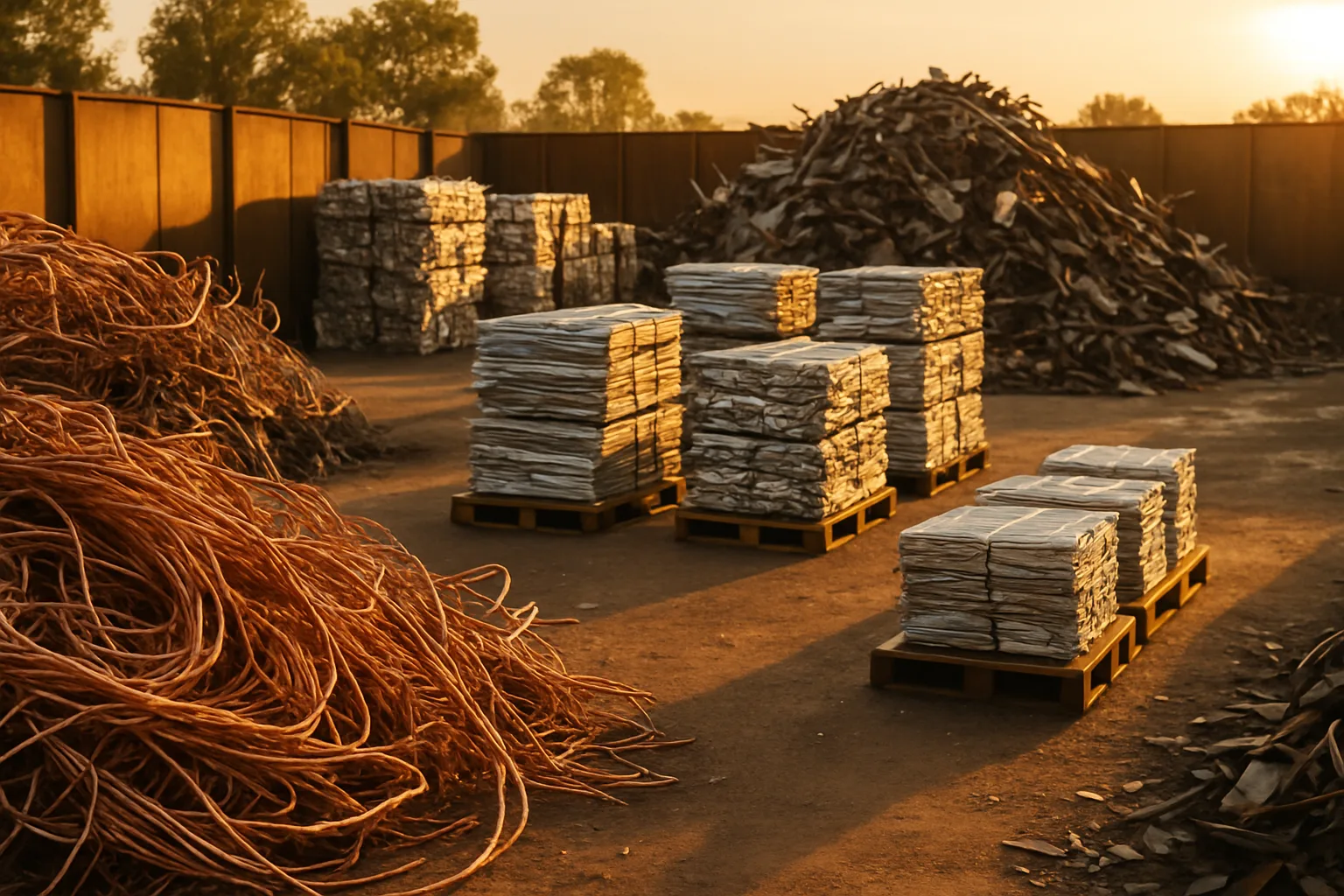
Most scrap yards pay you for what you bring. The sorted yards — the ones who prepare before they show up — get paid more. If you're sitting on a pile of mixed metal and wondering why your last load didn't hit the number you expected, the answer is usually prep work.
Understanding copper scrap prices Hamilton is one thing. Knowing how to present your material so buyers actually compete for it is another. This guide covers both.
Whether you're clearing out a construction site in Hamilton, breaking down industrial equipment, or pulling wire from an old building in Ontario, the way you sort and stage your scrap directly affects your payout. Let's get into it.
Why Sorting Scrap Metal Before You Sell Actually Matters
Here's the blunt truth: a buyer looking at a bin of mixed metal sees risk. They don't know exactly what's in there, so they price it low to protect themselves. That gap between what they guess and what's actually there? You eat it.
When you sort by metal type — copper separate from aluminum, steel away from stainless, clean wire away from insulated wire — you eliminate that guesswork. Buyers can price each grade accurately. And when buyers are confident in what they're bidding on, they bid higher. That's not a theory. That's how price discovery works.
Platforms like get competitive bids for your scrap in Canada are built on this principle. Documented, sorted inventory attracts more serious buyers. More buyers means better price discovery. The prep you do at your facility directly translates to what shows up in your offers.
How to Identify and Separate the Most Valuable Metals
Not all metal is created equal. The hierarchy matters, and knowing it saves you from leaving money on the table.
Copper sits near the top. It's dense, heavy, and commands the highest per-kilogram rate of the common non-ferrous metals. In Hamilton and across Ontario, copper scrap prices fluctuate with global commodity markets — so sorting it properly ensures you're getting paid for copper, not lumping it in with something worth a fraction of the price.
Here's how to break copper down by grade:
- #1 Bare Bright Copper: Clean, uncoated, unalloyed copper wire at least 1/16" thick. No solder, no insulation, no oxidation. This is your highest-value grade.
- #1 Copper: Clean pipe, bus bars, clippings — no significant oxidation, no solder, minimal coating.
- #2 Copper: Oxidized pipe, light gauge wire, copper with traces of solder or paint. Still valuable, but less than #1.
- Insulated Copper Wire: Priced by the recovery rate of the copper inside. Strip it if the volume justifies the labor. If not, sell it as-is but keep it separate.
Aluminum is the second major non-ferrous category most sellers deal with. Keep cast aluminum (engine blocks, wheels) separate from extruded aluminum (window frames, railing) and sheet aluminum (siding, flashing). These are different alloys and sell at different prices. Mixing them costs you.
Steel and iron are ferrous metals — magnetic, heavier by volume, and priced lower per kilogram. Don't mix them with non-ferrous. A magnet is your best sorting tool. If it sticks, it's ferrous.
Stainless steel is a step above regular steel. It's non-magnetic (most grades), corrosion-resistant, and worth more. Know what you have before you throw it in a general steel bin.
Scrap Metal Inventory Management: Document What You Have Before You Sell
This is where a lot of sellers leave money behind. They know roughly what they have, but they can't prove it. When you can't prove it, buyers discount it.
Good scrap metal inventory management doesn't have to be complicated. Before a load moves, document it:
- Weigh each category separately — even rough estimates by type help buyers understand the composition of your load.
- Photograph your sorted piles — photos confirm grades, show condition, and reduce disputes at the scale.
- Log serial numbers or VINs where applicable — especially for catalytic converters and large equipment cores. This is increasingly important for compliance, particularly in Ontario.
- Note contamination honestly — a load described accurately builds trust with repeat buyers. Surprises kill relationships.
- Keep BOLs and packing lists for commercial loads — buyers rely on these to confirm what they agreed to purchase.
SMASH's platform is built around this kind of documentation. When sellers upload accurate inventory with photos and weights, buyers bid with more confidence. That confidence shows up in your final price. You can sell your scrap metal at fair Canadian prices when the buyer knows exactly what they're getting.
Preparing Catalytic Converters, Cores, and High-Value Items
Catalytic converters deserve their own section. They're small, dense, and can be worth hundreds of dollars each — or almost nothing, depending on the make, model, and grade. If you're accumulating cats, don't mix them in with general scrap. Separate them, identify them by serial number or OEM code, and photograph both ends.
The difference between a properly identified cat and an unidentified one can be significant. Buyers on platforms like SMASH use serial tracking to verify PGM content before bidding. The more information you provide, the more accurate — and competitive — the bids get.
For other high-value cores — alternators, starters, electric motors — separate them by type and condition. A clean electric motor is worth more than one with a cracked housing and water damage. Condition matters. Don't assume buyers can't tell.
If you're in Hamilton handling industrial volumes of this material, connecting with Hamilton scrap metal services can help you move larger lots efficiently with buyers who specialize in exactly this kind of material.
Common Sorting Mistakes That Cost You Money
Even experienced sellers make these. Check your process against this list:
- Mixing copper grades: #1 bare bright and #2 copper are not the same price. Mixing them means everything gets bought at the lower rate.
- Leaving insulation on wire: If you have significant volume of copper wire, stripping insulation can meaningfully increase your payout — though it depends on wire gauge and labor cost.
- Throwing aluminum alloys together: Cast and extruded aluminum are different products to a buyer. Separate them.
- Ignoring moisture: Wet scrap weighs more — but most buyers account for moisture and will discount accordingly. Dry material is cleaner to weigh and less likely to trigger a penalty.
- Not photographing before transport: Once a load is mixed in transit, documenting what you started with is impossible. Photo first, move second.
- Selling catalytic converters to the first buyer who calls: Cats are high-value items. Get multiple bids. The spread between a single-buyer offer and a competitive auction can be substantial.
Getting the Best Scrap Metal Prices in Hamilton and Across Ontario
Once your material is sorted and documented, the question becomes: who's buying, and at what price? Scrap metal prices Hamilton — like everywhere else in Canada — track global commodity markets. Copper, aluminum, and steel prices move with LME spot rates, currency fluctuations, and regional supply and demand. No one can predict where prices go next, but you can control how well-positioned you are to capture the market rate when you sell.
The old approach was to call one buyer, take their number, and move on. That's a guessing game. The SMASH approach is to put sorted, documented inventory in front of vetted buyers and let them compete. If you're also looking at best scrap metal prices Toronto buyers or national buyers, a platform that reaches across Ontario and beyond gives you access to more buyers in a single transaction.
Knowing the copper scrap price today per kg is useful context — but price awareness only helps you if you're in a position to act on it. Sorted material, good documentation, and competitive bidding give you that position. That's how you explore scrap metal selling guides and actually apply what you learn.
When you're ready to move your load, get a fair price for your scrap today — whether it's a single pallet of copper pipe or a full truckload of mixed non-ferrous from a demolition site in Hamilton.
Disclaimer: Scrap metal prices fluctuate daily based on commodity markets, regional demand, and material grade. Always check current rates before selling. The price ranges referenced in this article are general context only and not guaranteed offers.
Frequently Asked Questions
Q: What are copper scrap prices in Hamilton right now?
Copper scrap prices in Hamilton track global LME copper rates and fluctuate daily. The price you receive also depends on the grade — #1 bare bright, #1 copper, #2 copper, and insulated wire all pay at different rates. Check with local yards or use a competitive bidding platform to get current market offers on your specific material. Always verify rates on the day you plan to sell.
Q: How do I know if my copper wire is worth stripping before I sell it?
It depends on the gauge and the volume. Thick gauge wire with a high copper recovery rate is often worth stripping — the premium for bare bright versus insulated wire can be significant. Thin gauge wire with heavy insulation may not be worth the labor. If you have large quantities, the math usually favors stripping. For small amounts, sell it as insulated and let the buyer factor in recovery.
Q: Does sorting really make a difference to my final payout?
Yes — consistently. Mixed loads force buyers to estimate composition and price conservatively. Sorted, documented loads remove that uncertainty. Buyers bid more aggressively when they know exactly what they're buying. The difference between a mixed load and a well-sorted, photographed load can be meaningful, especially on non-ferrous material like copper and aluminum.
Q: Do I need paperwork to sell scrap metal in Ontario?
For personal and smaller loads, the requirements are generally straightforward. For commercial volumes, regulated materials like catalytic converters, or loads with serial-numbered components, documentation becomes more important — both for compliance and for getting accurate bids. Ontario has regulations around scrap metal purchases that require dealers to record seller information. Keeping your own records protects you and builds credibility with buyers.
Q: How do I get the best scrap metal prices in Hamilton versus selling locally?
Local yards offer convenience, but they're also a single data point. To know if you're getting a fair price, you need comparison. Platforms like SMASH put your inventory in front of multiple vetted buyers — including buyers outside Hamilton — so the market decides the price rather than one buyer's margin. For high-value or large loads, competitive bidding consistently outperforms a single phone call.
Ready to stop guessing and start selling with confidence? Sell your scrap metal at fair Canadian prices — request a pickup at sell-scrapmetal.ca and let the market come to you.
Follow SMASH on LinkedIn for scrap metal market updates, pricing insights, and industry news across Canada.