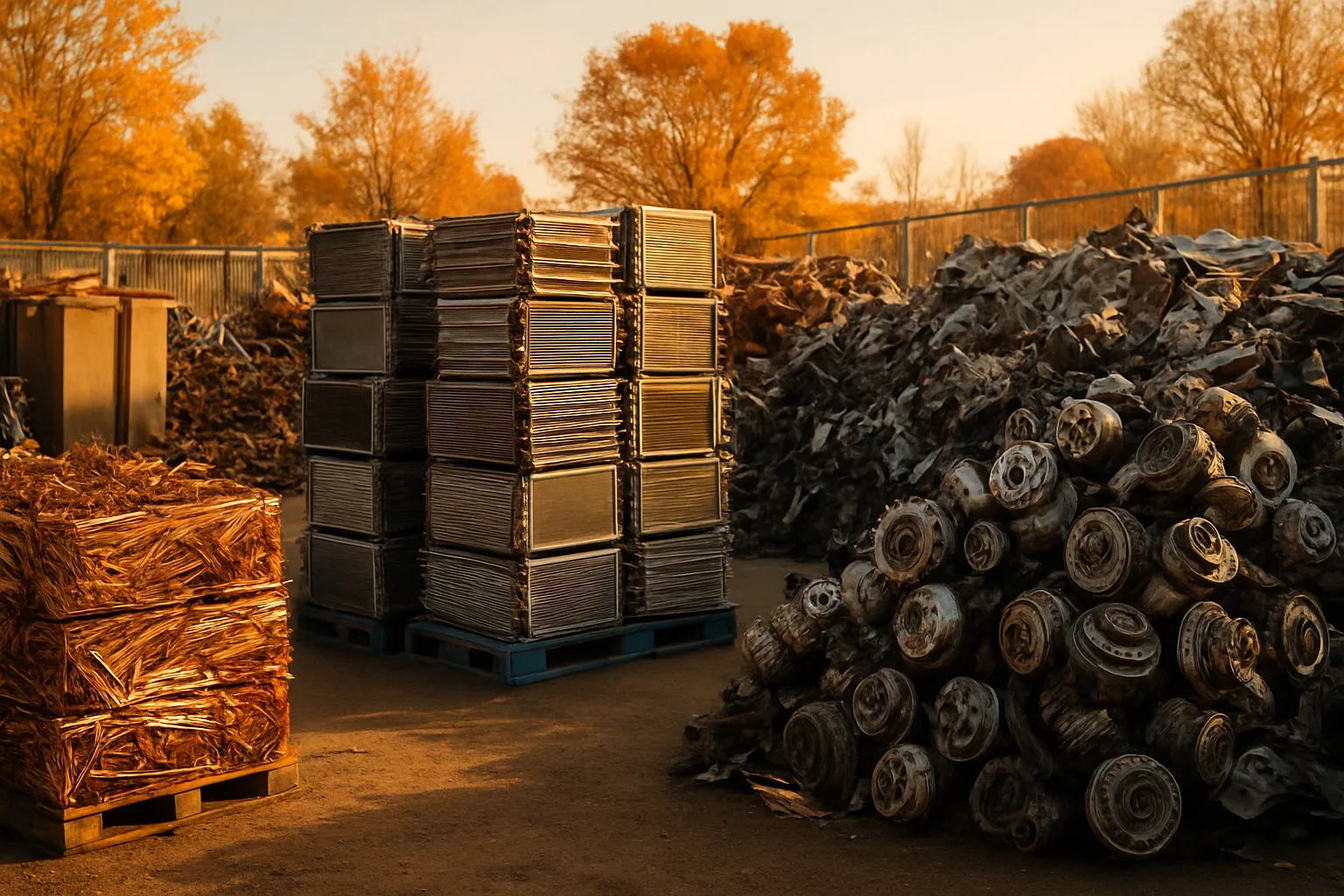
Most people know that old cars get crushed and recycled. Fewer people know exactly what happens to the parts inside — and how much money those parts can put back in your pocket. If you're sitting on a pile of used radiators, alternators, or other auto components in Brampton, you may be leaving real cash on the table.
Auto parts are dense with recoverable metals. Radiators carry copper and aluminum. Alternators hold copper windings. Starters, AC compressors, and power steering pumps all contain valuable non-ferrous metals that scrap yards and buyers actively want. Understanding how these parts get recycled — and how scrap metal prices Brampton are set — helps you sell smarter, not just faster.
Why Auto Parts Are Worth More Than You Think
A single copper-brass radiator from a commercial truck can weigh 10 to 20 pounds. At current non-ferrous rates, that's meaningful money for one part. Multiply that across a full teardown — alternators, starters, wiring harnesses, AC condensers — and you're looking at a load worth real attention. The problem is most people don't know what they have, or they sell it all as mixed scrap when it should be sorted by material.
Auto parts recycling works because the metals inside are exactly what manufacturers need. Copper windings from alternators get melted down and reused in new electrical components. Aluminum from radiator end tanks feeds into casting operations. Steel from brackets and housings goes into the basic steel stream. Each material has a different value — which is why sorting matters before you sell.
- Copper-brass radiators: Higher value than aluminum-only units. Look for older vehicles and heavy equipment.
- Aluminum radiators: Common in most post-2000 vehicles. Lighter but still valuable in volume.
- Alternators and starters: Contain copper windings and steel casings. Often sold whole or broken down.
- Wiring harnesses: Pure copper wire inside plastic insulation. Stripping increases value significantly.
- AC compressors: Aluminum bodies with copper components inside.
If you run an auto salvage operation, a mechanic shop, or you're parting out a fleet in Ontario, sorting these categories before you call a buyer puts you in a much stronger position at the scale.
How Radiators Are Recycled for Metal — Step by Step
Radiators go through a straightforward but precise recycling process. It starts with inspection and sorting. A copper-brass radiator looks different from an aluminum one — the core fins and tank material are the giveaway. Buyers and processors sort these because they have different melt points and end uses.
Once sorted, radiators get shredded or baled depending on the facility. Copper-brass radiators typically get chopped and processed separately to preserve the copper value. Aluminum units often go into a shredder with other aluminum auto scrap. From there, the material moves to a smelter where it's melted, refined, and cast into ingots or billets ready for manufacturing.
One key step that affects your payout: draining fluids. Many scrap yards in Brampton and across Ontario require that radiators be drained before acceptance. Coolant is considered a hazardous material. A radiator full of antifreeze may get docked in price or rejected outright. Drain it, document it, and you'll have a smoother transaction.
Copper Scrap Price Today: What Drives the Number You Actually See
The copper scrap price today at your local yard in Brampton isn't random. It follows a logic tied to global commodity markets, local demand, and the quality of what you're bringing in. Copper trades on exchanges like the COMEX and LME. Those spot prices filter down through processors and regional buyers, who apply their own margin based on processing costs, transportation, and current inventory.
What this means practically: the copper price you see quoted online is rarely the price you get at the yard. You're getting the processed end value minus the buyer's cost to deal with it. That's normal. What's not normal is getting a price that's wildly below market because you had no competing offers.
This is exactly where a scrap metal auction platform like SMASH changes the equation. Instead of calling one buyer and taking whatever they offer, you put your load in front of vetted buyers who compete. Competition creates price discovery. It doesn't guarantee a number — no platform can do that — but it does mean you're not leaving money on the table because you only had one offer to compare.
For current rates on copper, aluminum, and other non-ferrous metals in Canada, sell your scrap metal at fair Canadian prices and get a real-time picture of what your material is worth in today's market.
Scrap Metal Recycling Ontario: What Auto Shops and Salvage Yards Need to Know
Ontario has specific regulations around auto recycling and scrap metal transactions. If you're a business — auto wreckers, fleet operators, mechanical shops — you're likely dealing with documentation requirements that go beyond what a walk-in residential seller faces. Bill of lading, vehicle identification, business registration, and in some cases environmental compliance for fluid handling all come into play.
For scrap metal recycling Ontario businesses, this documentation isn't just a legal formality. It's also a selling advantage. Buyers on platforms like SMASH can see photo documentation, serial tracking, and inventory details that give them confidence in what they're bidding on. A well-documented load of alternators is easier to price — and easier to sell — than a mystery pile described as "misc auto parts."
Here's a practical checklist for auto parts loads in Ontario:
- Identify and separate ferrous from non-ferrous material.
- Sort copper-brass radiators from aluminum radiators — don't mix them.
- Drain all fluids from radiators, AC compressors, and power steering components.
- Photograph everything, especially high-value items like full copper wiring harnesses.
- Record approximate weights per category before listing or calling a buyer.
- Keep records of vehicle sources if required under provincial regulations.
Businesses running volume through Brampton-area salvage operations benefit most from getting multiple buyer eyes on a load. Get competitive bids for your scrap in Canada instead of settling for a single offer from a buyer who knows you have no alternative.
Aluminium Scrap Value Per Kg: Why Sorting Still Wins
Aluminum is everywhere in modern vehicles — radiator tanks, intake manifolds, transmission housings, wheels, engine blocks. The aluminium scrap value per kg varies considerably depending on alloy grade and cleanliness. Cast aluminum (engine blocks, wheels) trades at a different rate than sheet aluminum or extruded profiles. Mixed aluminum commands the lowest price because processors have to sort it themselves — and they pass that cost back to you.
In Brampton, where auto wrecking and light manufacturing generate significant aluminum scrap volume, getting the grade right before you sell makes a measurable difference. A clean lot of aluminum radiator end tanks is worth more per kilogram than the same weight tossed in with steel-contaminated mixed auto scrap.
If you're not sure what grade your aluminum falls under, ask before you sell. A reputable buyer will tell you. One who won't is likely bundling your premium material into a lower-grade price and keeping the difference.
For anyone building a regular volume of auto scrap in Ontario, it pays to explore scrap metal selling guides that break down alloy grades, pricing tiers, and how to prepare loads that buyers actually want to bid on.
How SMASH Helps You Get a Fair Price on Auto Parts Scrap
The old way of selling a load of radiators and alternators: call the yard, get a number, decide if you want to take it or spend another hour making calls. Most people take the first number. That's not negotiating — that's just accepting whatever margin the buyer wants to hold onto.
SMASH works differently. You document your load — photos, weights, material categories — and put it in front of multiple vetted buyers at once. They bid. You see the offers. You choose. It's not magic, and it doesn't promise the highest price in the history of copper. What it does is create the conditions for actual price discovery instead of a one-sided conversation.
There are no subscription fees. SMASH only earns when you sell. That means the platform has a direct interest in helping you get a competitive number, not just in getting you to sign up.
For businesses in Brampton and across Ontario moving regular volumes of auto scrap, that alignment matters. You're not paying to list. You're not locked into a contract. You sell when you have material, and you get competitive bids from buyers who know exactly what they're looking at.
Ready to stop guessing what your scrap is worth? Get a fair price for your scrap today and find out what competitive bidding looks like for your next load.
Disclaimer: Scrap metal prices fluctuate daily based on commodity markets, grade, volume, and regional demand. Always check current rates before finalizing any sale.
Frequently Asked Questions
Q: What are current scrap metal prices in Brampton for radiators and alternators?
Prices change daily based on commodity markets. Copper-brass radiators and aluminum units each trade at different rates. Alternators are typically priced by the unit or by weight depending on the buyer. Check with local buyers or use a platform like SMASH to get competitive offers that reflect current market conditions in Brampton.
Q: Do I need to drain my radiator before selling it as scrap in Ontario?
Yes. Most scrap yards in Ontario — including Brampton — require radiators to be drained of coolant before acceptance. Antifreeze is a regulated material, and a full radiator may be refused or docked in price. Drain it before you go and you'll avoid delays at the yard.
Q: Should I sell my alternator whole or stripped for more money?
Whole alternators are accepted at most yards. However, if you can strip the copper windings from the steel casing, the copper alone typically fetches a higher price per kilogram than a whole unit priced as a mixed component. It depends on your time and volume — at scale, stripping makes sense.
Q: What is the copper scrap price today in Brampton?
Copper scrap prices in Brampton follow national and global commodity benchmarks but vary by buyer and grade. The price you see quoted online is a starting point — your actual payout depends on purity, volume, and who you're selling to. Getting multiple bids through a platform like SMASH helps you understand what the real market is offering.
Q: Can businesses in Ontario sell auto parts scrap through an auction platform?
Yes. Businesses — including auto wreckers, fleet operators, and salvage yards — regularly use auction-based platforms to sell larger volumes of auto scrap. SMASH is built for exactly this use case: documented loads, vetted buyers, competitive bidding, and no subscription fees. It's a practical alternative to relying on a single buyer relationship for every load.
If you're parting out vehicles, clearing a yard, or managing a steady stream of auto components in Brampton or anywhere in Ontario, there's a smarter way to sell. Document your material, know what you have, and put it in front of buyers who compete. Sell your scrap metal at fair Canadian prices — request a pickup at sell-scrapmetal.ca and see what your load is actually worth.
Stay current on scrap metal market trends and industry updates — follow SMASH on LinkedIn for regular insights on pricing, platform updates, and what's moving in the Canadian scrap market.