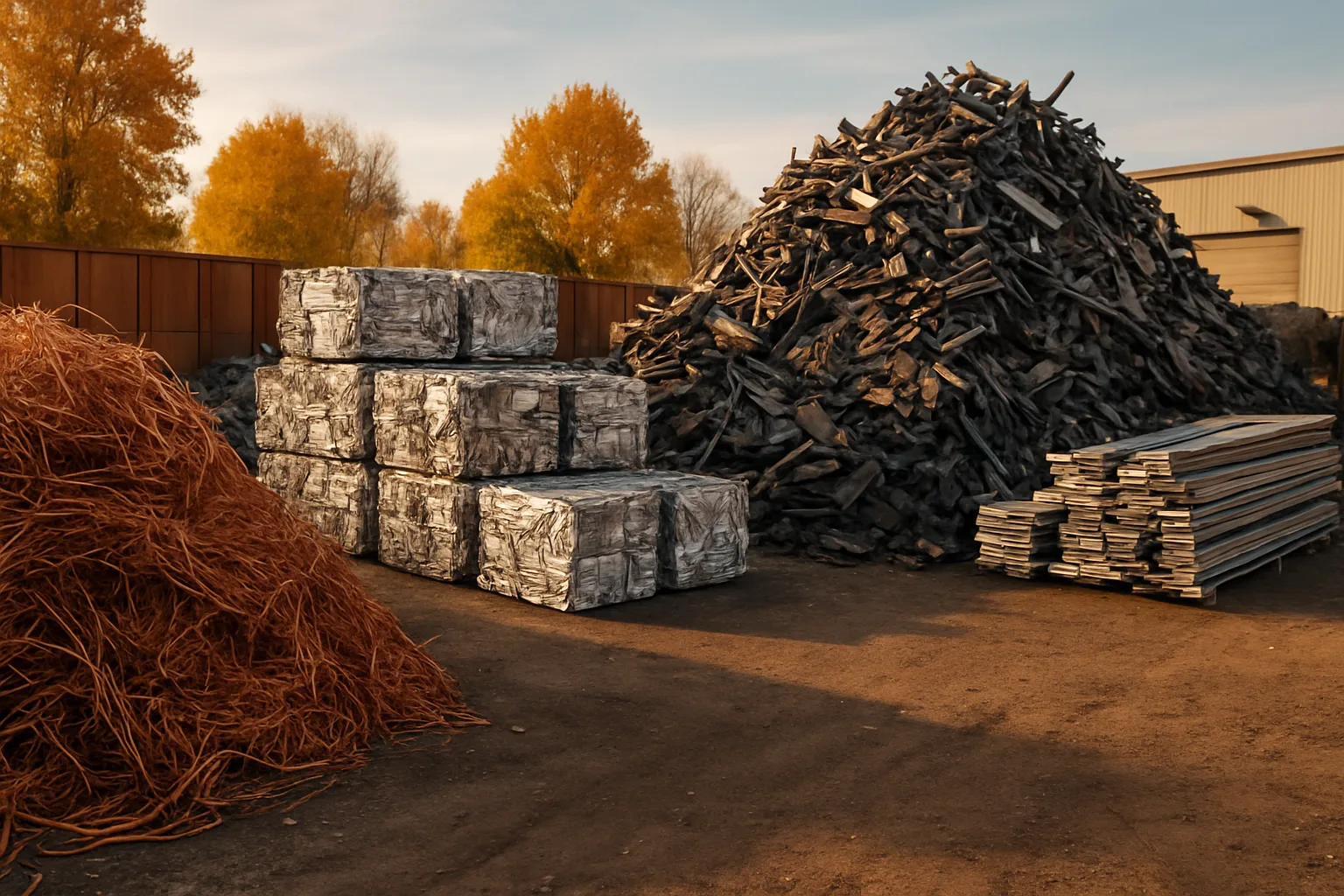
Most people have no idea what's sitting in their garage, shop, or backyard is worth real money. A single catalytic converter can fetch more than a full truckload of mixed steel. Knowing which metals pay — and why — is the difference between leaving cash on the table and getting a fair return for your time.
This week's market recap breaks down the most profitable scrap metals to collect right now, what's driving prices in 2026, and how sellers across British Columbia and beyond are getting better value by moving away from single-buyer deals. Whether you're a first-timer cleaning out a shop or a yard operator building inventory, this guide cuts through the noise.
If you've been searching for the aluminum scrap price today or trying to figure out where to start, here's your practical breakdown.
---Why Some Scrap Metals Pay Far More Than Others
Scrap metal isn't a flat market. Prices vary wildly based on metal type, grade, purity, and what global demand looks like on any given week. Steel and iron are the heaviest materials most people deal with, but they're also the lowest value per pound. Non-ferrous metals — copper, aluminum, brass, and stainless — sit in a different tier entirely.
What makes a metal profitable comes down to three things: scarcity, industrial demand, and how easy it is to recycle and reintroduce into the supply chain. Copper, for example, is critical for electrical infrastructure, EV manufacturing, and construction. That demand doesn't soften easily. Aluminum is lightweight, infinitely recyclable, and heavily used in automotive and packaging — global demand stays strong.
Understanding these fundamentals helps you prioritize what to collect, sort, and sell. It also helps you push back when a buyer low-balls you on a load without justification.
Copper: The Highest Value Scrap Metal Per Pound
Copper consistently ranks as one of the most valuable scrap metals on the market. Bare bright copper — the cleanest, uncoated copper wire — commands the highest price per pound. Copper pipe, tubing, and wire with insulation still attached are graded lower but remain well above the value of most other metals.
Common copper sources include:
- Electrical wire and cable (stripped or unstripped)
- Plumbing pipe from renovations or demolitions
- Electric motors and transformers
- Copper fittings and valves
- Heat exchangers and copper coils from HVAC equipment
In the current environment, EV production continues to drive copper demand upward. A single electric vehicle uses roughly three to four times more copper than a conventional gas-powered car. That industrial pull keeps copper prices elevated relative to most other metals. If you're sourcing copper regularly, platforms like SMASH connect you with vetted buyers who compete for your material — that competition is how you find out what your load is actually worth, not what one buyer decides to offer.
Keep your copper sorted by grade. Mixing clean copper with insulated wire or dirty material knocks you down a pricing tier fast. Clean = more money. That's straightforward.
Aluminum Scrap Price Today: What You Need to Know in 2026
Aluminum is the workhorse of non-ferrous scrap. It's not as high per pound as copper, but the volume you can accumulate makes it a serious revenue stream. If you're pulling aluminum from construction sites, automotive work, or manufacturing, you're sitting on consistent value.
The aluminum scrap price today varies depending on grade and form:
- Cast aluminum — engine blocks, transmission cases, wheels
- Sheet aluminum — siding, roofing, automotive body panels
- Extrusion aluminum — window frames, door frames, structural profiles
- Aluminum cans — clean UBC (used beverage cans) are easy to accumulate and easy to sell
- Wire and cable — aluminum electrical wire from older builds
Prices shift weekly based on LME (London Metal Exchange) movements and what's happening with North American manufacturing demand. Don't lock yourself into a single buyer's posted price as gospel. Getting competitive bids is the only real way to validate what the market will pay. For sellers in Langley and across British Columbia, this matters — regional buyers don't always reflect the full picture of what your aluminum is worth nationally.
Disclaimer: Aluminum scrap prices fluctuate daily based on commodity markets. Always check current rates before selling. The figures and grades referenced here are general guidance only.
If you're ready to sell your scrap metal at fair Canadian prices, don't guess at the market. Get real bids from real buyers.
Catalytic Converters: High Value, High Variation
Catalytic converters are the wildcard in scrap metal. A single cat can be worth more than a full pallet of mixed aluminum, depending on the make, model, and year it came from. The precious metals inside — platinum, palladium, and rhodium — are what drive that value. And those metals don't follow the same pricing patterns as copper or aluminum.
If you're pulling cats from vehicles in your yard or buying cores, you need a buyer who actually assays the material rather than quoting flat rates off a generic list. Flat-rate cat buying leaves money on the table. Period.
Key things to know when selling catalytic converters:
- VIN lookup and serial number tracking help identify the specific cat and its precious metal content
- Photo documentation protects both the seller and the buyer
- Aftermarket cats are worth significantly less than OEM units
- Foil-type and bead-type cats price differently than ceramic substrate units
smashrecycling.ca supports serial tracking and photo documentation on catalytic converter lots — that transparency is what gets you accurate bids instead of lowball guesses. When buyers can see exactly what they're bidding on, they bid accordingly.
Brass, Stainless, and Other Non-Ferrous Metals Worth Sorting
Beyond the big three — copper, aluminum, cats — there are several other non-ferrous metals that pay well when properly sorted.
Brass is common in plumbing fixtures, valves, fittings, and shell casings. It's a copper-zinc alloy and prices accordingly — lower than clean copper but well above ferrous material. Mixed brass and yellow brass are the two most common grades. Keep them separate if you want the best return.
Stainless steel sits above carbon steel but well below copper and brass. What makes it worth sorting is volume. Commercial kitchen equipment, food processing gear, and industrial tanks produce stainless in bulk. If you're pulling these, separate them from regular steel — you'll see a meaningful bump per pound.
Lead comes up in old construction (pipe and sheet), roofing flashings, weights, and batteries. It's heavy, easy to identify, and consistently priced. Lead-acid batteries are one of the most recycled products in North America.
Insulated copper wire — even with the jacket still on — is worth more than you might expect if you're not set up to strip it. Many buyers will accept insulated wire at a lower percentage of bare bright value. Know your yield before you spend time stripping low-gauge wire.
Sellers in Langley dealing with mixed loads benefit most from getting multiple bids. Best scrap metal prices in British Columbia aren't found by calling one yard — they're found through competition. That's exactly what a platform-based auction approach gives you.
How to Maximize What You Get for Your Scrap in 2026
The sellers who get the best returns aren't necessarily the ones with the biggest loads. They're the ones who sort, document, and sell competitively. Here's what that looks like in practice:
- Sort by metal type and grade. Don't mix copper grades. Don't throw stainless in with steel. Segregation at the source means better pricing at the sale.
- Document your loads. Photos, weights, BOLs, and packing lists give buyers confidence and reduce disputes. Confidence leads to stronger bids.
- Get multiple bids. One buyer, one price, no information. Multiple buyers competing means you find the market rate instead of one company's margin.
- Know your volumes and frequency. If you're selling consistently, buyers will want your business. That's leverage — use it.
- Use platforms built for scrap. SMASH handles the buyer network, the auction format, the invoicing, and the documentation in one place. That saves time and removes friction on every deal.
Whether you're selling a load of aluminum extrusion out of Langley or sourcing catalytic converters from across British Columbia, the process should be the same: document well, compete bids, and close clean. You can get a fair price for your scrap today without chasing down buyers one by one.
If you want to go deeper on any of these materials, explore scrap metal selling guides for more detail on specific metals, grades, and how pricing works across different categories.
The old way — one phone call, one number, take it or leave it — doesn't work anymore. More buyers mean better price discovery. That's not a theory. That's just how markets work.
Ready to find out what your scrap is actually worth? Sell your scrap metal at fair Canadian prices — request a pickup at sell-scrapmetal.ca.
---Frequently Asked Questions
Q: What is the aluminum scrap price today in Canada?
Aluminum scrap prices in Canada fluctuate based on daily LME commodity movements and regional demand. Prices vary significantly by grade — cast aluminum, sheet, extrusion, and UBC cans all price differently. Always get current bids from vetted buyers rather than relying on posted prices, which may not reflect what the market will actually pay for your specific material.
Q: Where can I find the best scrap metal prices in Langley, BC?
Getting the best scrap metal prices in Langley means getting more than one offer. Local yard prices are a starting point, not an endpoint. Platforms that connect sellers with multiple vetted buyers — like SMASH — allow competition to determine the real market price rather than a single buyer's margin. Sort your metal by grade before approaching any buyer.
Q: Can I sell scrap metal online in Canada?
Yes. Selling scrap metal online through auction-based platforms is increasingly common for both individual sellers and commercial recyclers. The key is working with platforms that vet buyers, handle documentation (BOLs, packing lists, photo records), and provide transparent auction pricing. SMASH is built specifically for this — connecting scrap sellers with competitive buyers across North America.
Q: What types of scrap metal are most profitable to collect?
In 2026, the highest-value scrap metals per pound are generally copper, catalytic converters (for their platinum group metals), and brass. Aluminum is lower per pound but makes up for it in volume and availability. Stainless steel, lead, and insulated wire also contribute meaningfully to overall returns when properly sorted and sold competitively.
Q: How do I find scrap metal pickup near me in British Columbia?
Search for licensed scrap buyers and recyclers in your area, or use a platform that includes pickup coordination as part of the service. In British Columbia, sellers in Langley and surrounding areas have access to regional buyers through platforms like SMASH, which also ensures your material is picked up, documented, and paid out properly — no chasing invoices.
---Stay current on scrap metal market trends and industry insights by following SMASH on LinkedIn: linkedin.com/company/scrap-metal-auction-sales-hub.