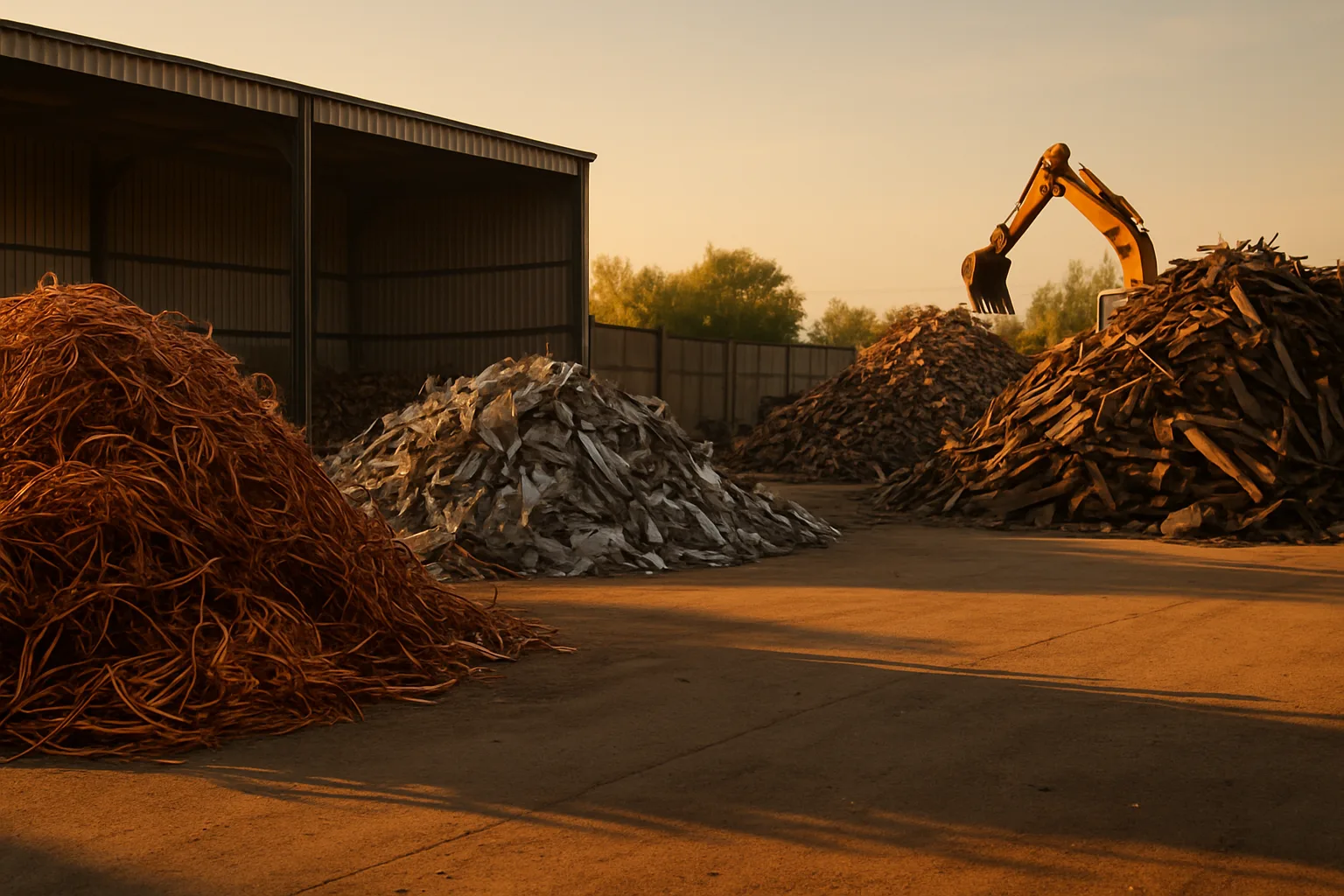
Why Copper Scrap Prices in Hamilton Change Before Your Coffee Gets Cold
Yesterday's price is already yesterday's price. If you're sitting on a load of copper and you priced it out last Tuesday, you may as well have used a Magic 8-Ball. Copper scrap prices in Hamilton — and across Ontario — shift daily, sometimes hourly, driven by forces most yard sellers never see coming. Understanding what's moving the market isn't just interesting. It's money.
This guide breaks down how scrap metal prices actually work, what drives daily fluctuations, and how sellers in Hamilton can stop guessing and start getting paid what their material is worth.
What Actually Drives Copper Scrap Prices Day to Day
Copper doesn't set its own price. The London Metal Exchange (LME) and COMEX futures markets do. Every morning, traders in London and New York are buying and selling copper contracts based on global supply projections, demand signals from manufacturing, and macroeconomic data. By the time a yard in Hamilton opens its gates, that benchmark has already moved.
Here's what's actively pushing the number up or down on any given day in 2026:
- LME and COMEX spot prices — The global benchmark. Yards apply a regional spread on top of this, but the direction they move almost always follows the exchange.
- USD/CAD exchange rate — Copper trades in U.S. dollars globally. When the Canadian dollar weakens, CAD-denominated scrap prices can rise even if the commodity price holds flat. The reverse is also true.
- Freight and logistics costs — Getting loads from Southern Ontario to smelters or export terminals costs real money. When diesel spikes or rail rates climb, that margin comes out of someone's price.
- Chinese manufacturing demand — China consumes roughly half the world's copper. When their factory output contracts or expands, the ripple hits Hamilton within 48 hours.
- Local inventory pressure — If yards in the Hamilton and broader Ontario market are sitting on excess copper, they have less urgency to pay top dollar. If they're short, competition for your load goes up.
None of this means you need to become a commodities trader. But it does mean that calling one buyer and taking whatever number they offer — without understanding whether that number reflects today's market or last week's — is leaving real CAD on the table.
Scrap Metal Prices in Hamilton: What Sellers Are Actually Working With
Hamilton has a legitimate industrial scrap ecosystem. Between the steel corridor along the waterfront, automotive supply chains feeding into the broader Ontario manufacturing belt, and decades of residential and commercial demolition activity, there's a consistent flow of non-ferrous and ferrous material moving through the region. That volume creates a real local market — but it also creates local pricing dynamics that don't always match what you'll see quoted on a national aggregate site.
Copper grades matter a lot here. #1 bare bright copper consistently commands the highest price. #2 copper — wire with insulation, mixed copper pipe, fittings — trades at a discount. Copper breakage, motors with copper windings, and low-grade mixed material all price differently again. When you're trying to understand scrap metal prices in Hamilton, make sure you know exactly what grade you have before you walk in or book a pickup.
The same logic applies across other metals:
- Aluminum — Sheet, cast, extrusion, and dirty aluminum all have separate price tiers. Extrusion typically trades at a premium over mixed aluminum.
- Steel and iron — Ferrous scrap prices are lower per pound but volume is everything. Large steel loads move market pricing in a way that a few pounds of mixed iron doesn't.
- Catalytic converters — Cats don't trade on a simple per-pound basis. PGM (platinum group metal) content drives value. A catalytic converter buyer using VIN lookup and serial tracking is giving you a more accurate number than one quoting blind.
- Stainless steel — Nickel content drives the price. Grade matters more than weight here.
If you want Hamilton scrap metal services that actually reflect what your specific material grades are worth today — not a blended average — you need price discovery, not just a price quote.
The Problem With the One-Call Method
Most sellers in Canada still do this: call one yard, get a number, load the truck, drive over. That's not a strategy. That's a guess. And the person giving you that number knows the market better than you do — which means the spread between their offer and actual market value almost always favors them, not you.
This isn't an accusation. It's just how information asymmetry works. When one buyer controls the price conversation, there's no competitive pressure on them to offer more. Why would they? You've already committed to the call.
The fix is straightforward: more buyers, more competition, better price discovery. Platforms like compare scrap metal bids from Canadian buyers exist precisely because the single-call model is broken. When vetted buyers are bidding on your documented load — with real photos, accurate weights, proper packing lists — the market tells you what your scrap is worth. Not one yard's margin target.
That's how SMASH works. You document your inventory, vetted buyers bid competitively, and you see where the market actually sits on that day, for your specific material, in your region. No subscription fees. No guessing.
Scrap Metal Inventory Management: Why Documentation Changes Your Payout
Here's something sellers don't talk about enough: a well-documented load gets better bids. Full stop. When a buyer can see clear photos, verified weights, proper material separation, and accurate grade descriptions, they don't have to build in a risk discount. That discount — the buffer a buyer adds when they're uncertain about what they're getting — comes directly out of your price.
Strong scrap metal inventory management isn't just about staying organized. It's a pricing tool. Consider what documentation does for a buyer evaluating your load remotely:
- Photos reduce grade uncertainty. A buyer can see whether that copper wire is bare bright or contaminated.
- Weight documentation prevents disputes at the scale.
- BOLs and packing lists accelerate settlement and reduce back-and-forth after the load ships.
- Serial tracking on cats confirms identity and helps match PGM data to the correct unit — critical for catalytic converter buyers operating in a market where misidentification is common.
SMASH's inventory tool is built for exactly this workflow. Whether you're selling copper from a demolition job in Hamilton or moving a pallet of mixed cats from an Ontario automotive shop, documentation is the difference between a confident bid and a discounted one. If you want to sell your scrap metal at fair Canadian prices, start with a load that buyers can confidently evaluate.
How to Track Scrap Metal Prices and Time Your Sales Smarter
You don't need a Bloomberg terminal. But a few habits will help you sell when the market is moving in your favor instead of against it.
Watch the LME copper price daily. Free sources publish this every morning. When copper is trending up over a 3-5 day window, yards in Canada tend to follow with slight lag. Selling into a rising market — even by a day or two — can meaningfully improve your return on a large load.
Monitor the CAD/USD rate. A Canadian dollar trading lower against the U.S. dollar generally pushes CAD-denominated scrap prices higher. When the loonie drops, your copper is worth more in local currency even if global prices hold steady.
Build relationships with multiple buyers. This isn't about playing games. It's about having legitimate market reference points. Knowing what two or three buyers are paying gives you context that a single call never will. This is especially useful for sellers moving regular volume — automotive recyclers, demolition crews, larger commercial operations across Ontario.
Don't stockpile speculatively unless you can manage the risk. Holding copper and waiting for a price run sounds smart until the market drops 8% in a week. Unless you have real insight into the forward market, selling consistently and capturing fair prices beats timing the market poorly.
For sellers looking to get a fair price for your scrap today without trying to predict commodity markets, the smarter play is competitive price discovery — let buyers compete on your documented load and let the market reveal the number.
Selling Scrap in Hamilton and Beyond: Making the Right Call
Whether you're a one-time seller cleaning out a property in Hamilton or a commercial recycler moving loads across Ontario every week, the fundamentals are the same. Know your grades. Document your material. Get more than one price. And don't assume that the first number you hear is the market.
SMASH puts vetted buyers in competition for your loads — no subscription fees, auto-invoicing, full documentation tools, and transparent pricing. The platform works for copper, aluminum, catalytic converters, and mixed non-ferrous loads. If you want to explore scrap metal selling guides and understand how to maximize what you're getting paid, the information is there.
Scrap metal prices today aren't a mystery. They're a function of global markets, local competition, and how well your load is presented to buyers. Take control of two of those three variables, and you're already ahead of most sellers in the market.
Ready to stop guessing? Sell your scrap metal at fair Canadian prices — request a pickup at sell-scrapmetal.ca and find out what your material is actually worth today.
Disclaimer: All scrap metal prices fluctuate daily based on commodity markets, exchange rates, and local conditions. Always verify current rates before selling.
Frequently Asked Questions
Q: How often do copper scrap prices in Hamilton change?
Copper prices can shift daily — sometimes multiple times in a single day — based on LME and COMEX trading, currency movements, and regional supply conditions. Always get a same-day quote before committing to a sale, especially on larger loads.
Q: What's the difference between #1 and #2 copper scrap?
#1 bare bright copper is clean, uncoated, unalloyed wire or bus bar — it commands the highest price per pound. #2 copper includes wire with insulation, mixed copper pipe, and fittings with minor contamination. The price gap between grades can be significant, so sorting before you sell is worth the time.
Q: How do I find the best scrap metal prices near me in Hamilton?
The most reliable method is getting competitive bids from multiple vetted buyers on the same documented load. A platform like SMASH puts buyers in competition for your material, which gives you real price discovery instead of a single yard's offer. Single calls rarely reveal the actual market rate.
Q: Does scrap metal inventory management really affect my payout?
Yes — significantly. Buyers discount loads that are poorly documented, mixed, or photographed unclearly because they have to price in uncertainty. A well-documented load with accurate weights, clear photos, and proper grade separation consistently attracts stronger bids.
Q: Can I sell catalytic converters the same way as copper or aluminum?
Cats require a different approach. Their value is based on PGM content, not weight alone, so a catalytic converter buyer using serial tracking and VIN lookup will give you a more accurate number than one quoting a flat rate per unit. Misidentification is common — proper documentation protects you.
Follow SMASH on LinkedIn for industry updates, scrap metal market insights, and tips on getting the most from your loads across Canada.