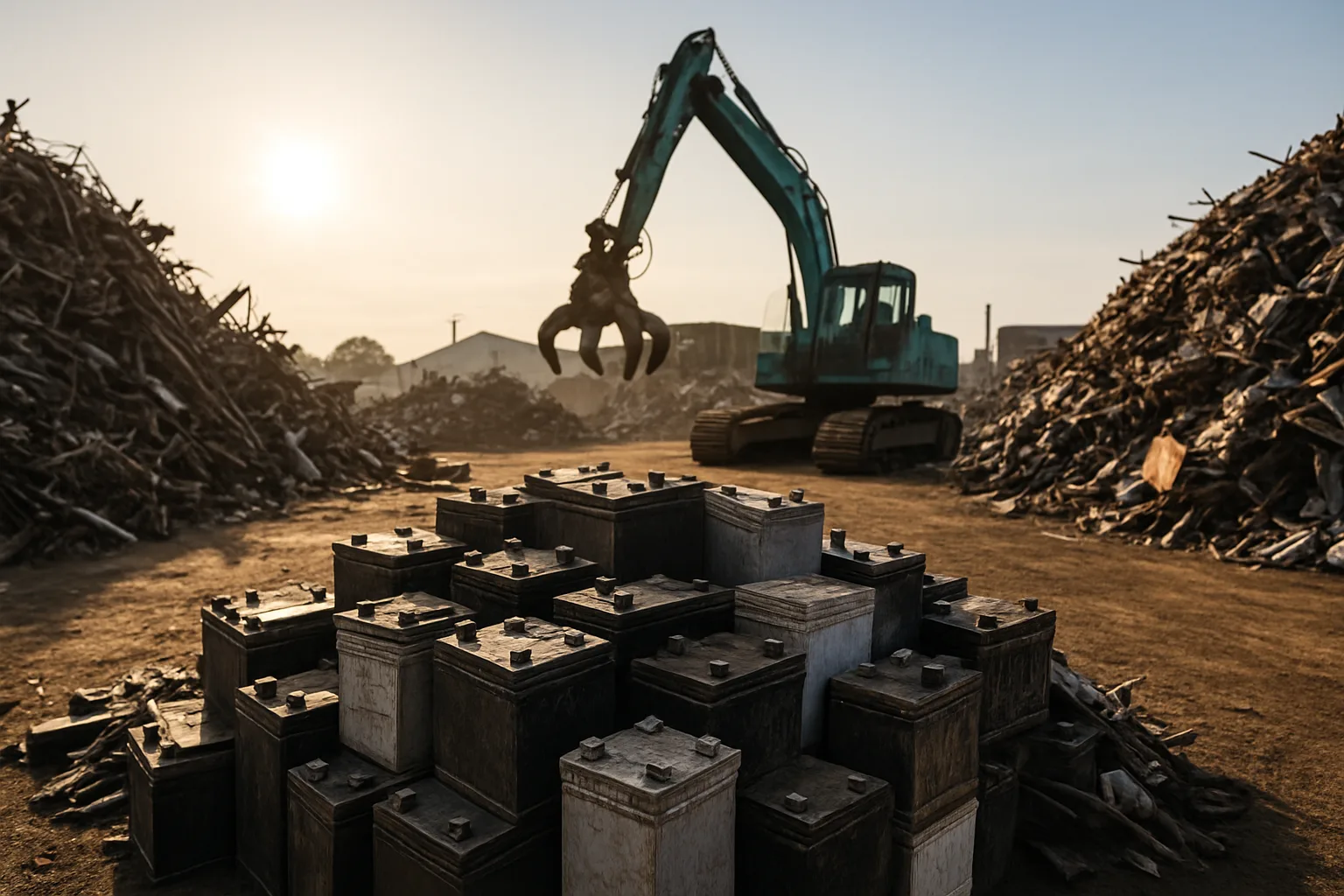
Most people don't realize the old car battery sitting in their garage is worth real money. Lead-acid batteries are one of the most recycled products on the planet — and in 2026, lead scrap remains a consistently valuable commodity across Canadian recycling markets. If you've got dead batteries piling up, you're leaving cash on the table.
This week's market recap breaks down what's driving lead scrap value right now, what your batteries are actually worth, and how scrap metal recycling Lethbridge sellers can get a fair price — without guessing or settling for whatever one buyer offers.
Why Lead-Acid Batteries Are Scrap Gold
Lead-acid batteries are found everywhere — cars, trucks, forklifts, UPS systems, solar storage setups, and marine equipment. A standard 12-volt automotive battery weighs between 18 and 25 kilograms. Most of that weight is lead — and lead is dense, recoverable, and recyclable at extremely high rates.
The recycling rate for lead-acid batteries in North America consistently sits above 95%. That's not an accident. Lead is expensive to mine, and recycled lead performs just as well as primary lead in most applications. Battery manufacturers need it. Smelters buy it. The demand doesn't disappear.
For sellers, this matters because lead scrap isn't speculative. It's a material with a stable, well-documented market. When copper prices swing hard, lead tends to hold steadier. That makes batteries a reliable part of your scrap portfolio — whether you're a yard operator or an individual bringing in a truck load.
What Drives Lead Scrap Prices in 2026
Lead prices are influenced by global commodity markets, energy transition demand, and domestic recycling capacity. In 2026, a few forces are worth tracking closely:
- Battery storage demand: Grid-scale and residential energy storage continues to expand. Lead-acid remains competitive with lithium in certain industrial backup applications, keeping demand for recycled lead active.
- EV market shifts: While lithium batteries dominate EVs, the broader automotive fleet still relies heavily on lead-acid for starting, lighting, and ignition systems. Replacement cycles keep the supply of used batteries flowing.
- Smelter capacity: Lead recycling depends on secondary smelters. When smelter capacity tightens — due to maintenance cycles or environmental compliance shutdowns — prices at the yard level can shift. Pay attention to regional smelter activity if you're moving volume.
- Freight and logistics costs: Batteries are heavy. Transportation costs affect what buyers can pay at the gate, particularly for sellers in markets like Lethbridge where haul distances to major smelters are longer.
Prices fluctuate week to week. Always check current rates before you sell — what held last month may not hold today. Disclaimer: Lead scrap prices vary by region, battery condition, and market timing. The figures above are general context only, not current market quotes.
Scrap Metal Recycling Lethbridge: What Local Sellers Should Know
Lethbridge sits in southern Alberta — and that geography matters when you're selling heavy materials like lead batteries. You're not in Vancouver or Calgary with a dozen yards competing for your load. That means the buyer pool is smaller, and without competition, you're more likely to accept whatever price a single buyer offers.
That's the old way. One call. One price. No leverage.
Platforms like smashrecycling.ca exist specifically to fix that problem. Instead of calling one buyer and hoping for a fair number, you put your load in front of vetted buyers across the region. Competition does the work. More buyers means better price discovery — and that matters even more when you're in a market like Lethbridge where local options are limited.
If you're running a yard or managing a commercial fleet in southern Alberta, your lead battery volume adds up fast. Don't let geography limit your return. Sell your scrap metal at fair Canadian prices by using platforms that expand your buyer reach beyond your immediate market.
You can also explore Lethbridge scrap metal services to understand what pickup and valuation options are available in your area.
How to Prepare Lead-Acid Batteries for Sale
Getting the best price for your batteries starts before you drop them off or schedule a pickup. Here's what actually matters:
- Keep them intact: Cracked cases, broken terminals, or leaking batteries are harder to process and may attract lower prices. Store batteries upright and avoid stacking in ways that cause damage.
- Know your type: Automotive, industrial (forklift), AGM, and gel batteries may be priced differently. Forklift batteries are significantly heavier and can represent substantial value on their own.
- Document your load: If you're moving commercial volume, a simple count and weight estimate makes the transaction faster and gives buyers confidence. Photo documentation helps when selling remotely.
- Separate from other materials: Don't mix batteries with non-ferrous metal loads unless you've confirmed the yard handles both. Mixed loads sometimes result in flat rates that undervalue components.
- Check for acid leaks: Leaking batteries may be subject to handling restrictions. Some yards charge a fee or refuse them outright. Know your load before you haul it.
The more organized your load, the faster and cleaner the transaction. Buyers who can verify what they're buying are more likely to bid competitively. That's true whether you're selling batteries in Lethbridge or shipping a pallet of cores across Alberta.
Lead Scrap vs. Other Non-Ferrous Metals: How Does It Stack Up?
Lead doesn't get the attention that copper does — and that's fair. Copper scrap prices Lethbridge sellers track carefully because the margins are higher per kilogram. But lead makes up for its lower unit price with sheer weight and volume. A single forklift battery can weigh 500 to 1,000 kilograms. That's a meaningful load even at modest per-kilogram rates.
For context, here's how lead-acid batteries generally compare to other common scrap categories:
- Copper: Highest value per kilogram. Wire, pipe, and clean copper command premium prices. Worth segregating carefully from mixed loads.
- Aluminum: Mid-range value. Rims, extrusions, and sheet aluminum are common in Alberta vehicle and construction scrap.
- Catalytic converters: Volatile pricing tied to platinum group metals (PGMs). High value but requires documented serial tracking to sell through legitimate channels. SMASH's platform handles serial tracking and photo documentation — important if you want to sell catalytic converters online through a vetted process.
- Lead (batteries): Lower per-kilogram value than copper, but reliable demand and high recyclability. Volume is your friend here.
- Steel and ferrous: Lowest per-kilogram value, but high volume makes it worth moving. Don't leave structural steel or appliances sitting if you have a load ready.
The smart play is to know what you have, separate it properly, and sell each category through channels that give you real price discovery. Dumping everything in one pile and taking a flat rate is the fastest way to leave money behind.
If you want to understand how best scrap metal prices Alberta sellers are achieving better returns, it comes down to preparation, documentation, and competition. Every time. Explore scrap metal selling guides for more category-specific breakdowns.
The SMASH Advantage for Battery and Scrap Sellers
SMASH is built for exactly this situation — sellers who have real material and no way to know if they're getting a fair price. The platform connects you with vetted buyers, runs a competitive auction process, and handles auto-invoicing so you're not chasing paperwork after the sale.
For lead-acid battery sellers, the key features are simple but powerful:
- Vetted buyers: You're not selling to whoever shows up. Buyers on SMASH are pre-qualified, which matters when you're moving regulated materials like batteries.
- Auction format: Buyers compete. That competition reveals the actual market — not just what one local yard decides to offer on a Tuesday afternoon.
- Photo documentation and inventory tools: List your batteries with photos and load details. Buyers have the information they need to bid confidently, which drives better results for you.
- No subscription fees: SMASH only wins when you win. There's no monthly fee to access the platform — the model is aligned with your outcome, not against it.
Whether you're a commercial fleet operation in Lethbridge clearing out end-of-life batteries, or an individual with a truck bed full of cores, SMASH gives you access to a buyer network that single-source selling never will. Get a fair price for your scrap today — don't settle for the first number someone throws at you.
If you're ready to move your material, reach out directly to jeff@smashscrap.com. For general questions about how the platform works, info@smashscrap.ca is your starting point.
The scrap sitting in your yard or garage has real value. The only question is whether you capture it or leave it on the table. Alberta sellers who build a habit of documenting loads, separating materials, and selling through competitive channels consistently do better than those who don't. Start there.
Frequently Asked Questions
Q: How much are lead-acid batteries worth at a scrap yard in Lethbridge?
Lead-acid battery prices vary based on current commodity markets, battery type, and local yard rates. Automotive batteries and industrial forklift batteries are priced differently — forklift batteries carry significantly more weight and value. Always check current rates before bringing in a load, as prices shift week to week.
Q: Can I sell scrap batteries directly online without going to a yard in Lethbridge?
Yes. Platforms like SMASH allow sellers to list loads with photos and documentation, then receive bids from vetted buyers across the region. This is especially useful for Lethbridge sellers who want to access a broader buyer pool beyond local options. Contact jeff@smashscrap.com to get started.
Q: Are lead-acid batteries considered hazardous when scrapping in Alberta?
Lead-acid batteries contain sulfuric acid and lead — both regulated materials. Intact batteries with no leaks are generally accepted at licensed recycling facilities across Alberta. Leaking batteries may require special handling. Always confirm with your yard or platform before transporting damaged units.
Q: What other scrap metals should I bring in alongside my batteries to maximize my trip?
Copper wire, aluminum rims, catalytic converters, and clean steel are all worth separating before your drop-off or pickup. Mixed loads often result in lower flat rates. Sorting your material — even roughly — gives buyers clarity and typically improves your return on every category.
Q: Does scrap metal recycling in Lethbridge include pickup services for large loads?
Yes. For commercial volume — such as multiple pallets of batteries or a mixed non-ferrous load — pickup options are available through platforms and service providers that serve southern Alberta. Use the Lethbridge scrap metal services page to see what's available in your area, or reach out to jeff@smashscrap.com for volume inquiries.
If you've got lead-acid batteries, mixed non-ferrous material, or any other scrap sitting idle, now is a reasonable time to move it. Markets are active, buyers are engaged, and the process is simpler than most people expect. Sell your scrap metal at fair Canadian prices — request a pickup at sell-scrapmetal.ca and stop leaving value on the floor.
Follow SMASH on LinkedIn for weekly scrap metal market insights, industry updates, and tips on getting better prices for your loads across Canada.
```