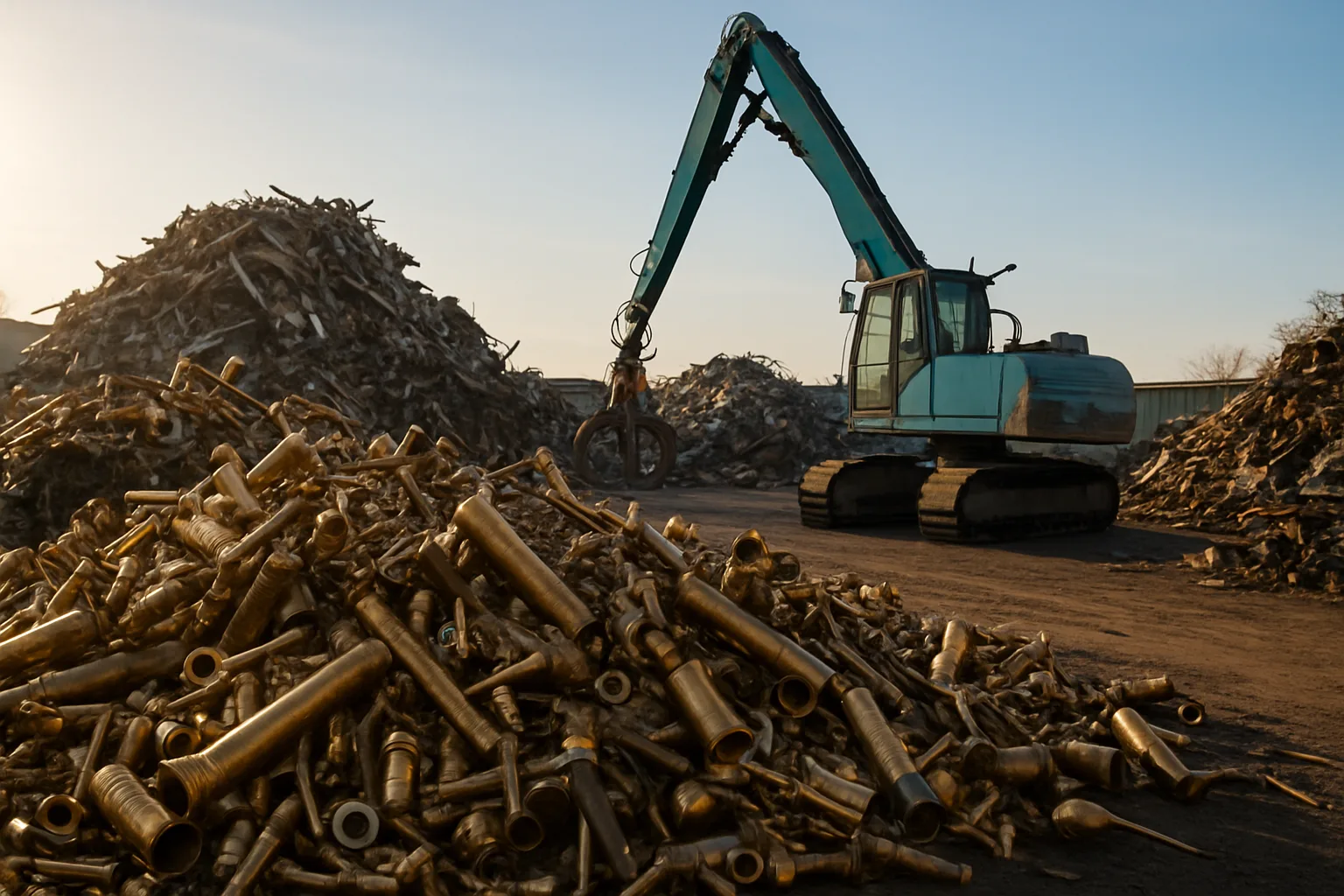
Most people chasing the steel scrap price today walk right past the real money sitting in their shop. Brass fittings. Bronze bearings. Old valves and gauges. These non-ferrous metals quietly outprice steel by a significant margin — and most sellers don't even know what they're looking at.
If you've got mixed metal on your property, in a renovation pile, or sitting in an old industrial bin, this guide is for you. We'll break down what brass and bronze are actually worth, where to find them, and how platforms like SMASH Recycling — where verified buyers bid on your metal help you stop guessing and start getting paid what your material is actually worth.
What Are Brass and Bronze — and Why Does It Matter at the Scale?
Brass and bronze get lumped together constantly. They look similar. They feel similar. But at the scale, they're priced differently, and mixing them up costs you money.
Brass is an alloy of copper and zinc. You'll find it in plumbing fittings, valves, taps, electrical components, and decorative hardware. It has a warm yellow tone and is one of the more common non-ferrous metals showing up in renovation and demolition scrap.
Bronze is copper and tin — sometimes with other elements like aluminum or phosphorus. It tends to look darker and more reddish than brass. You'll find it in bushings, bearings, marine hardware, pump components, and old industrial equipment. Both are worth significantly more per pound than steel scrap, which is why sorting matters.
A quick scratch test helps. Brass tends to show a bright yellow scratch. Bronze shows a more muted, reddish-golden mark. When in doubt, ask your buyer to identify it before you accept a price.
Scrap Metal Prices Today — What Brass and Bronze Are Trading At
Here's the honest truth: scrap metal prices today change constantly. Copper markets move, demand shifts, and what a yard pays in Dartmouth this week might differ from what they paid last month. Anyone publishing a hard number and calling it current is guessing.
That said, you can understand the value hierarchy. Non-ferrous metals — brass, bronze, copper, aluminum — consistently outprice ferrous metals like steel and cast iron. In the non-ferrous tier, clean copper sits at the top. Brass and bronze follow, typically trading at a fraction of clean copper but still at a meaningful premium over aluminum and steel.
- Clean red brass (no solder, no attachments) trades higher than yellow brass
- Yellow brass (most plumbing fixtures, keys, hardware) is the most common grade you'll encounter
- Bronze (bushings, bearings, pump parts) often fetches a comparable or slightly higher rate than yellow brass depending on purity and buyer
- Mixed or dirty brass (attached to steel, rubber gaskets, plastic fittings) will be docked — clean your material before you sell
The spread between clean and dirty brass can be significant. Ten minutes of prep — knocking off steel fittings, pulling rubber gaskets, cutting out valves with attached iron — can meaningfully move your payout. Don't bring mixed loads and expect top dollar.
Disclaimer: Prices fluctuate based on commodity markets, grade, volume, and buyer. Always check current rates before selling. The information above reflects general market dynamics, not a guaranteed price quote.
Where to Find Brass and Bronze Scrap in Nova Scotia
You don't need to be an industrial recycler to accumulate meaningful quantities of brass and bronze. These metals show up in predictable places — you just need to know where to look.
Renovation and demolition sites are the most consistent source. Older homes, especially those built before the 1970s, are loaded with brass plumbing components — gate valves, ball valves, compression fittings, and shut-off valves. If you're gutting a kitchen or bathroom, pull every fitting before the dumpster arrives.
Industrial and mechanical teardowns produce bronze at volume. Pump housings, bronze sleeve bearings, bushings, and marine hardware are common in industrial settings across Nova Scotia — particularly around the Dartmouth waterfront and port-adjacent properties where marine and industrial equipment has been in use for decades.
Other reliable sources include:
- Old electrical panels and transformer components (brass bus bars, terminals)
- Abandoned HVAC equipment (brass valves, fittings)
- Farm equipment and old machinery (bronze bushings, brass grease fittings)
- Fire suppression systems and sprinkler heads (often solid brass)
- Estate cleanouts — old lamps, decorative hardware, musical instruments
- Auto wrecking and cores (some older vehicles have brass radiators — these are worth pulling)
In Dartmouth and across Nova Scotia, commercial demolition and renovation contractors often have more brass than they realize. If you're running a yard or buying from contractors, it pays to educate your suppliers on sorting — sorted non-ferrous is worth more to you and to them.
Why the Old Way of Selling Non-Ferrous Is Leaving Money Behind
Here's the problem most sellers run into. They've got a load of brass and bronze sorted and ready to go. They call one buyer — usually the closest yard — get a number, and take it or leave it. No competition. No data. Just one person's offer and a guess about whether it's fair.
That's how scrap has been sold for decades. One call. One number. Take it or walk away. The buyer knows the market. The seller usually doesn't.
That dynamic is exactly what a B2B scrap metal marketplace like SMASH is built to disrupt. When multiple vetted buyers compete for your load — whether it's a drum of yellow brass, a pallet of bronze bushings, or a mixed non-ferrous lot — you stop guessing what your material is worth. The market tells you. That's price discovery, not negotiation theater.
SMASH handles the documentation side too. Photo documentation, packing lists, weight verification — the tools that give buyers confidence and give you a paper trail. Confident buyers bid better. Better documentation means fewer disputes at the scale. If you want to sell your scrap metal at fair Canadian prices, having buyers compete for your material is a smarter starting point than a cold call to one yard.
How to Prepare Your Brass and Bronze for Sale — Grade It Right
Getting the best return on brass and bronze starts before you load the truck. Grade sorting and basic prep work are the difference between top-tier pricing and a "mixed metals" dock.
Here's how to approach it:
- Separate brass from bronze — They're graded and priced differently. Mixed loads get priced at the lower grade.
- Remove attachments — Steel nipples, iron fittings, rubber gaskets, and plastic pieces drop your grade to "dirty." Cut or knock them off.
- Sort by color and composition — Red brass (higher copper content) vs. yellow brass. Keep them separate for maximum return.
- Document what you have — Weight, photo, grade description. Buyers price with confidence when they know what they're bidding on.
- Know your quantities — Per-pound pricing means volume matters. Even a few hundred pounds of clean brass adds up fast at non-ferrous rates.
If you're unsure about grading, use SMASH's inventory tools to document and describe your load accurately. Vetted buyers on the platform know what they're looking at — accurate descriptions mean accurate bids, not conservative lowball offers to account for uncertainty.
Ready to get a fair price for your scrap today? Prep your material, document it properly, and let competitive bidding do the work.
The SMASH Advantage — Auction Format for Non-Ferrous Loads
The SMASH scrap metal auction model isn't complicated. You list your load. Vetted buyers compete. You see real bids, not one take-it-or-leave-it offer. That's it.
No subscription fees. SMASH only wins when you do. Auto-invoicing handles the paperwork. The buyer pool is verified — no tire kickers, no slow-pay operators, no surprises at pickup.
For brass and bronze specifically, the auction format matters more than it does for bulk steel. Why? Because non-ferrous pricing varies meaningfully between buyers depending on their downstream markets. One buyer might be short on clean brass this week and bid aggressively. Another might be overstocked. You'd never know from a single phone call. But when both are bidding on your load, you see it in the numbers.
Sellers in Nova Scotia, including those operating yards or accumulating scrap in Dartmouth, are increasingly moving toward documented, competitive selling because single-buyer pricing is a losing game when you know what your material is actually worth. To explore scrap metal selling guides and understand more about how to maximize your returns, the information is out there — but the model you use to sell matters as much as the prep work you put in.
Whether you're clearing out a Dartmouth workshop, breaking down industrial equipment in Nova Scotia, or running a yard that moves non-ferrous weekly — the old way of selling isn't your only option anymore.
If you're ready to stop leaving money on the table, sell your scrap metal at fair Canadian prices and let the market tell you what your load is worth.
Frequently Asked Questions
Q: How does the steel scrap price today compare to brass and bronze scrap prices?
Steel and iron are ferrous metals and trade at a fraction of what brass and bronze fetch per pound. Brass and bronze are non-ferrous, copper-based alloys — they sit in a significantly higher price tier. If you have a mixed load, sorting your non-ferrous from your steel before selling will always improve your overall return.
Q: What is the difference between yellow brass and red brass at the scrap yard?
Yellow brass has a higher zinc content and lower copper content than red brass. Red brass — also called semi-red or high-copper brass — contains more copper and typically fetches a higher price per pound. Most plumbing fixtures and hardware you'll encounter are yellow brass. If you're unsure, a yard or buyer on a platform like SMASH can help you identify your grade before pricing.
Q: Where can I sell brass and bronze scrap near Dartmouth, Nova Scotia?
You can sell locally to a scrap yard in or near Dartmouth, or use a B2B platform like SMASH to have vetted buyers bid competitively on your load. The advantage of the auction model is that you're not locked into one buyer's offer — competition across the buyer pool can help reveal the true market value of your material.
Q: How do I know if scrap metal prices today are fair?
The best way to check is to get multiple offers. Scrap metal prices fluctuate with global commodity markets, so a fair price today may differ from last week. Using a marketplace where buyers compete gives you a real-time picture of what your material is worth rather than relying on a single yard's posted rate.
Q: Do I need to clean or sort my brass before selling it?
Yes — and it pays off. Dirty brass (mixed with steel fittings, rubber, or plastic) is docked to a lower grade and priced accordingly. Removing attachments and sorting by grade before you sell can meaningfully increase your payout. Clean, sorted material gives buyers confidence, and confident buyers bid better.
Stay current on scrap metal market trends, price movements, and industry insights by following SMASH on LinkedIn — practical updates for sellers and buyers across North America.