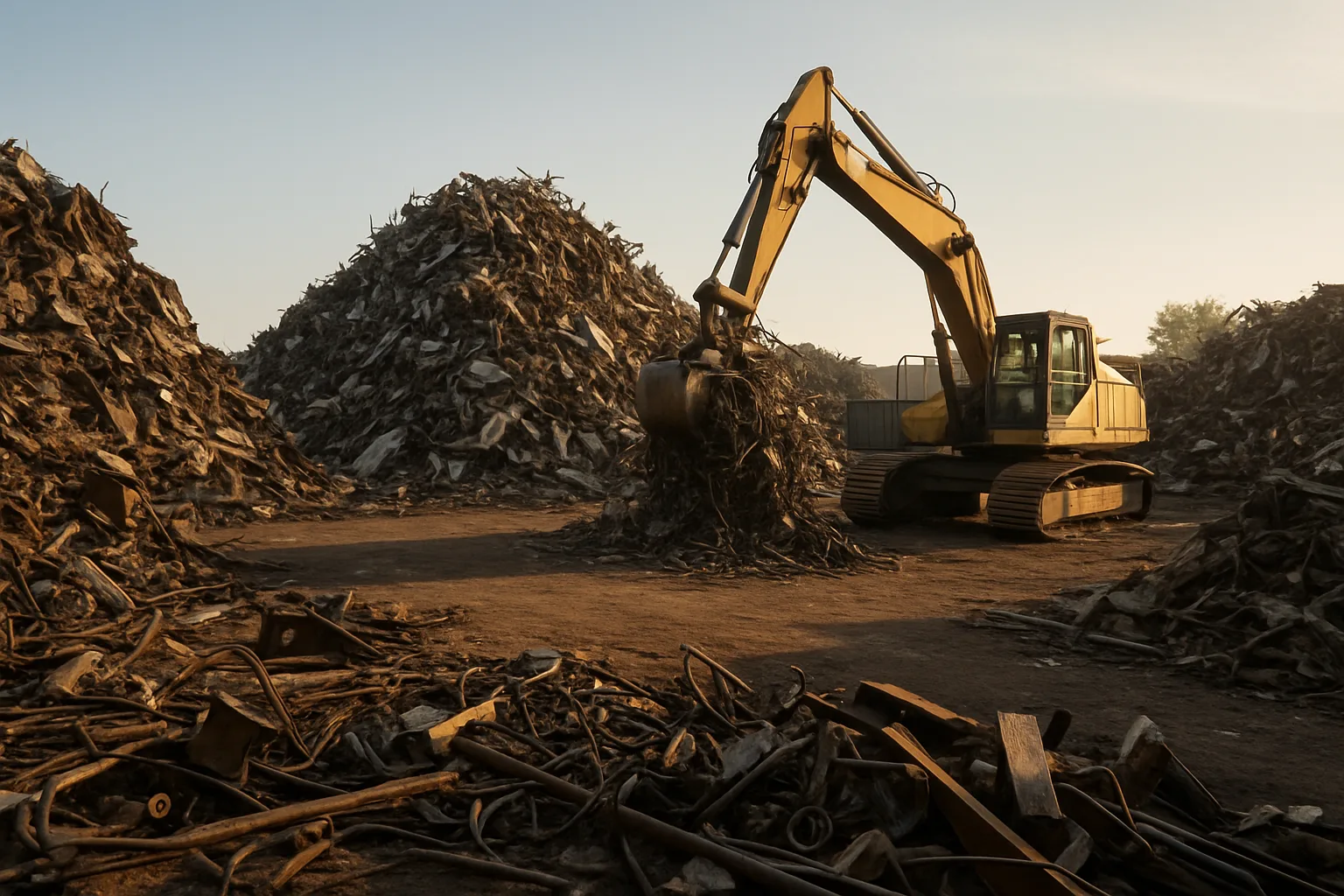
When Steel Mills in China Slow Down, Your Scrap Pile in Lethbridge Feels It
Most yard operators and scrap sellers think about price in simple terms: what's the guy down the street paying today? But the steel scrap price today in your driveway or yard connects directly to decisions made in Tokyo, São Paulo, and Brussels. That's not an exaggeration. Scrap metal is a globally traded commodity, and local buyers set their prices based on what mills and smelters are willing to pay — which is driven almost entirely by international demand.
Understanding that connection won't make you a commodity trader. But it will help you stop leaving money on the table every time you move a load.
The Chain That Connects Global Markets to Scrap Metal Prices Today
Here's how the chain works. A major steel producer in Asia needs scrap to feed its electric arc furnace. Demand from that mill pushes up export prices in U.S. ports. Canadian exporters and domestic mills then compete for the same pool of scrap, which tightens supply and pushes prices upward. The reverse is equally true — when global construction slows or tariffs disrupt steel trade, mills reduce purchasing, buyers cut prices fast, and suddenly your ferrous load is worth noticeably less than it was two weeks ago.
This cycle plays out across every metal category. Scrap metal prices today for copper, aluminum, and catalytic converters all follow similar logic — connected to LME (London Metal Exchange) spot prices, automotive production rates, and energy market shifts. Copper prices, for example, respond sharply to infrastructure spending in major economies. When large-scale electrification projects ramp up globally, scrap copper Canada demand tightens and prices reflect that pressure almost immediately.
The point isn't to overwhelm you with macroeconomics. The point is this: prices aren't random. They have drivers. And sellers who understand those drivers sell smarter.
How Alberta Scrap Sellers Get Caught in the Middle
Alberta sits in a specific position in the North American scrap economy. It's landlocked, which means export routes to port cities add logistics costs. Local processors in and around Lethbridge and across Alberta are generally selling to domestic mills or brokers who aggregate loads for export. That creates a pricing layer between the international benchmark and what you actually receive.
When global markets are strong, that gap narrows — competition among buyers tightens margins and more value flows back to the seller. When global markets soften, the gap widens. Buyers protect their own margins first, and sellers absorb the difference. That's the reality of single-buyer transactions. You get one number, take it or leave it, with no visibility into what the market is actually willing to pay.
This is exactly the scenario where competitive bids for your scrap in Canada change the outcome. When multiple vetted buyers compete on your load, you stop absorbing that gap quietly. Competition does the work that a single phone call never can.
A Real Scenario: What Happens When You Stop Guessing the Market
Consider a mid-sized Alberta operation selling a mix of prepared ferrous, scrap aluminum, and a batch of catalytic converter cores. Using the traditional method — calling one or two familiar buyers, getting a verbal quote, booking the load — there's no way to know if the number is fair. The buyer knows the current market. The seller usually doesn't. That information gap has a dollar value, and it comes out of your pocket.
Now run the same load through an auction-style platform. Inventory goes in with photo documentation, weight estimates, metal grades, and for cats — serial tracking and photo matching to prevent misidentification. Vetted buyers review the listing. They bid. You see competing offers in real time. The final number reflects what the market actually wants to pay, not what one buyer decides you should accept.
Platforms like SMASH bring that competitive structure to loads across Canada, including Lethbridge scrap metal services for Alberta sellers who want real price discovery instead of guesswork. No subscription fees. SMASH earns when you earn.
More buyers means better price discovery. That's not a promise — it's market logic. And it's especially important during volatile periods when the gap between benchmark prices and single-buyer offers can shift dramatically week to week.
Steel Scrap Price Today: What Actually Moves the Number
If you're watching the steel scrap price today and wondering why it jumped or dropped, here are the most common drivers:
- Global steel production rates: When mills run hot, scrap demand increases. When they idle or reduce output, they pull back purchasing fast.
- Tariffs and trade policy: Import/export restrictions on finished steel ripple back through the scrap supply chain. Tariff changes in major economies can move North American scrap prices noticeably within weeks.
- Energy costs: Electric arc furnaces are energy-intensive. When electricity prices spike, mill operating costs rise — and they respond by squeezing input costs, including what they pay for scrap.
- Currency exchange rates: A strong U.S. dollar makes exported scrap more expensive for foreign buyers. That can reduce export demand and soften domestic prices.
- Seasonal construction demand: Spring and fall typically see stronger steel demand tied to construction activity. Scrap prices often follow that seasonal curve.
- Automotive sector output: Vehicle production volumes directly affect shredder feed and catalytic converter supply. Slowdowns in auto manufacturing change scrap flow dynamics across the board.
None of these factors care about your local yard's situation. They operate at scale. Your job as a seller is to move your material when conditions favor you — and to use tools that surface actual market demand rather than relying on a single buyer's number.
Why Transparent Documentation Changes What You Can Ask For
Global market conditions set a ceiling. Your documentation determines how close to that ceiling you can actually get.
Buyers — especially on a B2B scrap metal marketplace — price risk into every offer. If they can't verify what they're buying, they discount. A poorly described load of mixed non-ferrous gets bid conservatively. A well-documented load with accurate weights, clear photos, metal separation, and — for cats — VIN lookups and serial tracking, gets bid aggressively because buyers know exactly what they're getting.
SMASH's inventory tool is built around this principle. Photo documentation, condition notes, serial tracking for catalytic converters, and clean packing lists and BOLs reduce buyer uncertainty. Less uncertainty means higher bids. It's that direct.
If you're selling scrap aluminum, make sure alloy grades are identified where possible. If you're moving copper, clean versus contaminated material should be separated and documented. For cats, matching photo to serial prevents disputes and protects both sides. These aren't bureaucratic steps — they're what separates a competitive bid from a discounted one.
What This Means If You're Selling Scrap in Lethbridge Right Now
Lethbridge isn't immune to global pricing pressure — no scrap seller in Alberta is. But sellers in this market also have real advantages. The agricultural and energy sectors generate consistent scrap flows: equipment steel, aluminum components, copper wire from decommissioned infrastructure, catalytic converters from fleet vehicles. That's consistent inventory with real buyer demand.
The problem has never been supply. It's been price visibility. Local sellers often don't know what buyers in other regions or channels are willing to pay. That's a structural disadvantage that a SMASH scrap metal auction directly addresses. When your load goes to vetted buyers across North America — not just whoever's closest — you get a real read on what the market will pay today, not what one buyer decides is fair.
If you want to sell your scrap metal at fair Canadian prices, the first step is stopping the guessing. Use the market. Let buyers compete. Document your loads properly. Time your moves when global signals suggest demand is climbing.
You don't need a Bloomberg terminal. You need competitive structure and accurate information — and both of those are accessible right now. When you're ready to get a fair price for your scrap today, the tools exist to make that happen. And if you want to go deeper on the mechanics of how metal markets work in Canada, explore scrap metal selling guides built for sellers who want more than guesswork.
Disclaimer: Scrap metal prices fluctuate daily based on global commodity markets, local supply and demand, and metal grade. Always check current rates before moving a load.
Frequently Asked Questions
Q: Why does the steel scrap price today change so frequently?
Steel scrap is a globally traded commodity tied to mill demand, trade policy, energy costs, and currency movements. Even small shifts in global steel production or export tariffs can move local prices within days. Checking current rates before booking a load is essential — not just monthly, but weekly during volatile periods.
Q: How do global markets affect scrap metal prices for sellers in Lethbridge specifically?
Lethbridge sellers sell into a chain that connects local buyers to provincial processors, then to domestic mills or export aggregators. When international demand for steel and non-ferrous metals rises, competition for scrap tightens all the way down that chain — including at the local level. The inverse is equally true. Alberta's landlocked geography adds a logistics layer, which is why getting competitive bids matters more, not less, than it does in port cities.
Q: What's the best way to know if the price I'm being offered is fair?
The most reliable way is competitive bidding. A single buyer quote gives you one data point — it may be fair or it may not be, and you have no way to know. Platforms like SMASH bring multiple vetted buyers to your load so you can see what the market actually wants to pay. That's real price discovery, not a guess.
Q: Does documentation really affect what buyers will pay for my scrap?
Yes, significantly. Buyers price uncertainty into their bids. A load with accurate weights, clear photos, proper metal separation, and serial tracking for catalytic converters gives buyers confidence — and confident buyers bid higher. Sloppy documentation leads to conservative offers, regardless of what global markets are doing.
Q: What types of scrap metal are most affected by global economic swings?
Ferrous scrap (steel, iron) tracks global steel production most directly. Copper is tightly linked to infrastructure and electrification demand worldwide. Aluminum follows automotive and aerospace production cycles. Catalytic converters track platinum group metal (PGM) spot prices, which are heavily influenced by automotive manufacturing volumes and emissions regulation changes globally. Every major category has its own sensitivity to macro conditions.
Ready to stop guessing and start selling based on real market demand? Sell your scrap metal at fair Canadian prices — request a pickup or get a quote at sell-scrapmetal.ca. Whether you're moving a single load or managing ongoing volume in Alberta, the process is straightforward and the pricing is competitive.
Follow SMASH on LinkedIn for ongoing scrap metal market insights, industry updates, and tips on getting more out of every load you sell.