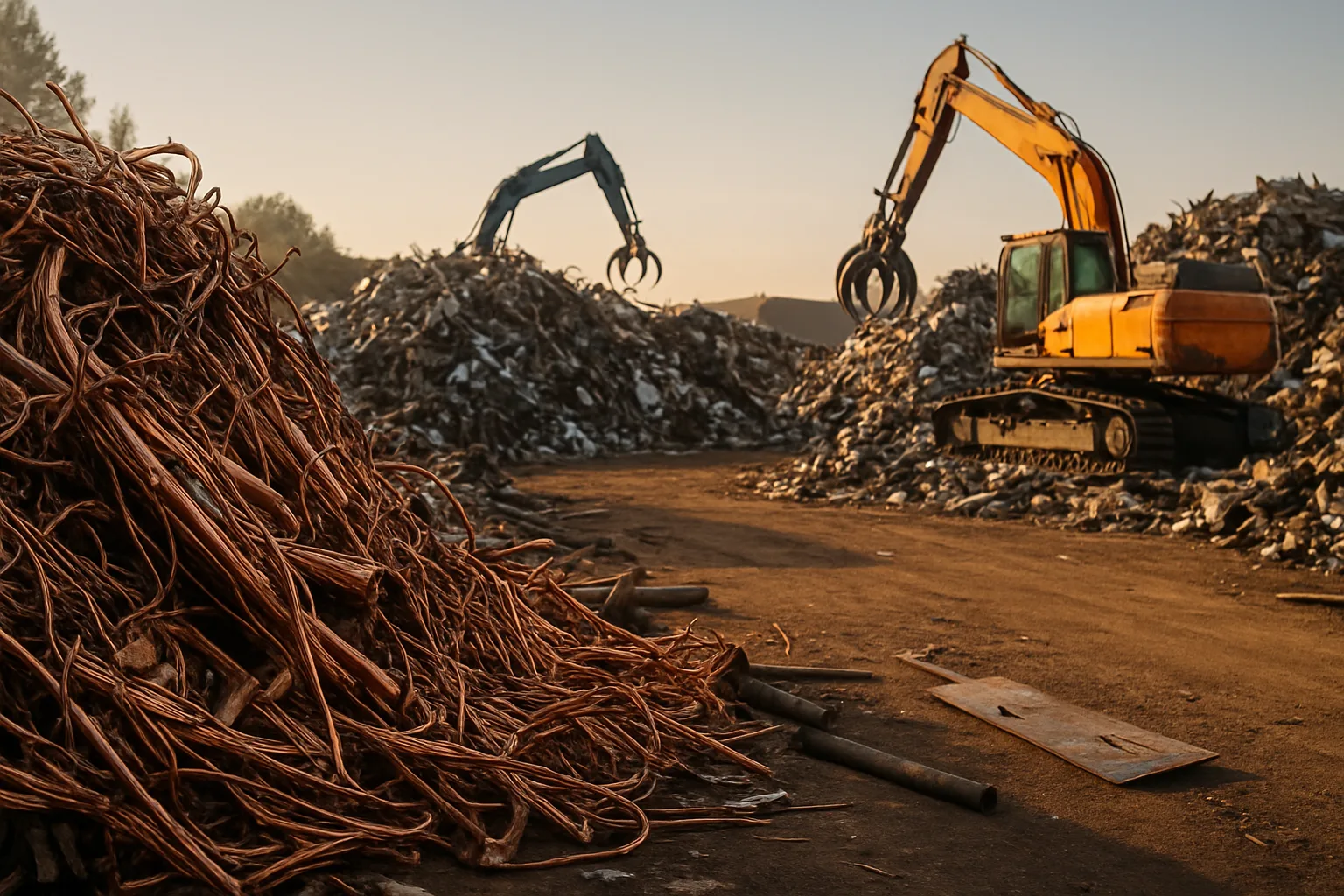
Copper Scrap Prices in Canada: What the Market Is Telling You This Week
Most people selling copper scrap are leaving money on the table — not because the market is bad, but because they don't know what grade they have. If you're sitting on a pile of copper wire, pipe, or fittings and you've only called one buyer, you've already lost. Understanding copper grading and where prices are trending in mid-2026 can be the difference between a fair deal and a great one.
Whether you're a contractor clearing a job site in Kamloops or a recycler sorting a mixed load in British Columbia, the grades matter. So do the buyers. This week's market recap breaks down what's moving copper prices, how to grade your material before you sell, and why sell your scrap metal on SMASH Recycling gives you a real shot at the market price — not just what one buyer decides to offer.
Copper Scrap Price Trends: What's Moving the Market in 2026
Copper has been one of the most actively traded metals on the scrap market this year. Global demand from EV manufacturing, grid infrastructure buildout, and industrial construction has kept pressure on copper supply. That means scrap copper — when properly graded and documented — commands real attention from buyers.
That said, copper prices fluctuate daily based on LME (London Metal Exchange) benchmarks, the Canadian dollar exchange rate, and regional supply conditions. What a Kamloops yard quotes you on a Monday may differ from what a buyer in another region offers on a Thursday. This is exactly why getting competitive bids matters more with copper than almost any other material.
Key factors driving copper scrap values right now:
- EV and battery infrastructure demand: Copper wiring and bus bars are core components in electric vehicle production and charging networks.
- Canadian dollar volatility: A weaker CAD can push scrap prices up for sellers, since copper is globally benchmarked in USD.
- Contamination discounts: Buyers are applying heavier deductions for mixed or contaminated loads. Clean, sorted copper commands a premium.
- Regional supply imbalances: British Columbia's construction activity affects local copper availability and what local buyers are willing to pay.
Disclaimer: Copper scrap prices fluctuate daily. Always check current rates before selling. The figures and trends discussed here reflect general market conditions as of June 2026 and are not guaranteed pricing.
The Copper Grading Guide: Know What You Have Before You Sell
Grading copper correctly is the single most effective thing you can do to protect your sale price. Showing up with unsorted, unlabeled copper gives buyers every reason to lowball you. Showing up with properly graded, clean material puts you in control of the conversation.
Here's a practical breakdown of the most common copper grades and what separates them:
#1 Copper (Bare Bright / #1 Heavy)
This is your top-tier material. Bare bright copper is uncoated, unalloyed, and free of insulation — typically 12-gauge or thicker wire that's been stripped clean. #1 heavy copper includes clean copper pipe, bus bars, and fittings with no solder, paint, or corrosion. This grade commands the highest price per pound. If you're stripping wire on a job site, the extra effort to get to bare bright pays off significantly at the scale.
#2 Copper
Slightly lower purity — still solid copper but may include some coating, light oxidation, or minor contamination. Copper pipe with solder joints, light-painted fittings, or slightly corroded material typically grades here. Buyers apply a discount to #2 versus #1, often in the range of 10–20% depending on condition and market. Sorting your #1 from your #2 before you sell is always worth the time.
Insulated Copper Wire (ICW)
This is where grades really branch out. Insulated wire is priced by its estimated copper recovery percentage — the ratio of copper to insulation by weight. Heavy-gauge insulated wire (like THHN or romex) recovers more copper per pound than thin-gauge communication wire. Buyers often price ICW in tiers:
- Heavy insulated: High copper recovery, strong pricing per pound
- Medium insulated: Mid-grade recovery, moderate price
- Christmas tree wire / comm wire: Low copper recovery, priced accordingly
Don't assume all insulated wire is the same. Separate your gauges and communicate what you have when you're getting quotes.
Copper Breakage and Mixed Copper
Includes motors, transformers, and mixed copper alloys that require processing to recover the copper. Price is significantly lower than clean grades, but it's still worth separating from your steel and aluminum rather than tossing it in a mixed bin.
Copper Alloys: Brass and Bronze
Brass (copper + zinc) and bronze (copper + tin) are common in plumbing fittings, valves, and fixtures. They grade and price separately from pure copper — don't mix them together or with your #1 and #2 material. Many yards and buyers now want brass documented with photos and described by type (yellow brass, red brass, semi-red brass). Platforms that support photo documentation, like SMASH, make this documentation straightforward and give buyers confidence in what they're bidding on.
Why a Single Phone Call Isn't a Market Price
Here's the blunt truth about selling copper scrap the old way: calling one buyer and accepting their quote isn't price discovery. It's price acceptance. You're taking whatever that buyer decides your material is worth that day, based on their inventory, their margins, and how busy they are. There's no competition. There's no benchmark. There's just their number.
That's a significant problem with copper, where a few cents per pound across a large load translates into real dollars. A contractor clearing a full reno job in Kamloops with 300–400 pounds of mixed copper grades isn't dealing with pocket change. The spread between a low-ball quote and a competitive market price on that kind of load can be substantial.
This is the core problem that a scrap metal auction format solves. When multiple vetted buyers compete for your load, you find out what the market actually pays — not what a single buyer wants to pay. Platforms built around competitive bidding exist specifically to close this gap. If you want to sell your scrap metal at fair Canadian prices, competition is the mechanism that gets you there.
How to Prepare Your Copper Load for Maximum Value
Preparation isn't complicated, but most sellers skip it and pay for it in deductions. Here's what separates a load that buyers fight over from one that gets discounted on arrival:
- Sort by grade. Separate bare bright from #1, #2, and insulated wire. Don't mix copper alloys with pure copper.
- Strip where it makes sense. Heavy-gauge insulated wire is often worth stripping to bare bright if you have the volume. Thin comm wire usually isn't worth the labor — sell it as ICW.
- Remove non-copper attachments. Steel fittings, rubber connectors, and plastic components added to copper reduce the grade and add processing costs for buyers.
- Photograph your material. A clear photo of sorted, labeled copper tells buyers more than a verbal description and reduces disputes about grade at the point of sale.
- Weigh it before you go. Know your approximate weights by grade. It's harder to dispute a scale ticket when you've already done your math.
- Document with a packing list. For larger loads, a basic packing list showing grade, estimated weight, and condition gives buyers the confidence to bid aggressively.
Platforms like SMASH support photo documentation, inventory tools, and buyer vetting — which means your prepared load goes in front of buyers who are ready to compete, not just browse. For British Columbia sellers, including those running Kamloops scrap metal services, this kind of structured selling is a significant step up from the traditional cold-call model.
Scrap Metal Prices Today: What Else to Watch This Week
While copper is the headline material for this week's recap, other non-ferrous metals are also worth tracking if you're get a fair price for your scrap today across a mixed yard or job site cleanup.
Aluminum: Sheet aluminum, extrusion, and cast aluminum continue to trade actively. Electric vehicle component recycling is increasing the volume of aluminum in the scrap stream, which buyers are actively seeking. Separate your alloys — mixing cast with sheet aluminum results in deductions.
Catalytic converters: PGM (platinum, palladium, rhodium) values embedded in catalytic converters remain volatile. Serial tracking and VIN lookup have become standard practice for legitimate buyers — if a buyer doesn't want documentation, that's a red flag. SMASH's platform includes serial tracking as a core feature, which protects both sellers and buyers in a market that's seen significant fraud pressure.
Ferrous metals: Steel and iron remain steady but price-sensitive to local supply and transportation costs. If you're in Kamloops with a steel load, regional demand and trucking distance to processing facilities affect your net. Getting competitive bids helps reveal whether your local option is actually your best option.
Want to go deeper on any of these categories? Explore scrap metal selling guides for detailed breakdowns by material type and grade.
Frequently Asked Questions
Q: Where can I sell scrap metal near me in Kamloops?
Kamloops has local yards and recyclers who accept copper, aluminum, and ferrous metals. For competitive pricing, consider using a platform like SMASH that puts your load in front of multiple vetted buyers rather than settling for a single yard's quote. More buyers means better price discovery on your material.
Q: What are scrap metal prices today for copper in Canada?
Copper scrap prices in Canada fluctuate daily based on LME benchmarks and the CAD/USD exchange rate. Bare bright copper commands the highest price per pound, followed by #1 copper, #2 copper, and insulated wire grades. Always request current rates directly from buyers or platforms before committing to a sale.
Q: How does a scrap metal auction work for selling copper?
A scrap metal auction puts your documented load — photos, weights, grades — in front of multiple pre-vetted buyers who place competitive bids. The seller reviews the bids and accepts the best offer. This format replaces the single-buyer cold-call model and typically results in better price discovery because competition is built into the process.
Q: What is the difference between #1 and #2 copper scrap?
#1 copper is clean, uncoated, unsoldered copper pipe, fittings, or stripped wire — no contamination or significant corrosion. #2 copper includes material with some paint, solder, light corrosion, or minor coatings. The price difference between the two grades can be meaningful on larger loads, so sorting before you sell is worth the time.
Q: Do I need to strip copper wire before selling it in Kamloops?
It depends on the gauge and volume. Heavy-gauge wire (like romex or THHN) is often worth stripping to bare bright if you have enough volume to justify the labor. Thin communication or computer wire typically has low enough copper recovery that selling it as insulated wire is more practical. When in doubt, get quotes for both stripped and unstripped and let the math decide.
If you've got copper sorted and ready to move, don't settle for the first number you hear. Competition reveals the real market price. Sell your scrap metal at fair Canadian prices — request a pickup at sell-scrapmetal.ca and see what the market actually offers for your material.
Stay current on copper trends, grading shifts, and scrap market news by following SMASH on LinkedIn — practical industry updates without the noise.