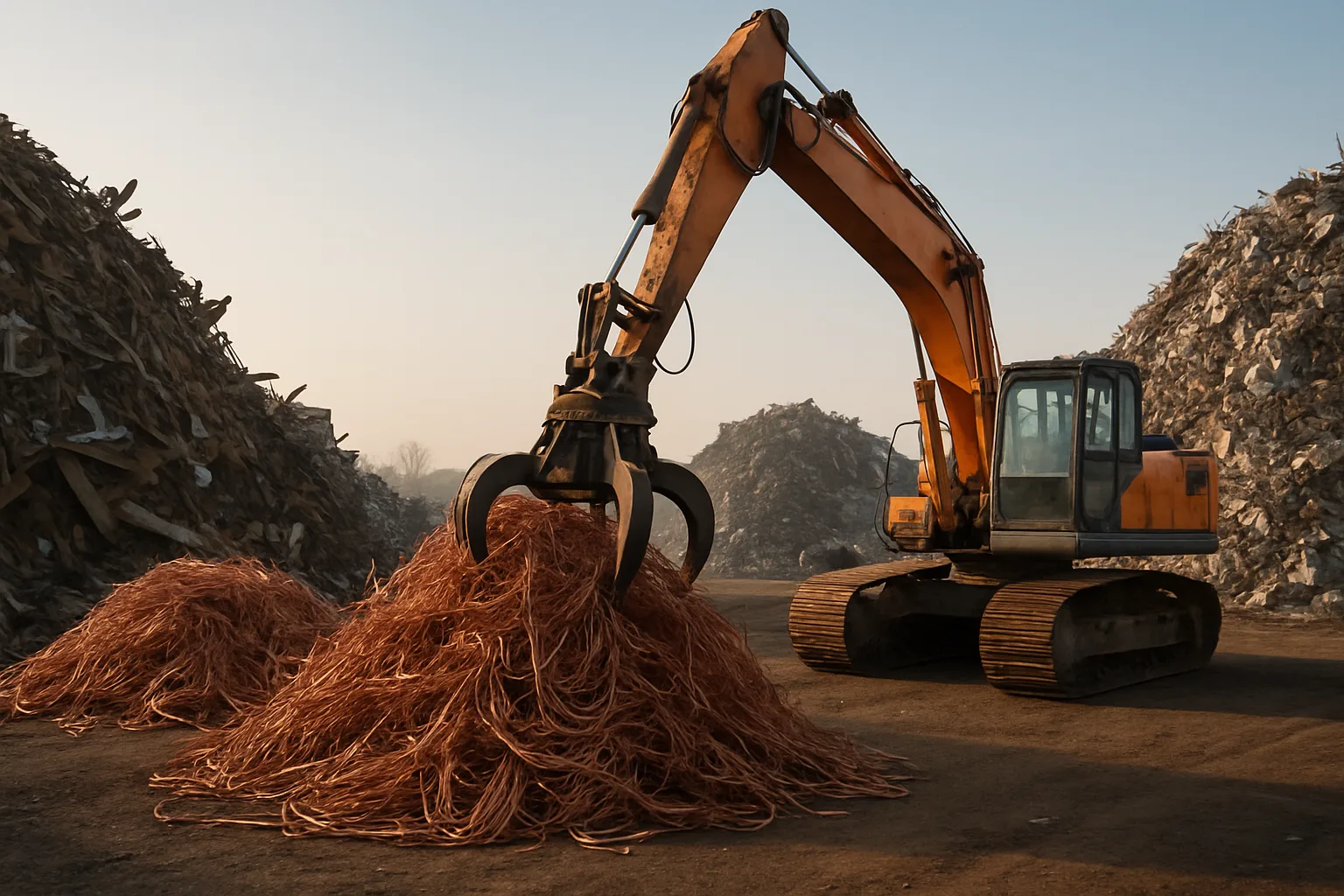
Copper is one of the most valuable metals you'll ever drop off at a scrap yard — but most sellers leave money on the table because they don't understand grading. If you're hauling copper and treating it all the same, you're probably getting paid like it's all the same. It isn't.
This guide breaks down how copper scrap is graded, what's driving price trends in mid-2026, and how platforms like SMASH are changing the way sellers across Canada get paid. We'll also cover the aluminum scrap price today for sellers who are moving mixed loads — because if you're pulling copper, you're probably pulling aluminum too.
Why Copper Scrap Grades Matter More Than You Think
Not all copper is equal. A scrap yard in Hamilton or anywhere else in Ontario will sort your load the moment it hits the floor. The grade they assign determines your payout — and the difference between top grade and bottom grade can be substantial.
Here's the basic breakdown of how copper scrap is typically graded in Canada:
- Bare Bright Copper (#1 Bright & Shiny): The cleanest, most valuable grade. This is uncoated, unalloyed copper wire — stripped, dry, and free of insulation or solder. Think of stripped romex wire or clean bus bars. It commands the highest price per pound.
- #1 Copper: Clean copper pipe, bus bars, and clippings with no fittings, paint, or insulation. Minimal oxidation allowed. High value, but below bare bright.
- #2 Copper: Copper with some oxidation, small amounts of solder, paint, or minor attachments. Includes unalloyed wire with some insulation still attached. Priced lower than #1.
- Light Copper (#3): Heavily oxidized copper, copper with significant attachments, or copper mixed with other metals. This grade takes a meaningful price hit.
- Insulated Wire: Priced by copper recovery percentage. The thicker the insulation relative to the conductor, the lower the payout.
Before you haul anything, strip what you can. Clean copper earns more — every time. Even partial stripping on insulated wire can move your load from a low recovery percentage to a higher one, and that adds up fast when you're moving volume.
Copper Scrap Price Trends in Mid-2026
Copper markets in 2026 have been shaped by a few converging forces. Global demand for copper in EV manufacturing, grid infrastructure, and industrial automation continues to push underlying commodity prices. At the same time, trade policy shifts across North America have added volatility to spot prices — which flows directly into what scrap yards pay.
What does this mean for sellers in Ontario and across Canada? It means timing matters. A load sold on a strong market day versus a soft day can reflect a real difference in what you pocket. The old model — one buyer, one phone call, take it or leave it — doesn't serve sellers well in a volatile market.
The smarter move is getting your load in front of multiple vetted buyers simultaneously. That's exactly what Canada's B2B scrap recycling marketplace is built to do. Competition between buyers gives you actual price discovery instead of a number someone handed you with no context.
Disclaimer: Copper scrap prices fluctuate daily based on commodity markets, exchange rates, and regional supply and demand. Always check current rates before selling.
Best Scrap Metal Prices in Hamilton and Ontario — What Sellers Need to Know
If you're looking for the best scrap metal prices Hamilton has to offer, the answer isn't just about finding the right yard — it's about creating competition for your load. Hamilton's industrial base means there's no shortage of scrap activity in the region. But activity doesn't automatically mean fair pricing if you're only talking to one buyer.
Sellers in Hamilton and across Ontario who move copper loads should be asking the following questions before they commit to a buyer:
- Are you grading my material on-site after the fact, or agreeing to a price before pickup? Post-weigh price adjustments are common and can surprise first-time sellers.
- What's the grade you're assigning my insulated wire, and why? Get specifics, not a general number.
- Are you pricing against today's spot, or last week's? In a moving market, that distinction matters.
- Is there any deduction for moisture, oil, or contamination? Know what you're agreeing to before the truck leaves.
Documented loads — with photos, weights, and grade details — give buyers more confidence and remove ambiguity. SMASH's inventory tool and photo documentation features exist for exactly this reason. When buyers can see what they're bidding on, the numbers reflect it.
Aluminum Scrap Price Today — Selling Mixed Loads in Canada
Most sellers hauling copper are also moving aluminum. If you're checking the aluminum scrap price today, here's the short version: aluminum grades matter too, and clean material pays more than contaminated or mixed alloy loads.
Common aluminum grades you'll encounter in scrap include:
- Bare aluminum wire: High-purity, uninsulated wire. Commands better pricing.
- Cast aluminum: Engine blocks, transmission cases, wheels. Priced by alloy and cleanliness.
- Sheet aluminum (litho or clips): Clean sheet material from industrial or commercial sources. Good recovery value.
- Aluminum radiators: Often bought clean or with minor steel attachments. Separate where possible.
- Mixed/dirty aluminum: Contaminated with steel, rubber, or plastic attachments. Takes a meaningful price reduction.
If you're selling a mixed copper and aluminum load, separating the two before you show up is almost always worth the extra time. Getting paid two correct rates beats getting averaged down on both.
For sellers moving significant volume, sell your scrap metal at fair Canadian prices through a platform where multiple buyers compete — rather than accepting the first number you hear on a cold call.
Selling Catalytic Converters Online — What Canadian Sellers Should Know
If your load includes catalytic converters, treat them separately from your copper and aluminum. Cats contain platinum group metals (PGMs) — platinum, palladium, and rhodium — and they're priced against a completely different market than base metals.
Grading for catalytic converters typically relies on:
- VIN lookup: For OEM cats, the vehicle's VIN can identify the exact cat model and its PGM content profile. SMASH's VIN lookup feature makes this process faster and more accurate for volume sellers.
- Serial number identification: Many buyers use serial tracking to match cats against known reference data.
- Physical condition: Cracked substrate, damage, or aftermarket units will affect value. Document the condition with photos before selling.
If you're looking to sell catalytic converters online, working with a platform that uses serial tracking and photo documentation removes a lot of the guesswork — and the risk of being lowballed on units you can't positively identify in the moment.
Canadian regulations around catalytic converter sales have tightened in recent years. Sellers in Ontario and across Canada should ensure they're transacting with buyers who maintain proper documentation and comply with provincial requirements. Legitimate buyers will ask for documentation. If they don't, that's a signal worth noticing.
How SMASH Helps Copper and Scrap Metal Sellers Get Paid Fairly
The traditional scrap selling process looks like this: you call one yard, they give you a number, you either take it or make more calls hoping for better. There's no transparency, no documentation standard, and no competitive pressure on the buyer to offer their best price.
SMASH flips that. When you list a load — whether it's bare bright copper, insulated wire, aluminum sheet, or a pallet of cats — vetted buyers across the network can see it and bid on it. Competition between buyers is what drives real price discovery. More buyers means better price discovery. That's not hype — that's how auctions work.
The platform handles auto-invoicing, GST/HST documentation, and inventory tracking. If you're a business seller, that back-end paperwork matters. Missing documentation creates headaches at tax time and slows down reconciliation. SMASH handles it so you don't have to chase it.
No subscription fees. You only pay when a deal closes. If you're selling copper or any other scrap metal in Hamilton, Ontario, or anywhere across Canada, there's no reason to leave money on the table with a single-buyer process when competition is available. Hamilton scrap metal services through this platform mean local sellers get access to a wider buyer pool without leaving the region.
If you're ready to stop guessing and start selling with data behind you, explore scrap metal selling guides to sharpen your approach before your next load goes out the door.
Selling scrap shouldn't feel like a coin flip. Whether you're hauling bare bright copper, stripping insulated wire, or moving a mixed load of aluminum and cats, the difference between a fair price and a low one usually comes down to how many buyers see your load. Get a fair price for your scrap today — request a pickup at sell-scrapmetal.ca and put competition to work for you.
Frequently Asked Questions
Q: What is the aluminum scrap price today in Canada?
Aluminum scrap prices fluctuate daily based on commodity markets and regional demand. Cast aluminum, sheet aluminum, and bare wire are priced differently — clean, separated material always commands better rates. Check current prices directly with buyers or through a platform like SMASH before committing to a sale.
Q: How do I get the best scrap metal prices in Hamilton?
The best way to get a strong price in Hamilton is to present clean, sorted, documented material to multiple buyers simultaneously. A single-buyer phone call gives you one number with no competitive pressure. Using an auction-based platform creates competition, which drives better price discovery on your load.
Q: What's the difference between #1 and #2 copper scrap?
#1 copper is clean, uncoated, and unalloyed — pipe, clippings, or wire with minimal oxidation and no attachments. #2 copper has some oxidation, solder, paint, or minor insulation still attached. The price gap between the two grades can be meaningful, so stripping and cleaning your material before you sell is almost always worth the effort.
Q: Can I sell catalytic converters online in Ontario?
Yes, but Ontario sellers should work with buyers who use proper documentation — serial tracking, photo records, and compliant invoicing. Regulations around catalytic converter sales have tightened across Canada, and legitimate buyers will ask for documentation before completing a transaction.
Q: Does SMASH charge a monthly fee to list scrap metal?
No. SMASH operates without subscription fees — you only pay when a deal closes. That structure means sellers aren't carrying platform costs while waiting for the right buyer or right market conditions to move their load.
Stay current on copper markets, aluminum prices, and scrap metal regulations — follow SMASH on LinkedIn for industry updates and Canadian scrap market insights.