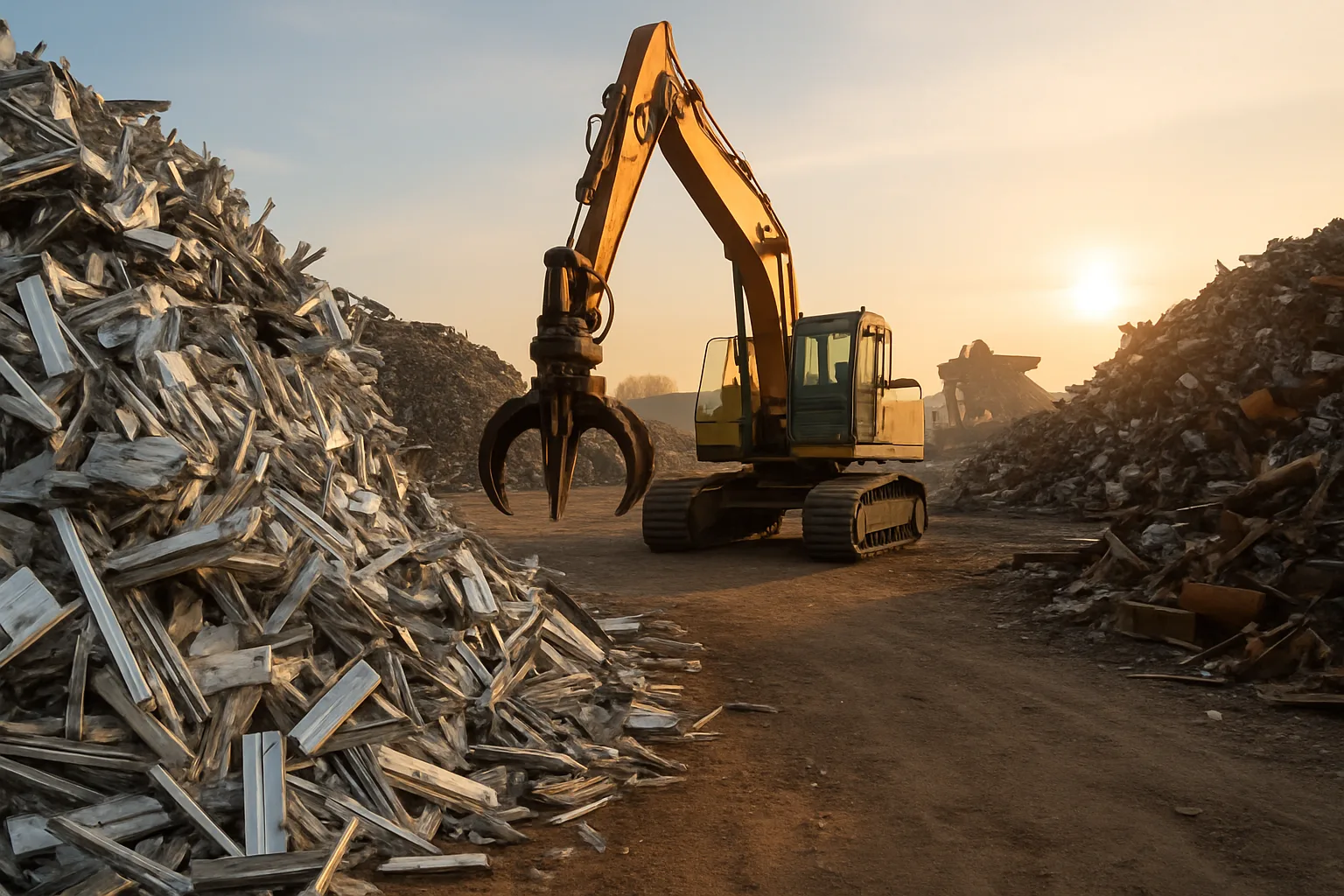
Why Your Aluminum Grade Determines Your Payout — Not Just Your Weight
Most sellers leave money on the table before they even pull into the yard. They show up with a mixed load, get a blended rate, and walk away thinking that's just how it works. It isn't. Aluminum scrap is one of the most grade-sensitive metals in the recycling market — and knowing the difference between a clean 6061 extrusion and a painted window frame can mean a significant difference in your payout per pound. If you're trying to get the best scrap metal prices Kelowna has to offer, sorting matters as much as volume.
This guide breaks down the major aluminum grades, what buyers actually look for, and how platforms like SMASH connect sellers to competitive buyers who pay for quality — not just tonnage.
The Aluminum Grades That Matter Most to Scrap Buyers
Not all aluminum is created equal in the eyes of a smelter or a secondary processor. Buyers price based on alloy composition, contamination level, and how much prep work they need to do before the metal becomes usable again. The cleaner and more consistent your load, the higher the bid.
Here are the grades you're most likely to encounter as a seller in British Columbia — whether you're cleaning out a shop, pulling HVAC units, or processing end-of-life vehicles:
- 6061 / 6063 Extrusions (Clean): Window frames, door frames, curtain wall, and structural profiles — as long as they're free of plastic, rubber, or steel hardware. This is one of the higher-value grades because it's consistent and low-prep for buyers. Remove the fasteners. It matters.
- Cast Aluminum (Dirty / Clean): Engine blocks, transmission cases, and pump housings. "Dirty cast" has iron content, grease, or steel inserts. "Clean cast" is stripped and free of attachments. There's a real price spread between the two — sometimes significant.
- Sheet Aluminum (Clips): Flat rolled sheet, stampings, and clips from manufacturing or auto body. Buyers want it free of non-aluminum attachments. This is a mid-tier grade — solid volume play.
- Aluminum Radiators: These can go two ways. Auto radiators with copper/brass tanks pull a higher rate as a mixed unit. Aluminum-only radiators (newer style) are priced separately. Know what you have before you sell.
- Turnings and Borings: Machine shop waste. Lower value because of cutting fluid contamination and the mixed alloy question. Some yards won't touch wet turnings. Dry, clean turnings are a different story.
- MLC (Mixed Low Copper Aluminum): The catch-all grade. Painted extrusions, mixed alloy sheet, or anything that doesn't fit neatly into a higher grade. You'll get less per pound here — but it beats tipping fees if you're cleaning a site.
- 356 / 319 Cast (Wheels, Pistons): Aluminum wheels are a consistently strong grade. Clean wheels without weights or valve stems fetch more. Pistons are a specialty item — some buyers want them, some don't. Know your market.
The core principle: the more prep work a buyer has to do, the less they'll pay you. Sorting takes time upfront, but it pays off at the scale when you're moving regular loads.
How to Prep Your Aluminum Load for Maximum Value
You don't need a full processing facility to improve your grade profile. A few habits on the yard floor can meaningfully shift what category your material falls into — and what it fetches per pound.
Start with the basics:
- Remove steel hardware. Bolts, hinges, brackets, and inserts pull your extrusion or sheet into a lower grade. A cordless drill and five minutes per piece is worth it at volume.
- Strip wire insulation. Bare aluminum wire is a different product than insulated wire. If you're dealing with thicker aluminum conductor cable, stripping pays. Thin gauge — check whether the labor makes sense.
- Separate cast from wrought. These are different alloy families. Mixing them forces a buyer to blend-price the load downward. Keep engine components away from extrusions.
- Drain fluids from cast parts. Oil-soaked engine blocks are docked or rejected outright. Let them drain. Rinse if you have the setup. A dry, clean block is worth more than a wet one sitting in its own oil.
- Keep wheels separate. Aluminum wheels are a premium item. Don't let them get buried in a mixed load. They're easy to identify, easy to count, and buyers like them.
- Document what you have. Photos, weights by grade, and clear descriptions help buyers make confident bids. This is exactly what SMASH's inventory tool is built for — upload photos, add weights, describe the material, and let buyers compete on a documented load rather than a guess.
In Kelowna, where regional buyers may not always be competing aggressively for your load, documentation and grade clarity become your leverage. A well-described load on a B2B scrap metal marketplace reaches buyers who specialize in specific grades and will pay accordingly.
The Problem with the Single-Buyer Model for Aluminum Scrap
Here's the old way: you load up, drive to the scrap yard near me open on a Saturday or hunt for a scrap yard near me open Sunday, hand over your material, accept the posted price, and leave. No negotiation. No visibility into whether that price is the market or just one buyer's margin.
For occasional sellers moving a few hundred pounds of mixed aluminum, this is fine. But if you're a shop, a demolition crew, a fleet operator, or a recycling business moving regular volume of sorted material — that model is costing you. You have no idea if the buyer down the road would pay more for your clean 6061 load. You have no competition. You have no data.
The single-buyer model works great for the buyer. It doesn't work for you.
Platforms like SMASH exist specifically to fix this. When you list a documented aluminum load — grades sorted, weights noted, photos uploaded — vetted buyers across North America can see it and bid. That competition is how price discovery actually works. More buyers seeing your material means more chances that the right buyer — the one who specifically needs clean cast aluminum or 6063 extrusions this week — finds your load and bids what it's actually worth to them.
If you're in Kelowna or anywhere in British Columbia, you can get competitive bids for your scrap in Canada without being limited to whoever answers the phone locally that day.
What Buyers Look for in a Serious Aluminum Seller
Repeat buyers — the ones who pay consistently well and don't nickel-and-dime every load — aren't just looking at your metal. They're evaluating you as a supplier. That matters in a B2B scrap metal marketplace where relationships and consistency drive the best long-term prices.
What signals a reliable seller to serious aluminum buyers:
- Consistent grades. If you say it's clean 6063, it's clean 6063. Not "mostly 6063 with some painted stuff mixed in." Buyers who get burned once don't come back.
- Accurate weights and documentation. Bills of lading, packing lists, photo records. Buyers bidding on loads they can't physically inspect will pay more when the documentation is solid.
- Predictable volume and timing. Even rough schedule estimates help buyers plan. If you're moving a load every two weeks, say so. That reliability has value.
- Honest contamination disclosure. Found some oily turnings mixed in? Say it upfront. Buyers would rather adjust a bid than get a surprise at the receiving dock.
- Clear communication. Fast responses, accurate logistics info. Buyers deal with dozens of sellers — the ones who are easy to work with get prioritized.
SMASH's platform supports all of this. The inventory tool, photo documentation, and serial or VIN tracking (for vehicle-related scrap) create a record that builds seller credibility over time. You can sell your scrap metal at fair Canadian prices and build a track record that earns you better bids on future loads — not just today's.
Timing, Logistics, and Getting Paid: The Full Picture
Even with great grades and solid documentation, you can still leave money behind if you ignore timing and logistics. Aluminum prices move with commodity markets — LME spot prices, energy costs at smelters, and downstream demand from automotive and construction all push the number up or down. Selling when demand is strong versus selling into a soft market matters.
You don't need to be a trader to be smart about this. A few practical moves:
- Track general market direction. When aluminum futures are trending up, buyers tend to bid more aggressively. When they're pulling back, don't expect heroic offers.
- Don't sit on sorted loads too long. Sorted aluminum stored outdoors can oxidize or pick up contamination that drops its grade. Move it when it's clean.
- Understand the pickup vs. drop-off math. Larger loads often justify logistics costs better. If you're a smaller operation in Kelowna, consolidating material before listing may get you a better net price than moving partial loads repeatedly.
- Auto-invoicing removes friction. SMASH handles invoicing automatically after a completed transaction, which means less admin time and faster reconciliation. For businesses running multiple loads a month, that adds up.
The bottom line: getting top dollar for aluminum scrap isn't about luck or knowing the right guy. It's about grade discipline, documentation, and putting your material in front of the right buyers. If you want to explore scrap metal selling guides that go deeper on specific materials and market dynamics, there's a growing library of practical resources to work through.
You've done the work sorting and prepping. Make sure the sale reflects that. Get a fair price for your scrap today — whether you're moving a few hundred pounds of clean extrusions or a full truckload of mixed cast aluminum, the right buyer exists. SMASH helps you find them.
Ready to stop guessing and start selling smart? Head to Kelowna scrap metal services to get started — or visit sell-scrapmetal.ca to request a pickup and connect with buyers who pay for quality material.
Frequently Asked Questions
Q: What's the highest-value aluminum scrap grade I can sell in Kelowna?
Clean aluminum extrusions (6061 and 6063 alloys), stripped bare aluminum wire, and clean aluminum wheels consistently fetch strong prices. The key word is "clean" — free of steel hardware, plastic, rubber, and other attachments. Grade quality matters more than volume alone when you're after the best scrap metal prices Kelowna buyers will offer.
Q: How do I find a scrap yard near me open Sunday in Kelowna?
Hours vary by facility, and not every yard in the Kelowna area operates on Sundays. Your best move is to call ahead or check the yard's website before loading up. Alternatively, listing your material on a platform like SMASH means you're not tied to a single yard's schedule — buyers come to you, and transactions can be arranged around your timeline.
Q: Does sorting aluminum by grade actually make a noticeable difference in payout?
Yes — significantly. Mixed or contaminated aluminum gets priced to the lowest common denominator in your load. A sorted load of clean 6063 extrusions will be priced as a premium grade. At scale, even a modest per-pound difference adds up quickly. Sorting is one of the highest-return activities a scrap seller can do before going to market.
Q: What is a B2B scrap metal marketplace and how does it help me sell aluminum?
A B2B scrap metal marketplace is an online platform where verified industrial buyers compete to purchase your scrap material. Instead of calling one yard and accepting their posted price, you list your load — with grades, weights, and photos — and multiple buyers bid. SMASH is built exactly this way, which means your documented aluminum load gets in front of buyers who specialize in what you have, not just whoever is nearby.
Q: Are scrap metal prices in British Columbia different from the rest of Canada?
Regional logistics, local demand, and buyer competition all influence what you actually receive for your material in British Columbia. National commodity prices set the baseline, but your net payout depends heavily on who's buying in your market and how many of them are competing for your load. That's why accessing a broader buyer pool through a platform like SMASH — rather than relying on local posted prices alone — can make a real difference in what you take home.
Follow SMASH on LinkedIn for scrap metal market updates, grade pricing trends, and practical tips for getting more out of every load you sell.
Disclaimer: Scrap metal prices fluctuate based on commodity markets, grade, contamination level, and regional buyer demand. Always confirm current rates directly with buyers or through your platform before making selling decisions.