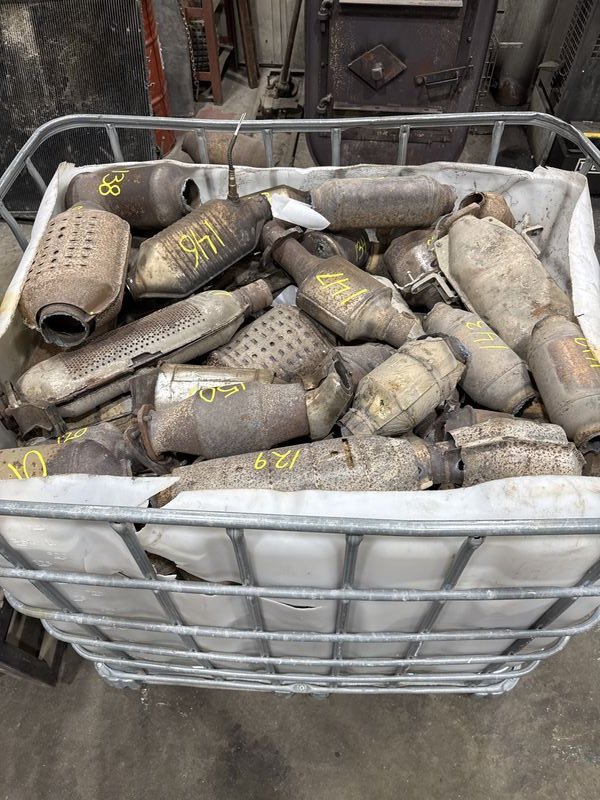
What's Actually Inside a Catalytic Converter — and Why It's Worth More Than You Think
Most people know catalytic converters have value. Few understand why that value swings so dramatically — sometimes by hundreds of dollars per unit — from one month to the next. If you've ever wondered why the yard down the street quoted you one price while someone else offered something completely different, the answer lives inside the converter itself. And understanding it can put more money in your pocket.
Catalytic converter recycling is one of the most complex corners of the scrap metal world. It's not like selling copper wire or clean aluminum — where you weigh it, check the aluminum scrap price today, and get paid. Cats involve precious metals that require assay testing, commodity market tracking, and buyers with specialized equipment. Let's break down how it actually works.
What's Inside a Catalytic Converter That Makes It Valuable
The value isn't in the steel shell. It's in the ceramic or metallic substrate coated with platinum group metals (PGMs) — specifically platinum, palladium, and rhodium. These three metals do the actual catalytic work: converting harmful exhaust gases into less harmful emissions. They're also extraordinarily rare, which is why recyclers want them back.
Here's what makes cat recycling different from selling scrap aluminum or copper:
- PGM content varies wildly by vehicle make and model. A Honda converter and a BMW converter can contain completely different loadings of platinum, palladium, and rhodium — even if they look similar from the outside.
- Prices for platinum, palladium, and rhodium fluctuate daily on global commodity markets. A converter worth $180 one month could fetch significantly more or less the next.
- You can't see the PGMs. They're measured through sampling and assay — a lab process that takes time and equipment most local yards don't own.
- Grade and condition matter. Broken substrates, aftermarket replacements ("direct-fit" vs. OEM), and foil-type cats all pay differently.
This is why the recycling chain for cats is longer and more specialized than it is for most other metals. Understanding that chain helps you ask better questions — and find buyers who pay fairly.
How the Catalytic Converter Recycling Process Actually Works
When a converter leaves your vehicle — whether you pulled it off a junked car or stripped it during a major exhaust repair — it enters a multi-step process before the precious metals ever get recovered. Here's what that looks like from start to finish.
- Collection and grading. Buyers and recyclers sort converters by type. Common categories include domestic (North American vehicles), foreign (imports), diesel, and aftermarket. Each category carries a different price range. Experienced buyers can often identify high-value units by the vehicle they came from or by reading the part number stamped on the housing.
- Decanning. The steel housing is cut open to extract the substrate — the honeycomb-structured material that holds the PGMs. This step can be done by hand or with automated equipment. The steel shell is sold separately as scrap.
- Sampling and assay. The substrate material is ground into a fine powder. A sample is sent to a specialized smelter or assay lab. The lab measures the exact platinum, palladium, and rhodium content and reports back a PGM recovery figure.
- Settlement. Based on the assay results and current spot prices for each PGM, the recycler calculates the value. After deducting processing fees, they pay out to whoever supplied the material.
The full assay cycle can take days to weeks depending on volume and the buyer's processing setup. Larger operations that run their own toll refining relationships can turn this around faster — and pass better margins back to sellers.
Why Catalytic Converter Prices Vary So Much — Even for the Same Unit
This is the question sellers in Cambridge, Ontario and across the country keep asking. You got quoted $95 at one yard and $160 somewhere else — same converter. What's going on?
Several things drive that gap:
- Commodity market timing. Rhodium in particular has been historically volatile — swinging thousands of dollars per troy ounce between market cycles. When PGM prices drop, cat prices follow. When they spike, payouts go up. Buyers who quote you a price today are working from today's spot prices, not last month's.
- Buyer sophistication. A yard that ships direct to a toll refiner and gets assay-based settlements can afford to pay more than a yard buying at a flat rate and hoping they're right about the grade.
- Volume and relationships. High-volume buyers with established smelter relationships often get better processing rates, which means they can offer more competitive prices to sellers.
- Your location in the recycling chain. If you're selling to a middleman who sells to another middleman before it reaches an assay facility, every step takes a margin. The fewer hands it passes through, the better your payout tends to be.
- Converter condition. A rattling cat with a broken substrate has already lost material. Buyers discount heavily for that. A clean, intact unit commands full value.
This is exactly why platforms like the SMASH Recycling auction platform exist. When you put material in front of multiple vetted buyers at once, you let the market reveal the real price — instead of guessing whether the first quote you got was fair.
How This Compares to Selling Aluminum and Other Scrap Metals
If you're also sitting on aluminum, copper, or steel alongside your cats, the pricing logic works differently — and it's worth understanding both.
The aluminum scrap price today is driven by London Metal Exchange (LME) benchmarks, local supply and demand, and the specific alloy you're selling. Extrusion-grade aluminum, cast aluminum, and aluminum cans all pay differently. But unlike cats, aluminum pricing is relatively transparent — posted prices at yards are generally close to what you'll actually get. You can explore scrap metal selling guides to understand which aluminum grades pay the most before you haul anything in.
Copper works similarly. Clean bright copper pays significantly more than insulated wire or mixed copper. The spread between grades can be $1.00 or more per pound — so stripping wire before you sell it is almost always worth the effort.
Catalytic converters are the outlier. The price discovery process is more opaque, the commodity inputs are more volatile, and the risk of under-selling is much higher if you don't know what you have. That's not a reason to avoid selling cats — it's a reason to work with buyers who are transparent about how they price them.
What to Know Before You Sell Your Catalytic Converters in Cambridge or Across Ontario
Whether you're a shop owner in Cambridge clearing out a pile of cores, or an individual who pulled a cat off a vehicle before scrapping it, there are a few things that will help you get a fairer outcome.
Know what you have before you call anyone. If you can identify the vehicle make, model, year, and whether the converter is OEM or aftermarket, you're already ahead of most sellers. That information directly affects the price. Some online tools let you look up approximate values by part number — use them.
Get more than one quote. This is the single most impactful thing you can do. Prices genuinely differ between buyers. A quick call or email to two or three buyers costs you nothing and often reveals a meaningful price gap. Or better yet, use a platform that does that work for you automatically.
Don't assume the biggest yard pays the most. Volume doesn't always mean better prices for sellers. Sometimes smaller, specialized buyers with direct smelter access offer stronger payouts because they have lower overhead and tighter processing chains.
Document what you're selling. Especially if you're selling a larger lot of converters, photos and serial numbers help buyers price more accurately — and protect you if there's any dispute. SMASH builds documentation into the platform so both sides have a clear record.
For Cambridge scrap metal services, including converter recycling, getting multiple competitive quotes is easier than it used to be. You don't have to drive around to five yards anymore. You can sell your scrap metal at fair Canadian prices through platforms built to bring the buyers to you.
SMASH connects sellers across Ontario and beyond with vetted buyers who compete for your material — cats, non-ferrous metals, and everything in between. More competition means better price discovery. That's not a sales pitch; it's how markets work.
If you're ready to stop guessing and start selling with more confidence, get a fair price for your scrap today and see what competitive bidding actually looks like for your material.
Frequently Asked Questions
Q: Why does the aluminum scrap price today matter if I'm selling catalytic converters?
If you're selling a mixed lot — converters plus aluminum or other non-ferrous metals — each material is priced separately using different benchmarks. Aluminum follows LME spot pricing, while cats are priced on PGM commodity markets. Knowing both helps you evaluate whether the quote you're getting is fair across the board.
Q: What are the best scrap metal prices in Cambridge for catalytic converters?
Prices vary by buyer, by the specific converter type, and by current PGM spot prices. There's no single posted rate the way there is for aluminum or copper. Your best move is to get multiple quotes — either by calling several yards or by using a platform that brings buyers to you competitively. That's how you find the best scrap metal prices Cambridge buyers are actually willing to pay.
Q: Can I sell scrap metal online, including catalytic converters?
Yes. Platforms like SMASH allow you to list material, document it with photos and serial information, and receive offers from vetted buyers — without having to physically shop your load around. Selling scrap metal online works especially well for higher-value material like cats, where the price difference between buyers is most significant.
Q: How do I know if my catalytic converter is OEM or aftermarket, and does it matter?
OEM (original equipment manufacturer) converters generally contain higher PGM loadings than aftermarket replacements, which means they pay more at recycling. You can often identify an aftermarket cat by its generic appearance, lighter weight, or the absence of a manufacturer-stamped part number. If you're unsure, a reputable buyer should be able to tell you which category your unit falls into before they quote you.
Q: Is there a scrap metal buyer near me open in Cambridge or the Ontario area?
Most scrap yards in Cambridge and across Ontario operate standard business hours, Monday through Saturday. Hours vary by location. If you're having trouble finding a buyer who handles catalytic converters specifically — not all yards do — an online platform can connect you with specialized buyers regardless of your location in the province.
Follow SMASH on LinkedIn for regular updates on scrap metal market conditions, pricing trends, and recycling industry news across Canada.
Disclaimer: Scrap metal and PGM prices fluctuate daily based on global commodity markets. All price references in this article are illustrative. Always check current rates with buyers before making selling decisions.