Why Small-Scale Scrap Collectors Leave Money on the Table (And How to Stop)
Most small-scale scrap collectors are doing the hard part — hauling loads, sorting metal, making runs. But a surprising number of them walk away with less than their material is worth. Not because the metal isn't valuable. Because the selling process is broken. One buyer, one phone call, one price — no competition, no transparency, no leverage.
If you're a part-time collector, a weekend hauler, or someone who strips copper and aluminum from job sites and renovation teardowns, this guide is for you. Scrap metal prices today are driven by real market forces — LME movements, trade flows, local supply and demand. You deserve to know what your load is actually worth before you accept the first number someone gives you.
Here's how to sharpen your approach, get better pricing, and stop leaving money behind on every trip.
---Know What You Have Before You Walk In the Door
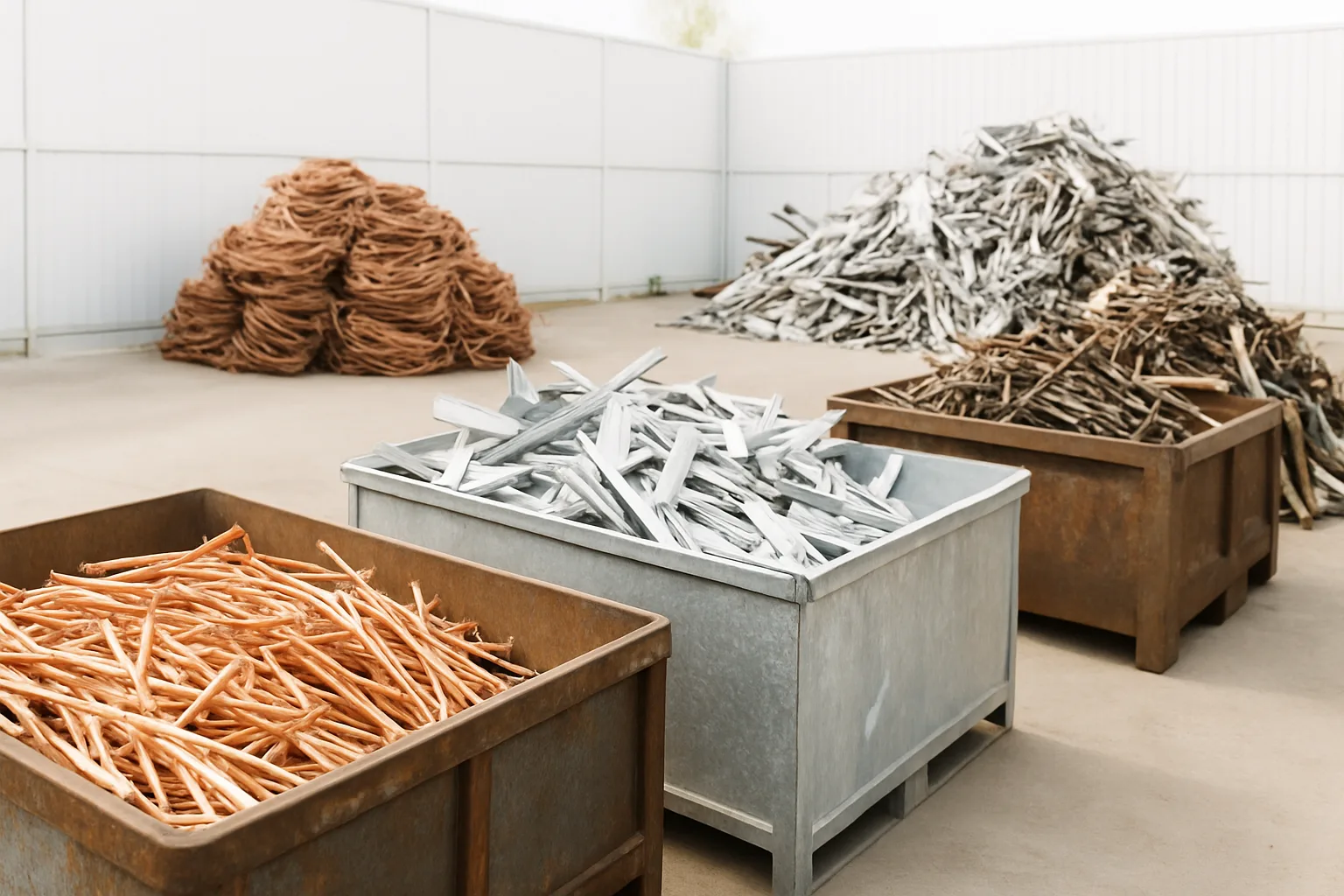
Sorting your metal is the single highest-return activity in scrap collecting. Yards pay different rates for different grades — and if your load comes in mixed, you'll get priced at the lowest common denominator. That's not fraud, that's just how it works. The buyer doesn't sort for free.
Here's a basic breakdown of what to keep separate:
- Copper: Bare bright, #1 copper, #2 copper, and copper-bearing material (motors, transformers) all carry different values. Don't mix them.
- Aluminum: Extrusions, cast aluminum, aluminum sheet, and litho sheet are graded differently. Painted or coated aluminum drops in value.
- Steel and iron: Light iron (appliances, sheet steel) versus heavy melt (structural steel, plate) — price spreads can be significant per tonne.
- Catalytic converters: These are a category on their own. The platinum group metals inside them make cats among the most valuable items a small collector can handle. Grade them by serial number if you can — don't just toss them in a pile.
- Non-ferrous odds and ends: Brass, stainless steel, lead, and zinc all have their own price points. Lump them together and you lose.
Proper sorting takes time upfront. But it's the kind of time that shows up directly in your payout. Platforms like find the best price for your scrap in Canada are built to give buyers full visibility into what they're bidding on — which means better-documented, well-sorted loads attract stronger competition.
---Track Scrap Metal Prices Today — Don't Guess
Walking into a yard without knowing current market rates is like selling a used truck without checking what it's worth. You might get a fair number. You might not. Either way, you have zero reference point to push back.
Scrap metal prices today are tied to a few key benchmarks:
- LME (London Metal Exchange) copper and aluminum prices — these set the floor for non-ferrous pricing across North America
- PGMS (platinum group metals) — what drives catalytic converter values; rhodium, palladium, and platinum spot prices move daily
- Local supply conditions — a city like Windsor, Ontario, with its manufacturing and automotive history, sees different regional scrap flows than, say, a rural market
You don't need to become a metals analyst. But checking benchmark prices once or twice a week takes five minutes and gives you a baseline. If a yard is quoting you significantly below the benchmark, you now know to ask why — or take your load elsewhere.
For collectors in Windsor, local demand from automotive and manufacturing sectors can sometimes push non-ferrous prices above national averages. That's regional leverage. Use it. If you're not sure how current pricing stacks up in your area, sell your scrap metal at fair Canadian prices through a platform that brings competition to your load instead of leaving you to negotiate alone.
---Build Consistency: Volume and Frequency Matter More Than You Think
Scrap collecting at small scale often means irregular trips — a load when you have enough, a run when the truck's full, a sell-off when you need the cash. That's fine as a starting point. But inconsistency is expensive.
Yards and buyers pay attention to reliability. A collector who shows up with clean, sorted loads on a predictable schedule earns trust — and sometimes better pricing — over time. That's not a guarantee, but it's a real dynamic in how scrap relationships work.
A few habits that build consistency:
- Set a trip threshold. Don't run a load until you hit a minimum weight that makes the fuel and time worthwhile. Know your break-even point.
- Keep a running inventory. Even a simple notebook or phone note tracking what you've accumulated by grade helps you plan timing and estimate payout before you go.
- Separate as you collect, not after. Sorting at the source — at the job site, in the garage, on the truck — saves hours and reduces contamination between grades.
- Document your loads. Photos of sorted material before drop-off give you a record if weight tickets don't match what you brought in. They also matter if you're selling through an get a fair price for your scrap today process that requires documented inventory.
Scrap metal recycling in Ontario is a competitive market. Small collectors who operate like small businesses — even informally — consistently outperform those who treat it as casual. The margin difference adds up fast when you're moving copper, aluminum, or cats on a regular basis.
---Catalytic Converters: The High-Value Item Most Small Collectors Under-Sell
If you're picking up end-of-life vehicles, doing auto dismantling, or working with garages and body shops, catalytic converters are likely your highest-value individual items. They're also the most commonly under-sold.
Why? Because most collectors either sell them to the first buyer who offers a flat rate, or they don't know the serial number lookup process that reveals true PGM content. A cat worth $200+ can walk out the door for $80 if you don't know what's inside it.
Here's what changes the outcome:
- Use a VIN or serial number lookup to identify the converter type before selling. SMASH's platform includes serial tracking tools that help document and identify cats accurately.
- Don't mix high-value and low-value cats in one flat-rate deal. Grade them separately where possible.
- Understand that buyers competing for your cats will pay more than a single buyer with no competition. That's the core logic behind an auction-based approach.
For collectors in Windsor and across Ontario, the volume of automotive scrap flowing through the region creates real opportunity in the cat market. SMASH connects sellers to vetted buyers specifically for this kind of high-value, high-variance material — which is exactly where the old one-call method costs you the most.
Want to see what competitive bidding actually does to your catalytic converter payout? Explore scrap metal selling guides that break down the process step by step.
---Use the Right Platform — Not Just the Closest Yard
The closest yard is convenient. It's not always the best price. Small collectors often default to proximity because it's easy — and then wonder why the payout feels low. Convenience has a cost. You're paying it every run.
The shift worth making: treat selling scrap like selling anything else of value. You wouldn't sell a piece of equipment to the first person who showed up without knowing what it's worth. Apply the same logic to your loads.
SMASH is a scrap metal auction platform built for exactly this problem. Instead of one buyer setting your price, multiple vetted buyers compete for your material. That competition is what drives price discovery — not a posted rate on a whiteboard that may or may not reflect today's market.
For Windsor-based collectors, Windsor scrap metal services through platforms like SMASH mean you're not limited to what's within a 10-minute drive. Your load gets visibility across a broader buyer network — which matters most when you're moving non-ferrous, cats, or mixed loads where pricing varies most.
No subscription fees. SMASH only earns when you sell. That alignment matters — you're not paying for access to a platform that may or may not deliver results.
---Weekly Market Recap: What Small Collectors Should Watch This Week
As of this week in August 2026, non-ferrous markets continue to reflect global uncertainty around industrial output and trade flows. Copper remains a closely watched benchmark — any movement in manufacturing activity in North America and Asia tends to show up in scrap copper pricing within days.
Aluminum scrap demand from automotive and construction end markets remains steady in Ontario, driven in part by ongoing production activity in the Windsor corridor. Light iron and steel remain range-bound, with regional supply conditions playing a larger role than global benchmarks for most small collectors.
Catalytic converter values remain volatile week-to-week given PGM price swings. If you're holding cats, this is not a market to sit on inventory without a clear selling plan. Competition from vetted buyers is the best hedge against getting caught on the wrong side of a price drop.
Disclaimer: Scrap metal prices fluctuate daily based on market conditions, regional demand, and material grade. Always verify current rates before selling. Nothing in this article constitutes a guaranteed price or financial advice.
---Frequently Asked Questions
Q: How do I find out scrap metal prices today near Windsor?
Check current LME copper and aluminum benchmarks online, then compare them against what local yards are posting. Better yet, use a platform that puts your load in front of multiple buyers — competitive bidding gives you a real-time read on what your material is worth in the current market, not just what one buyer is willing to offer.
Q: Is it worth sorting scrap metal before I sell it?
Yes — every time. Mixed loads get priced at the lowest-grade rate in the pile. Sorting your copper, aluminum, and ferrous material separately can meaningfully increase your payout. For high-value items like catalytic converters, proper identification and documentation makes an even bigger difference.
Q: Can I sell scrap metal near me in Windsor without a large load?
Most yards have minimum weight requirements, and some aren't set up for small individual loads. If you're collecting part-time or at small scale, focus on accumulating enough of each grade to make a trip worthwhile. Platforms like SMASH work with loads of various sizes — and vetted buyers competing for your material means smaller loads still get real market attention.
Q: What scrap metal is most valuable for small collectors in Ontario?
Copper and catalytic converters consistently top the value-per-pound chart. Bare bright copper and properly identified cats are where small collectors see the biggest price variance — both upside and downside — depending on how well they document and sell their material. Aluminum extrusion and brass are also worth separating and selling carefully.
Q: How does a scrap metal auction platform work for small sellers?
Platforms like SMASH let you list your material — with photos, weights, and grade documentation — and put it in front of multiple vetted buyers who bid competitively. Instead of accepting the first number from a single buyer, you let the market set the price. There are no subscription fees; SMASH earns when you sell.
---If you're putting in the hours to collect, haul, and sort scrap metal, you deserve to get paid what your material is actually worth. The tools exist to make that happen — and the difference between the old one-call method and a competitive, documented selling process shows up directly in your pocket. Sell your scrap metal at fair Canadian prices — request a pickup at sell-scrapmetal.ca and find out what your load is worth on the open market.
Stay current on scrap metal market movements and selling strategies — follow SMASH on LinkedIn for weekly industry updates, pricing insights, and tips built for real collectors and recyclers across North America.