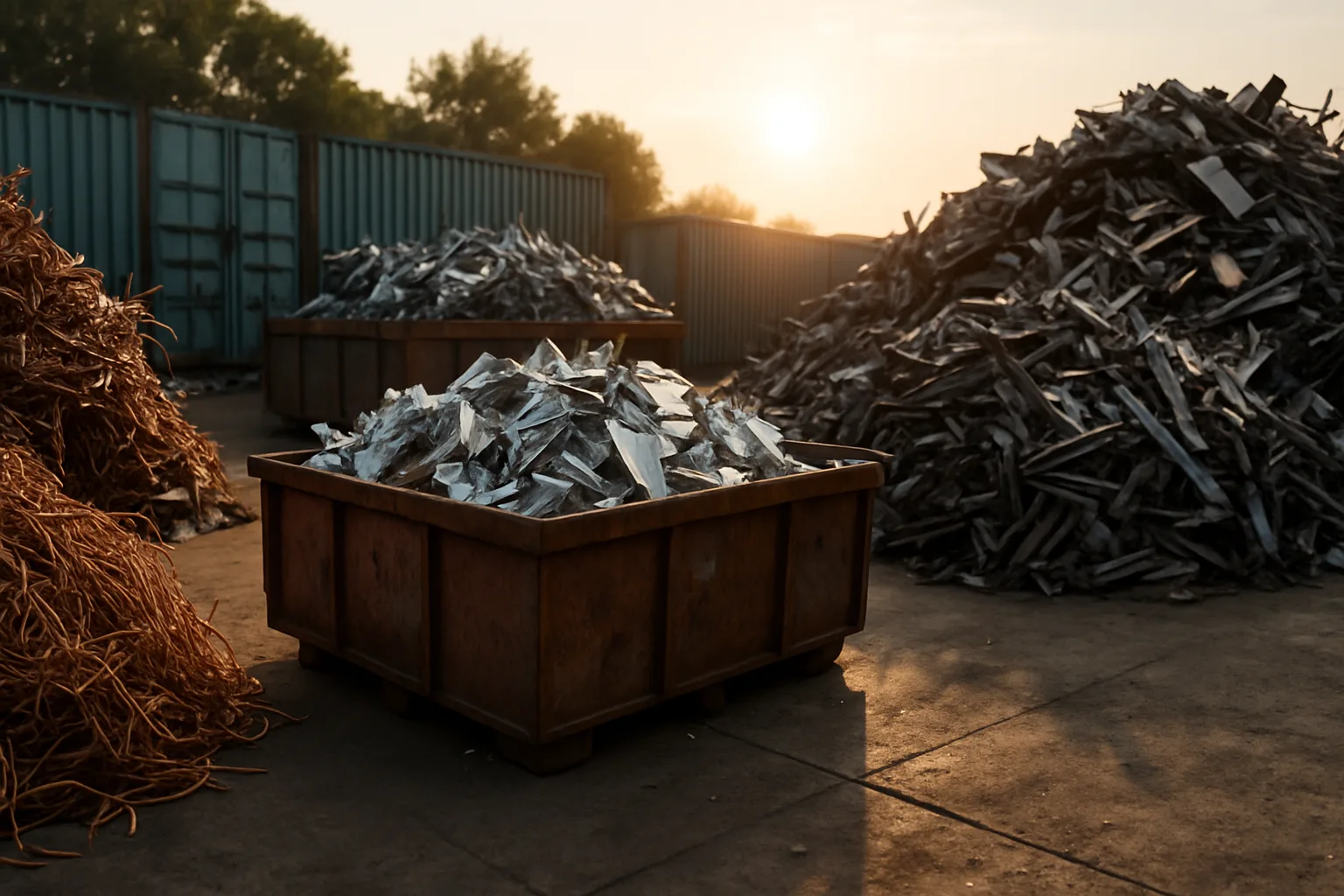
Most people drop off a load of scrap metal and accept whatever number the yard hands them. No questions asked. That's leaving money on the table. If you want to sell scrap metal near me Fredericton searches to actually pay off, you need to understand exactly how yards assess what you bring in — because the weighing and grading process directly determines your cheque.
This isn't complicated, but it is specific. Yards follow a process. When you know that process, you can prep your material better, ask smarter questions, and stop getting surprised by deductions. Whether you're a homeowner with a truckload of old copper pipe or a contractor clearing a demolition site in Fredericton, the rules are the same.
Step One: The Scale — How Yards Actually Weigh Your Load
Every commercial recycling yard uses a certified platform scale — the same type used for truck weigh stations. You drive onto it before unloading, they record your gross weight. You drive off after unloading, they record your tare weight. The difference is your net metal weight. Simple in theory, but there are details that catch people off guard.
First, your vehicle's moisture and fuel level can shift the tare weight slightly. More importantly, yards deduct for non-metal materials attached to your scrap. Wire insulation, plastic connectors, rubber grommets, concrete on rebar — all of it gets factored in. Some yards do this through a flat percentage deduction. Others actually inspect and estimate manually. Either way, contamination costs you weight on paper.
- Gross weight: Your vehicle plus all the scrap
- Tare weight: Your empty vehicle after unloading
- Net weight: The number your payout is based on
- Deductions: Applied for non-metal attachments, moisture, or contamination
Ask the yard for a printed weight ticket. You're entitled to it. If you're moving volume — multiple loads per month — those small deductions add up fast. Knowing your net weight at every drop keeps you honest about what your material is actually worth.
How Yards Grade Scrap Metal — And Why Grade Changes Everything
Weight gets you in the ballpark. Grade determines your actual rate. Yards classify metals into grades based on purity, form, and condition. The difference between grades on the same metal can be significant — sometimes 30 to 50 percent on a per-pound basis. That's not a small gap.
Here's how grading works in practice for the most common materials:
Copper
Bare bright copper — clean, uncoated wire or tube — sits at the top of the grading scale. Below that comes #1 copper (clean copper pipe or bus bar with no solder), then #2 copper (soldered fittings, light oxidation), then insulated wire, which gets graded by its estimated copper content. A bundle of mixed wire pulled from a wall isn't bare bright — it's insulated and gets paid accordingly. Strip it, and your rate jumps.
Aluminum
Aluminum grades separate by alloy and form. Cast aluminum (engine blocks, wheels) pays differently than extruded aluminum (window frames, angle stock). Cans are a separate category entirely. Clean sheet aluminum is graded differently from painted or coated pieces. Mixing clean extrusions with painted frames in the same bin pulls everything down to the lower grade at most yards.
Steel and Iron
Ferrous metal grades are generally simpler: heavy melt steel (thick plate and structural), light iron (thin gauge sheet), shredder material, and cast iron. Yards use magnets as a quick sort. Anything that sticks is ferrous. Clean, heavy-gauge steel gets the best ferrous rates. Rusted, mixed, or thin gauge material gets sorted down.
Catalytic Converters
Cats are graded by platinum group metal (PGM) content — platinum, palladium, and rhodium. The grade is determined by the converter's make, model, year, and serial number. VIN lookup and serial number tracking matter here. A high-value cat misidentified as a low-value cat costs you real money. Platforms like smashrecycling.ca use serial tracking and photo documentation so buyers are bidding on the actual unit — not a guess.
What Deductions Look Like in Practice
Yards don't always explain their deductions clearly. You hand over material, they quote a price, and the math doesn't quite match what you expected. Knowing the common deduction categories helps you anticipate the gap — and prep your material to minimize it.
- Moisture deduction: Common on wire bundles, shredded steel, or any material stored outside. Wet scrap weighs more, so yards apply a moisture penalty.
- Irony deduction: Applied to non-ferrous metal that contains ferrous contamination. If your aluminum has steel bolts still attached, expect this.
- Insulation deduction: Applied to copper wire based on estimated copper recovery percentage. Thicker insulation means a larger deduction.
- Processing deductions: Some yards charge to process certain materials — baling, shredding, or separating mixed loads.
The best defense is prep. Strip wire where it's practical. Remove steel hardware from aluminum. Pull concrete off rebar. Separate your metals by type before you arrive. Yards reward clean, sorted loads — not because they're being generous, but because clean loads cost them less to process.
Why Scrap Metal Prices Today Vary Between Buyers — And What You Can Do About It
Here's the part most sellers don't think about: the yard's posted scrap metal prices today are not a fixed market price. They're that yard's buying price on that day. A yard across town might be paying more. A specialty buyer focused on non-ferrous might value your copper higher. The market exists — but no single yard shows you the whole market.
This is exactly the gap that a scrap metal auction model addresses. Instead of calling one buyer and taking their number, you put your documented load in front of multiple vetted buyers simultaneously. Competition does what competition does — it surfaces the actual market rate rather than a single buyer's preferred margin.
SMASH operates exactly this way. When you list a load on SMASH — whether it's a bin of sorted copper, a pallet of cats, or a containerload of mixed non-ferrous — vetted buyers bid against each other. Your payout reflects what multiple buyers are willing to pay, not what one buyer decided to offer. More buyers means better price discovery. That's not a sales pitch — it's basic economics.
If you're looking to sell your scrap metal at fair Canadian prices, the difference between a single quote and a competitive auction can be meaningful, especially on high-value loads like catalytic converters or clean copper.
How Documentation Affects Your Payout — Especially in Fredericton
Documentation is underrated by most sellers. But here's the reality: a buyer who can see exactly what they're getting bids with more confidence. A buyer bidding blind builds in a discount for uncertainty. That discount comes out of your payout.
Good documentation for a scrap load includes:
- Photos of the material — sorted, clearly lit, showing the condition and grade
- Weight and grade description — what you have, how much, and how it's prepped
- Serial numbers or VINs — critical for catalytic converters
- Bill of lading (BOL) — for larger shipments, confirms quantity and condition at handoff
- Packing lists — useful for mixed loads with multiple metal types
Yards that handle volume in New Brunswick, including operations serving Fredericton, increasingly expect this level of documentation — particularly for catalytic converter purchases, where provincial and national theft-prevention regulations require seller ID and vehicle documentation. Don't show up without it.
Platforms like SMASH build documentation into the listing process. You upload photos, describe the grade, add serial numbers if applicable. That package goes to buyers who can actually evaluate what they're bidding on. The result is a more accurate bid — and more of the market value in your pocket. If you're new to this, explore scrap metal selling guides that walk through the process step by step.
Getting the Best Scrap Metal Prices: Practical Tips Before You Drop Off
You've done the work. You've sorted your load, documented it, and you understand how grading works. Here's the pre-drop checklist that separates a good payout from a great one.
- Separate ferrous from non-ferrous. Keep steel and iron in one section, aluminum, copper, and brass in another. Mixing costs you on both sides.
- Strip wire if it makes financial sense. On large bundles of heavy-gauge wire, the copper recovery jump is worth the labour. On thin wire, the math often doesn't work out — know the difference.
- Remove attachments. Steel bolts in aluminum, plastic fittings on copper pipe, rubber insulation on iron — all of it creates deduction opportunities for the yard.
- Check current rates before you go. Scrap metal prices today fluctuate with global commodity markets. A week's difference can move copper rates meaningfully. Time your drop when rates are favourable if you have the storage.
- Get multiple quotes. Don't settle for the first number. Or use a platform that gets multiple buyers to quote simultaneously.
- Know your cat serials. If you're bringing catalytic converters, photograph the serial number before you go anywhere. It's your proof of what you have.
For sellers in Fredericton looking to move volume regularly, connecting with Fredericton scrap metal services that understand the local market puts you ahead of sellers who are just walking in cold.
Ready to stop guessing and start getting paid what your material is actually worth? Get a fair price for your scrap today — whether you're clearing out a single load or moving material on a recurring basis across New Brunswick.
Frequently Asked Questions
Q: How do I find a scrap metal buyer near me in Fredericton?
Start with local recycling yards in the Fredericton area, but don't stop there. Platforms like SMASH connect sellers across Canada with vetted buyers who compete for your load — which often means a better return than a single local quote, especially on high-value materials like copper or catalytic converters.
Q: What affects the scrap metal price I get for my load?
Three main factors: the current commodity market rate (which fluctuates daily), the grade and purity of your metal, and how well-sorted and documented your load is. Clean, well-documented loads in clear grades consistently get better prices than mixed, contaminated loads.
Q: Do I need ID or paperwork to sell scrap metal in New Brunswick?
Yes. New Brunswick has regulations in place requiring sellers to provide government-issued ID and, for certain materials like catalytic converters, documentation of ownership or source. Check with your local yard or service provider for the current requirements — regulations are updated periodically.
Q: How do I know if I'm getting a fair price for my scrap metal today?
Check current commodity prices for copper, aluminum, and steel online as a baseline. Then get more than one quote. A competitive auction format — where multiple buyers bid on your documented load — is the most reliable way to surface what the market will actually pay, rather than what a single buyer chooses to offer.
Q: What's the difference between #1 and #2 copper at a scrap yard?
#1 copper is clean, uncoated copper pipe or wire with no solder or significant oxidation. #2 copper has solder joints, light coatings, or minor contamination. The price difference between the two grades can be substantial — stripping fittings and cleaning your copper before selling can move it from #2 to #1 and meaningfully increase your payout.
Prices referenced in this article are for general guidance only. Scrap metal prices fluctuate based on global commodity markets. Always check current rates before selling.
Stay current on scrap metal market trends and industry updates — follow SMASH on LinkedIn for insights that help you sell smarter.