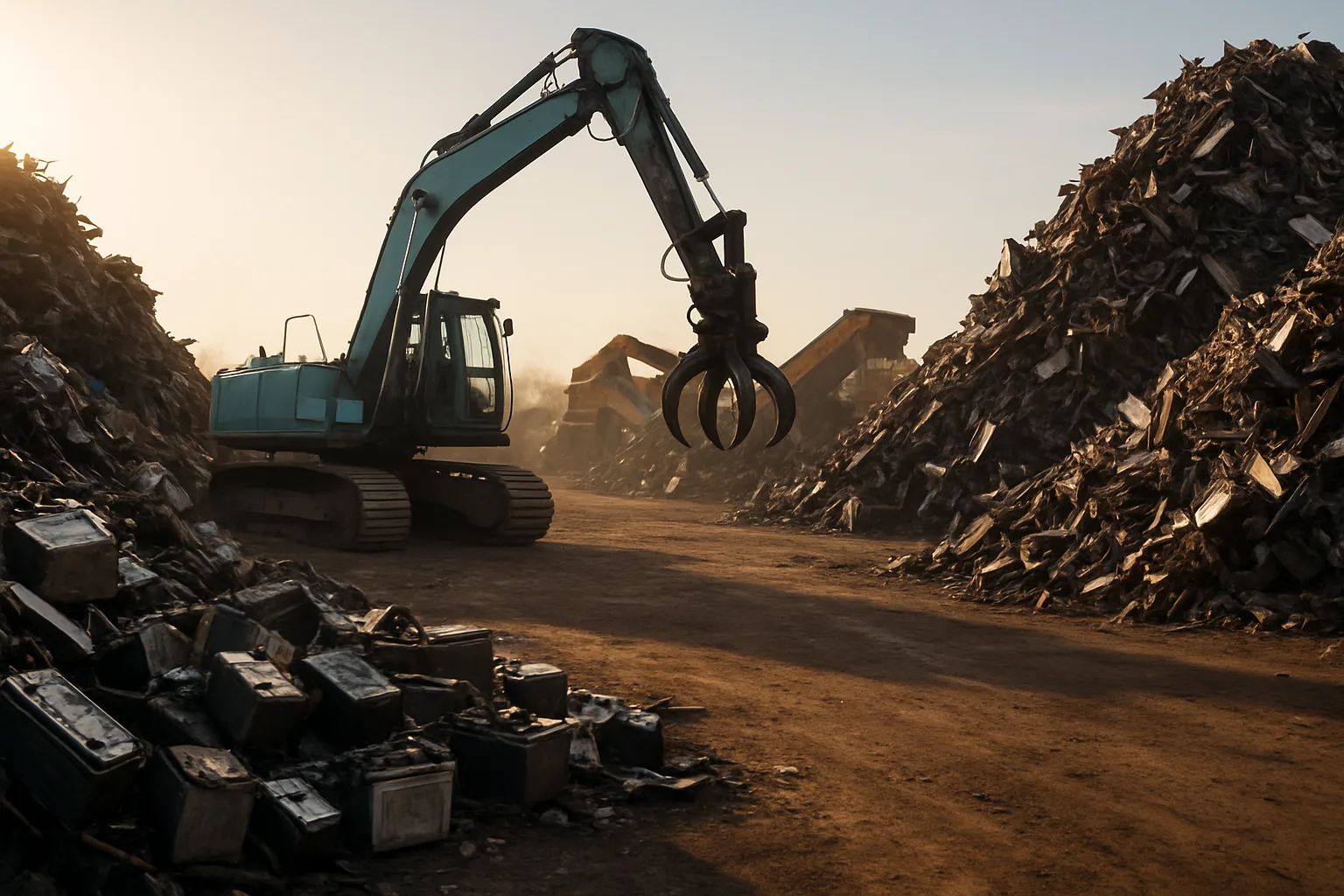
Lead-Acid Batteries Are Worth More Than You Think — Here's What Recyclers in Prince George Need to Know
Most people toss a dead car battery aside and forget about it. That's a mistake. Lead-acid batteries are one of the most consistently recyclable items in the scrap metal world — and in mid-2026, lead scrap continues to carry real value for yards and sellers across British Columbia. If you're sitting on a pile of dead batteries from a fleet, a shop, or a seasonal equipment cleanout, you're sitting on money.
This article breaks down how lead-acid battery recycling works, what drives lead scrap value, and how to make sure you're getting the best scrap metal prices Prince George has to offer — instead of leaving dollars on the table with a single phone call to a single buyer.
What's Inside a Lead-Acid Battery — and Why It Matters for Scrap Value
A standard 12-volt automotive lead-acid battery weighs between 15 and 25 kilograms. The bulk of that weight is lead — lead plates, lead oxide paste, and lead alloy components. That's roughly 60–70% recoverable lead by weight, depending on battery size and type. Industrial and deep-cycle batteries run heavier, sometimes 30 kg and up.
Lead is a dense, heavy non-ferrous metal. It doesn't corrode quickly, it's infinitely recyclable, and secondary lead (recycled from batteries) makes up the majority of global lead supply. That's not an accident — it's economics. Smelters prefer recycled lead because it's cheaper and more energy-efficient to process than virgin ore. That demand keeps scrap lead prices from collapsing the way some other metals can.
Here's what's inside a typical lead-acid battery:
- Lead plates and grids — the highest-value component
- Lead oxide paste — recovered and refined at smelters
- Lead alloy terminals — antimony or calcium alloy depending on battery type
- Polypropylene casing — recyclable plastic, often bought separately
- Sulfuric acid electrolyte — neutralized and processed at licensed facilities
When you sell whole batteries to a scrap yard, you're selling all of that together. Buyers price whole batteries at a per-unit or per-kilogram rate that reflects the blended recovery value — lead content minus processing and handling costs.
Lead Scrap Prices in 2026: What's Driving the Market Right Now
Lead prices in 2026 have been influenced by a few converging factors. Global EV adoption has reduced the dominance of traditional lead-acid starter batteries in passenger vehicles — but it hasn't eliminated them. Heavy-duty trucks, agricultural equipment, backup power systems (UPS units), and off-grid solar storage still rely heavily on lead-acid chemistry. Demand from these sectors keeps the recycled lead market active.
At the same time, battery manufacturers have been pushing for tighter supply chains around secondary lead, which means more competition among buyers for quality scrap battery loads. That's good news if you're a seller — but only if you're selling into a competitive environment rather than accepting the first number a single buyer offers you.
Disclaimer: Lead scrap prices fluctuate based on LME (London Metal Exchange) spot prices, regional demand, and processor capacity. Always check current rates before selling — posted prices can change week to week.
For context, lead-acid battery buyers typically quote in one of two ways: a flat rate per battery unit, or a price per kilogram of whole battery weight. Larger volumes generally attract better rates. A fleet shop or industrial yard clearing out dozens of batteries has more negotiating leverage than someone selling two. That's exactly the kind of load where a B2B scrap metal marketplace like SMASH creates real price discovery — multiple buyers competing on your load instead of one buyer setting the number.
How Scrap Yards in Prince George Handle Battery Recycling
Prince George sits at the crossroads of northern British Columbia's resource economy. Forestry equipment, mining support vehicles, heavy-duty transport fleets — this region generates a consistent volume of end-of-life batteries. Local recycling operations accept lead-acid batteries, but like anywhere, rates and buyer appetite vary.
If you're managing scrap metal inventory management across a fleet or multi-site operation, batteries often get overlooked in the accounting. They pile up in corners, get written off as a disposal cost, or get handed off to whoever shows up first. That's the old way. The smarter move is treating your battery stockpile as a sellable commodity — document the count, weigh what you can, photograph the condition — and then get it in front of more than one buyer.
Platforms like SMASH make that process straightforward. You log your load, upload photos and weights, and vetted buyers across British Columbia and beyond can bid on it. That's a different outcome than calling one local yard and accepting whatever rate they quote. You can explore Prince George scrap metal services to understand what's available in your area and how to connect with buyers who are actively looking for battery loads.
For sellers new to recycling, here's a practical checklist before you sell a battery load:
- Count and weigh your batteries if possible — buyers want specifics
- Note the battery types (automotive, AGM, deep-cycle, industrial)
- Check for obvious damage — cracked cases affect value
- Keep batteries upright to prevent acid leaks during transport
- Ask if the buyer wants them sorted by type or accepts mixed loads
Aluminium Scrap Value Per Kg — The Other Metal in Your Battery Cleanup
When you're clearing out a shop or yard, lead-acid batteries rarely travel alone. Battery terminals, cable ends, and the surrounding equipment often include aluminum components. If you're thinking about aluminium scrap value per kg alongside your lead recovery, you're asking the right question.
Aluminum and lead need to be separated before sale — mixing them reduces value and complicates processing. Aluminum scrap in 2026 continues to command solid per-kilogram rates, particularly clean sheet, extrusion, and cast grades. Cable with aluminum conductors has its own pricing bracket. The point is: sort your metals before you approach buyers. A mixed, unsorted load gives a buyer every reason to low-ball you. A documented, sorted load gives them confidence — and confidence translates to stronger bids.
This is where scrap metal inventory management pays off beyond just batteries. When you sell your scrap metal at fair Canadian prices, having a clear breakdown of what you're selling — lead battery weight, aluminum cable weight, steel content — puts you in a better negotiating position regardless of which channel you use to sell.
Why Selling Through a Competitive Platform Gets You Closer to the Best Price
Here's the reality of the scrap market: buyers know more about current prices than most sellers do. That information gap is how single-buyer transactions tend to favor the buyer. You call, they quote, you either take it or walk away. Most people take it because they don't have another number to compare.
SMASH was built to close that gap. It's a vetted buyer network where your scrap load — whether it's a pallet of lead-acid batteries, a mix of non-ferrous metals, or a full yard cleanout — gets seen by multiple buyers at once. That competition is what drives price discovery. More buyers means better price discovery. It's not a guarantee of any specific number, but it's a fundamentally different dynamic than one phone call.
If you're in Prince George managing a meaningful volume of scrap — fleet batteries, copper cable, aluminum extrusion, catalytic converter cores — you have enough leverage to attract serious buyers. Don't give that leverage away by defaulting to whoever picks up the phone first. Find the best price for your scrap in Canada by putting your load in front of a competitive field.
Auto recyclers and industrial operations across British Columbia have started treating scrap sales the way they treat any other procurement decision — with documentation, comparison, and a process. If you're not doing that yet, start with your next battery load. It's a simple, high-weight commodity that's easy to document and easy to sell competitively.
Ready to get a fair price for your scrap today? Start by getting organized, then get your load in front of more than one buyer. That's the whole strategy. And if you want to build on it, explore scrap metal selling guides that walk through other metals, pricing factors, and how to approach larger loads.
Whether you're clearing out a single shop in Prince George or managing fleet scrap across multiple locations in British Columbia, the math is simple: more buyers competing on your load is better than one buyer setting the price. SMASH puts you on the right side of that equation. Sell your scrap metal at fair Canadian prices — request a pickup at sell-scrapmetal.ca.
Frequently Asked Questions
Q: How much is a lead-acid battery worth as scrap in Prince George?
Lead-acid battery scrap prices depend on current lead spot prices, battery weight, and local buyer demand. Most automotive batteries weigh 15–25 kg and are priced per unit or per kilogram of whole battery weight. Rates change regularly — check with buyers in Prince George or use a platform like SMASH to get competitive quotes before committing to a sale.
Q: Can I sell batteries with cracked cases or acid leaks?
Damaged batteries may still be accepted by licensed processors, but cracked cases and acid leaks affect handling requirements and often result in lower pricing. Keep batteries upright during storage and transport, and disclose condition issues to buyers upfront. Transparency builds trust and usually leads to smoother transactions.
Q: What's the best way to get the best scrap metal prices in Prince George?
The most reliable way to get competitive scrap prices anywhere — including Prince George — is to put your load in front of multiple buyers at the same time. Document your materials, weigh what you can, photograph the load, and use a platform like SMASH to attract vetted buyers who are actively bidding. Competition reveals the market rate in a way that a single phone call never can.
Q: Do I need to separate lead batteries from other scrap metal before selling?
Yes. Mixed, unsorted loads are harder for buyers to price accurately, which typically results in lower offers. Separate your lead-acid batteries from aluminum, copper, and steel before selling. Sorted, documented loads attract stronger bids and make the transaction faster for both parties.
Q: Is lead-acid battery recycling regulated in British Columbia?
Yes. British Columbia has producer responsibility regulations covering lead-acid batteries, and processors handling battery acid and lead materials must meet environmental compliance requirements. For sellers, this primarily means working with licensed buyers and recyclers — which vetted platforms like SMASH help facilitate. Always confirm that your buyer is a licensed processor for hazardous materials.
Follow SMASH on LinkedIn for scrap metal market updates, industry news, and insights on getting the most value from your loads across Canada.