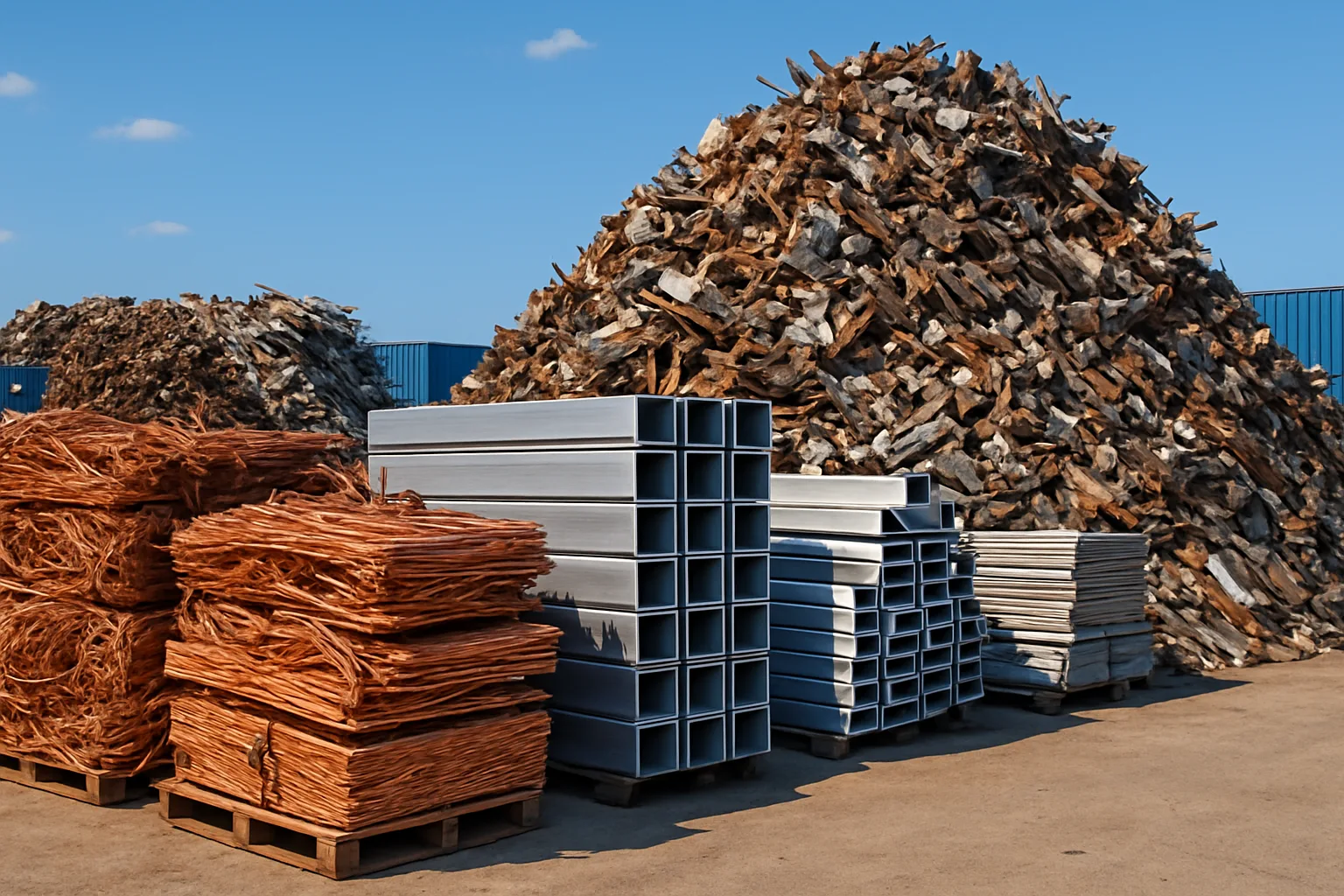
You've got a pile of metal in the yard and no idea what it's worth — because you don't actually know what it is. That's not a small problem. Getting your identification wrong means you might hand over copper at steel prices, or mix your loads in a way that drops the value of everything. Before you worry about the steel scrap price today, you need to know what you're actually looking at.
This guide walks you through a practical, hands-on process for identifying common scrap metals. No lab equipment. No guesswork. Just a magnet, your eyes, and a few simple tests that yard operators across Canada use every day — including in Charlottetown, where smaller volumes make accurate sorting even more critical for getting a fair return.
Why Metal Identification Matters Before You Sell
Mixed loads are the enemy of good pricing. When a buyer can't confirm what's in a load, they either pass on it or price it at the lowest possible metal in the mix. That's how sellers leave money on the table — not from market conditions, but from poor sorting up front.
Knowing your metals gives you two advantages. First, you can separate loads properly and sell each material category at its correct market rate. Second, you can speak confidently with buyers about what you have. Confidence builds credibility. Buyers on platforms like compare scrap metal bids from Canadian buyers respond better to documented, accurately described inventory than to vague listings.
It also helps you understand why scrap metal prices today vary so dramatically between materials. Copper trades at a completely different price per pound than structural steel. Aluminum sits somewhere in between. If you're sorting these correctly from the start, you're already ahead of most casual sellers.
The Magnet Test: Your First and Most Useful Tool
Start here. Every time. A basic refrigerator magnet or a stronger rare-earth magnet is the fastest way to split your pile into two categories: ferrous and non-ferrous.
Ferrous metals contain iron. They attract magnets. This group includes:
- Steel — structural beams, pipes, appliances, car frames
- Cast iron — engine blocks, old radiators, cookware
- Wrought iron — older decorative items, railings, farm equipment
Non-ferrous metals do not attract magnets. This group includes:
- Copper — wire, pipe, coils, motors
- Aluminum — cans, wheels, extrusions, sheet
- Brass — fittings, valves, fixtures
- Stainless steel — appliances, food equipment (some grades are weakly magnetic)
- Lead — batteries, weights, old pipe
- Zinc — die-cast parts, galvanized coatings
Non-ferrous metals are almost always worth more per pound than ferrous. That's the core reason this first test matters so much. When you're trying to understand the steel scrap price today versus copper or aluminum rates, the magnet is what separates the categories in your physical pile.
One important note: stainless steel can fool you. Some grades are non-magnetic. If a piece doesn't stick to the magnet but looks like steel, check for a dull silver finish with no rust — that's a sign you might be holding stainless, which commands a premium over regular steel.
Visual Identification: What to Look for After the Magnet Test
Once you've split your pile into ferrous and non-ferrous, use your eyes. Color, weight, texture, and surface finish all tell you something.
Copper
Copper is one of the easiest metals to identify. Fresh copper is bright orange-red. Aged copper turns green (called patina). It's heavy for its size, bends easily, and is extremely common in electrical wire, plumbing pipe, and HVAC coils. If you're in Charlottetown stripping out an older home or commercial building, the copper pipe and wiring inside can be some of your highest-value material. Strip the insulation off wire before you sell — bare bright copper grades higher than insulated wire.
Aluminum
Aluminum is light. Noticeably light. If you pick up a piece of metal and it feels almost too light for its size, it's likely aluminum. The color is dull silver-grey. It doesn't rust — it oxidizes with a white, powdery surface instead. Common sources include window frames, doors, siding, automotive wheels, and beverage cans. Aluminum is non-magnetic and won't spark when ground.
Brass
Brass has a distinct yellow-gold color. It's denser than aluminum but lighter than copper. You'll find it in plumbing fittings, valves, door handles, and musical instruments. Don't confuse it with gold — brass is duller and doesn't shine the same way. It's non-magnetic and worth considerably more per pound than aluminum.
Steel vs. Cast Iron
Both are ferrous, but they behave differently. Cast iron is brittle and heavy — drop it and it can crack or shatter. It's often rough-textured and used in engine blocks, cookware, and old radiators. Steel is more flexible, often smooth or mill-finished, and shows up in beams, pipes, car bodies, and appliances. For scrap metal inventory management, keeping cast iron separate from light iron and steel helps you grade loads accurately and get better offers from buyers.
Stainless Steel
Stainless has a bright, shiny silver finish. It resists rust and looks cleaner than regular steel. As mentioned, some grades weakly attract magnets — run the magnet test but don't rely on it alone. Stainless is worth more than regular steel and is worth identifying carefully.
Practical Sorting Tips for Charlottetown Sellers
Sellers in Charlottetown and across Prince Edward Island often deal with mixed-source material — farm equipment, seasonal construction scraps, marine components, and residential cleanouts. The variety is real, and so is the risk of misidentification.
Here are practical sorting habits that help:
- Sort as you collect. Don't let a mixed pile sit. Every day it stays unsorted, you're adding work later.
- Use separate bins labeled by metal type. Ferrous, copper, aluminum, brass — minimum four categories.
- Strip what you can. Copper wire with insulation grades lower than bare bright. Aluminum with steel attachments grades as contaminated mixed metal.
- Photograph your loads. Good photos support better-documented listings. Platforms like SMASH encourage photo documentation precisely because it gives remote buyers confidence in what they're bidding on.
- Weigh your loads before listing. Knowing the weight of each category lets you compare offers on a per-pound basis instead of guessing.
If you want to sell your scrap metal at fair Canadian prices, sorting is where the money is made before the sale even happens.
How SMASH Uses Your Metal Identification to Drive Competition
Here's where accurate identification stops being just a sorting exercise and starts being a pricing strategy. When you list on SMASH, you're not calling one buyer and accepting whatever they offer. You're putting documented inventory in front of multiple vetted buyers who compete for your load.
That competition is only possible if buyers trust the listing. A clear, accurate description — "250 lbs bare bright copper, photographed, palletized" — invites real bids. A vague listing — "some copper and other stuff" — invites low-ball hedging or no bids at all.
SMASH's inventory tool supports serial tracking, photo documentation, and grade classification. That's not just organization — it's leverage. More buyers means better price discovery. And better price discovery is how you stop guessing what your scrap is worth and start knowing. Whether you're tracking the steel scrap price today or watching copper move, documented loads get taken more seriously.
You can explore scrap metal selling guides to go deeper on grading, pricing, and what buyers actually look for when they evaluate a load.
A Note on Catalytic Converters and Specialty Metals
Catalytic converters deserve their own category. They don't follow the same visual or magnet rules as structural metals. They contain platinum group metals — platinum, palladium, and rhodium — embedded in a ceramic or metallic substrate inside a steel shell. The steel shell is ferrous. The value isn't.
Cats are identified by their housing, vehicle origin, and serial number. VIN lookup tools and serial tracking — both features available through SMASH — help you identify and document cats accurately. A properly identified catalytic converter gets a more accurate offer than one listed generically as "used cat." For sellers in Prince Edward Island dealing with end-of-life vehicles, this matters. Don't lump cats into your ferrous pile.
Ready to stop guessing and start selling what you actually have? Get a fair price for your scrap today and put your sorted, documented loads in front of buyers who compete for them.
Frequently Asked Questions
Q: How do I find out the steel scrap price today in Charlottetown?
Steel scrap prices fluctuate based on global commodity markets and local demand. Your best approach is to check with multiple buyers rather than accepting the first quote. Platforms like SMASH create competitive bidding that helps reveal the actual market rate for your material. Prices vary by grade, so accurate sorting directly affects the rate you're quoted.
Q: Does the magnet test work on all metals?
The magnet test is reliable for separating ferrous from non-ferrous metals in most cases. The exception is certain grades of stainless steel, which may show weak magnetic attraction despite being non-ferrous in value terms. Use the magnet test as your first step, then confirm with visual identification.
Q: What is the difference between scrap metal prices today for copper versus steel?
Copper consistently trades at a significantly higher price per pound than structural steel. The exact spread changes with market conditions, but non-ferrous metals like copper and aluminum almost always outvalue ferrous metals like steel and cast iron. Always separate your loads by metal type before getting quotes. Disclaimer: prices fluctuate — check current rates before selling.
Q: Can I sell unsorted mixed metal loads?
You can, but you'll get priced for the lowest-value metal in the mix. Buyers hedge when they can't confirm composition. Sorting takes time upfront but consistently produces better returns than selling mixed loads. Even basic separation — ferrous versus non-ferrous — makes a measurable difference.
Q: Is scrap metal inventory management really necessary for small sellers?
Even small sellers benefit from basic documentation — weight, metal type, and a photo. It makes your listing credible, speeds up the transaction, and gives buyers the information they need to bid confidently. SMASH's inventory tools are designed to work for yards of all sizes, not just large operations.
Follow SMASH on LinkedIn at linkedin.com/company/scrap-metal-auction-sales-hub for Canadian scrap metal market updates, pricing insights, and industry news.