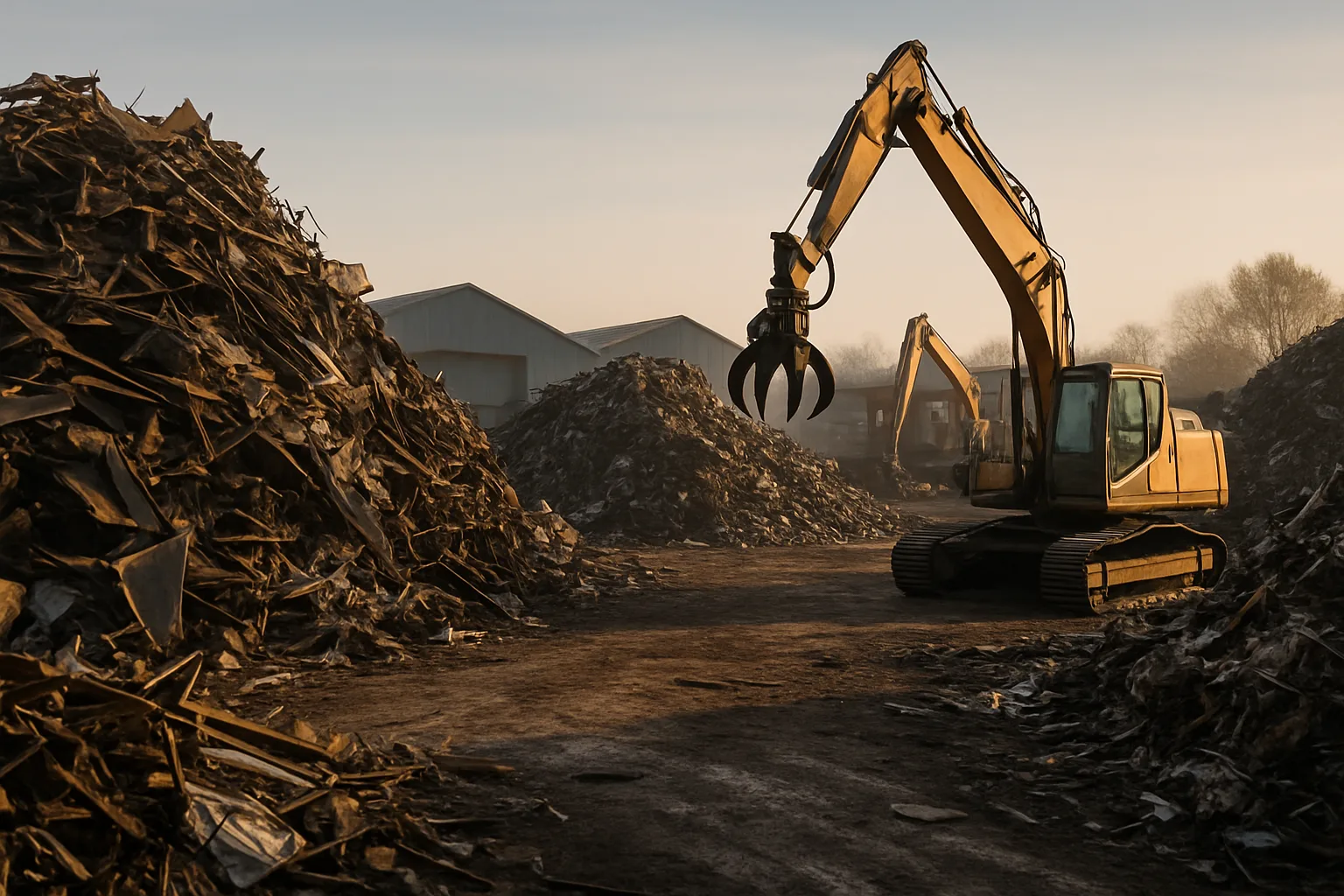
Why Scrap Metal Prices Move Every Single Day — And What That Means for You
You checked copper prices last Tuesday. You check again today and they're different. Not dramatically — but different. That's not a glitch. That's how scrap metal markets actually work, and if you're trying to sell scrap metal near me New Westminster, understanding why prices shift can put real money back in your pocket.
Scrap metal isn't priced like a grocery item with a fixed tag. It trades like a commodity. Global supply, smelter demand, currency movements, trade policy — all of it feeds into what a yard will offer you on any given Monday versus any given Friday. Most sellers don't know this. They take the first number they're quoted and walk away, assuming that's the market. It isn't always.
What's Actually Driving Scrap Metal Prices in July 2026
The first half of 2026 has been volatile for commodity markets across the board. Ongoing trade policy adjustments between major steel-consuming nations, shifting energy costs at smelting facilities, and fluctuating Chinese demand for non-ferrous metals have all kept buyers and yards on edge. That uncertainty flows directly downstream to the prices you see at your local yard.
In British Columbia, local market conditions add another layer. Port activity through Metro Vancouver affects how quickly processed scrap moves to export markets. When container availability is tight or shipping costs spike, processors get cautious — and offer prices get trimmed to protect margin. When demand is strong and logistics cooperate, the same load earns more.
Here's a quick breakdown of the key factors moving scrap metal prices today:
- London Metal Exchange (LME) benchmarks — copper, aluminum, and nickel futures set the tone globally every trading day
- USD/CAD exchange rate — most non-ferrous metals trade in USD; a weaker Canadian dollar means higher CAD prices for sellers, and vice versa
- Domestic mill demand — Canadian steel mills adjust their scrap buying programs weekly based on order books
- Seasonal flows — summer typically brings higher scrap volumes from construction and demolition; more supply can soften prices
- Catalytic converter precious metal spot prices — platinum, palladium, and rhodium prices directly impact what buyers pay per cat
None of these factors are visible when you make one phone call to one buyer. That single quote is that buyer's margin calculation — not necessarily a reflection of what competition would reveal.
Copper, Aluminum, and Cats — How Each Metal Behaves Differently
Not all scrap moves the same way. Scrap copper Canada pricing tends to be the most reactive — it follows LME copper tick for tick, and the spread between #1 bare bright copper and #2 copper can widen or narrow week to week depending on domestic demand. Right now, #1 copper remains one of the most actively traded grades at yards across New Westminster and the surrounding Metro Vancouver area.
Scrap aluminum is more regionally driven. Extrusion-grade aluminum and cast aluminum trade at different premiums depending on proximity to aluminum de-ox facilities and secondary smelters. Aluminum cans (UBC) follow a separate track tied to beverage can recycling programs. For commercial volumes, the grade mix in your load matters enormously — a clean load of aluminum extrusion commands a very different price than mixed zorba.
Catalytic converters deserve their own conversation. Cat pricing has compressed significantly from the peak years, with palladium prices well off their historic highs. But cats still represent real money — especially in volume. Serial number tracking and accurate identification matter here. Buyers who can verify a converter grade before bidding offer tighter, more reliable prices than those quoting blind. That's exactly the kind of documentation that platforms like compare scrap metal bids from Canadian buyers support through photo documentation and serial tracking tools.
The Problem With Calling One Buyer for Your Scrap Price
Here's the uncomfortable truth about how most scrap gets sold in Canada: a yard operator or individual seller calls their regular buyer, gets a number, and ships the load. No competitive process. No price discovery. Just one data point presented as the market rate.
That buyer isn't doing anything wrong — they're running a business. But their offer reflects their margin target, not the ceiling of what the load could earn. More buyers means more competition. More competition means better price discovery. That's not a sales pitch — that's how auctions work in every commodity market on earth.
If you're sitting on a significant load — a bin of scrap copper, a pallet of cores, a truck full of mixed non-ferrous — and you're in New Westminster or anywhere else in British Columbia, a single phone call is leaving information on the table. You don't know if another buyer 200 kilometers away would have paid more. You don't know if a different processor with a current mill order was hungry for exactly your grade that week.
SMASH was built specifically to solve this. Instead of one buyer and one quote, SMASH scrap metal auction connects your documented load to a network of vetted buyers who compete. You get a transparent process and real market feedback — not one buyer's margin estimate.
How Documentation Changes What Buyers Will Pay
One of the most overlooked levers in scrap pricing is how well a load is documented. Buyers price uncertainty into their offers. If they can't verify what they're buying — photos, weights, grade breakdowns, VIN lookups on cores — they hedge. That hedge comes out of your price.
When you document a load properly, buyers get confident. Confident buyers bid tighter. Tighter bids mean better outcomes for the seller. It sounds simple because it is, but most sellers never think about it this way. They assume the load speaks for itself. A blurry photo of a pile of mixed metal in a bin does not speak clearly.
SMASH's inventory tool is built for this. Photo documentation, VIN lookup for catalytic converters and automotive cores, serial tracking for high-value non-ferrous — all of it reduces buyer uncertainty and supports a cleaner auction process. When you're ready to sell your scrap metal at fair Canadian prices, the quality of your listing affects the quality of the bids you attract.
Timing Your Sale — Does It Actually Matter?
Seasoned yard operators will tell you: yes, timing matters, but chasing the market top is a fool's game. What matters more is understanding the general direction of the market and not selling into a confirmed downtrend when you have flexibility to wait.
Here's a practical framework for thinking about timing:
- Watch LME copper and aluminum weekly, not daily — daily noise isn't actionable; weekly trends tell you more
- Watch the CAD/USD rate — a move of even two or three cents in the exchange rate has meaningful impact on your CAD scrap price
- Don't hold perishable or weather-sensitive loads — cats stored poorly degrade; ferrous held outside rusts down in grade
- Larger volumes give you more leverage — accumulate before selling if storage allows; a bigger lot attracts more serious buyers
- Check multiple sources, not one yard's board price — posted prices aren't always what negotiated loads clear for
For regular sellers, setting up a recurring process — document the load, run it through a competitive channel, compare results — builds a data history over time. That history becomes a real benchmark. You stop guessing what the market is and start knowing.
If you're newer to selling and want to understand the landscape better, explore scrap metal selling guides for practical breakdowns by metal type, grade, and process. And when you're ready to stop calling one buyer and start letting buyers compete, get a fair price for your scrap today through a process that's built around your interests as the seller.
The scrap market moves every day. The sellers who understand why — and who use competitive channels to capture real pricing — consistently outperform those who rely on habit and a single phone call. Whether you're a yard in New Westminster moving volume weekly or an individual with a one-time load, the principle is the same: more transparency, more competition, better outcomes.
Disclaimer: Scrap metal prices fluctuate daily based on commodity markets, exchange rates, and local demand. Always check current rates before making selling decisions.
---Frequently Asked Questions
Q: How do I find the best place to sell scrap metal near me in New Westminster?
Start by identifying local yards that accept your metal type and grade. Then go beyond a single quote — platforms like SMASH connect sellers in New Westminster and across British Columbia with vetted buyers who compete for your load. More competition typically means better price discovery than calling one buyer.
Q: How often do scrap metal prices change?
Scrap metal prices can change daily. Non-ferrous metals like copper and aluminum track commodity exchanges that price continuously during trading hours. Most yards update their posted prices at least weekly, and negotiated prices on larger loads can shift mid-week based on market movement.
Q: Is free scrap metal pickup near me actually worth it?
It depends on the load. For small volumes of lower-grade material, free pickup eliminates transportation cost and can make the transaction worthwhile even at modest per-pound prices. For larger or higher-value loads — a full bin of clean copper or a pallet of cats — weigh the convenience against what a competitive auction process might return versus a pickup-only offer.
Q: What's the difference between a scrap metal auction and selling directly to a yard?
Selling directly to a yard means one offer from one buyer. A scrap metal auction like SMASH brings multiple vetted buyers to your documented load and lets them compete. The auction format creates real price discovery rather than a single margin calculation from one processor.
Q: Do I need to sort my scrap before selling?
Sorting almost always improves your outcome. Mixed loads get priced at the lowest-grade component to account for sorting costs on the buyer's side. Separating clean copper from insulated wire, or aluminum extrusion from cast, typically returns a higher blended price than selling a mixed bin. Document your grades clearly — it gives buyers confidence and supports better bids.
---Ready to stop guessing what your scrap is worth? Sell your scrap metal at fair Canadian prices — request a pickup or start a listing at sell-scrapmetal.ca and let the market tell you what your load is actually worth.
Stay current on scrap metal market trends and industry news — follow SMASH on LinkedIn for weekly insights, price movement commentary, and updates from across the North American recycling industry.