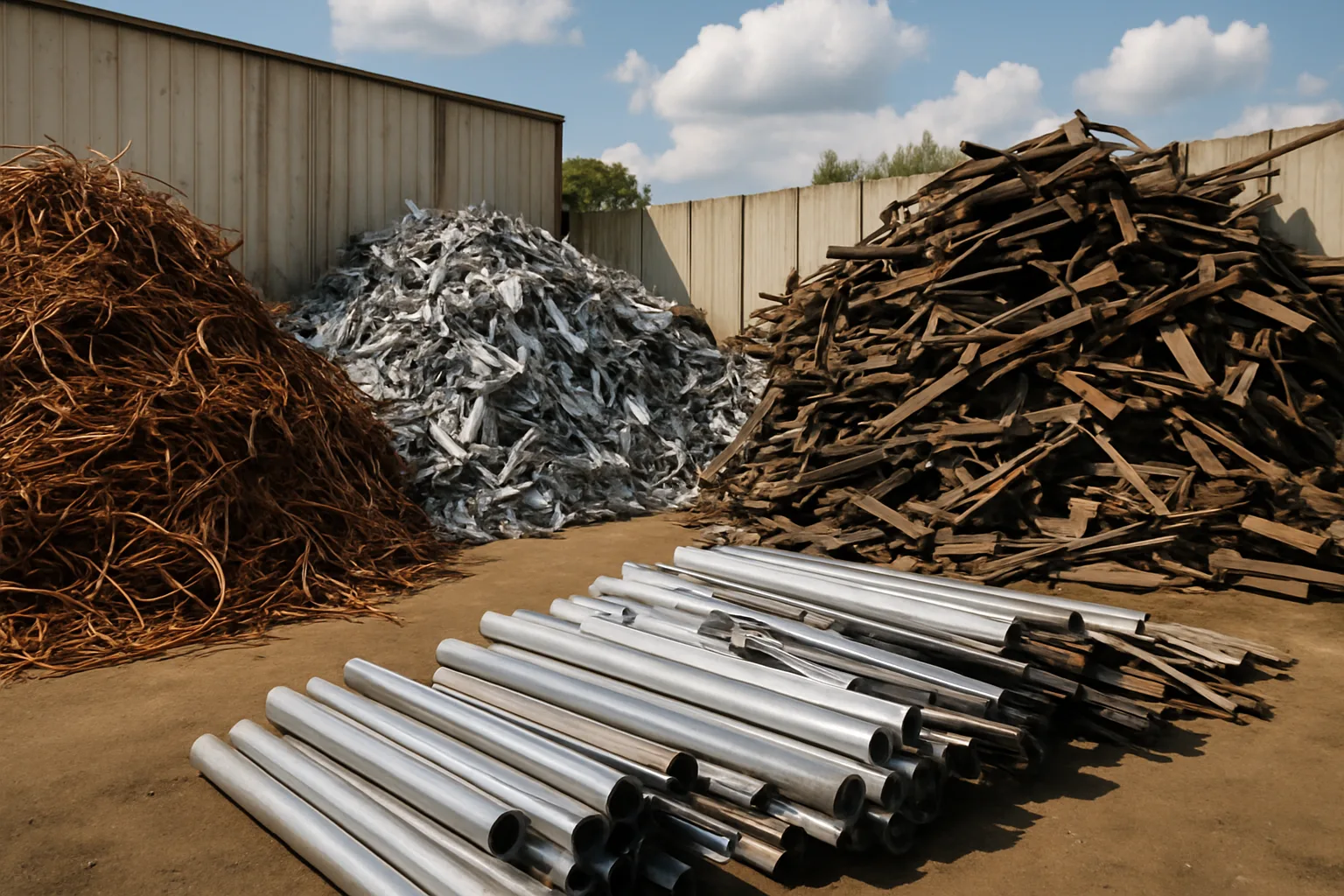
Most contractors see a demolition job and think about disposal costs. The smart ones see a revenue opportunity. A single mid-sized commercial demo in Ontario can generate thousands of kilograms of recoverable metal — steel rebar, copper wiring, aluminum framing, and more. If you're hauling that material to a landfill, you're paying to get rid of something buyers actually want.
This is exactly the kind of situation where knowing how to sell scrap metal Oshawa and surrounding regions makes a real difference. Whether you're a general contractor, demo crew, or property developer, the metal sitting on your jobsite has value. The question is whether you're capturing it.
---What Construction and Demolition Sites Actually Produce
C&D sites are some of the most metal-dense environments in the recycling supply chain. A commercial teardown, a road rehabilitation project, or even a residential renovation can yield a surprising volume of recoverable material. The mix depends on the structure's age and original build, but the categories are consistent.
Here's what typically comes off a demolition or construction site:
- Steel rebar and structural steel — heavy, bulky, and in consistent demand from steel mills
- Copper wire and pipe — one of the highest-value metals by weight; electrical systems and plumbing are full of it
- Aluminum framing and flashing — windows, storefronts, HVAC ducting, and roofing details
- Cast iron and ductile iron — older pipes, radiators, and mechanical equipment
- Stainless steel — commercial kitchen equipment, exhaust systems, specialty fixtures
- Electrical motors and transformers — contain copper windings worth separating out
- Catalytic converters — if the site involves decommissioned vehicles or equipment
Older buildings — especially those built before the 1980s — often carry higher copper and cast iron content. Newer builds lean aluminum and coated steel. Either way, the material is there. The opportunity is real.
---Why Most Crews Leave Money on the Table
Here's the honest problem: most demolition teams don't have a system for scrap recovery. Metal gets mixed with concrete, drywall, and debris, which contaminates the load and drops its value — or makes it unsellable altogether. Work gets done fast, and sorting feels like a time cost nobody wants to absorb.
But that logic breaks down quickly when you run the numbers. Copper alone can trade at several dollars per pound. Even steel and iron — lower on the value ladder — add up fast at construction volumes. The issue isn't that the metal isn't worth recovering. It's that most sites lack a process for doing it efficiently.
The other problem is the old single-buyer model. One buyer, one price, no leverage. You call your regular contact, they quote you a number, you take it or leave it. You have no way of knowing whether that price reflects the actual market. That's where platforms like SMASH Recycling — where verified buyers bid on your metal change the math entirely. When multiple vetted buyers compete for your load, you get real price discovery instead of one person's best offer.
---Scrap Metal Prices Today: What Construction Loads Are Worth
Understanding scrap metal prices today means understanding that they move. Copper, aluminum, and steel prices fluctuate with global commodity markets, energy costs, and regional supply and demand. A price you got quoted in spring may look nothing like a summer quote. This is especially true for non-ferrous metals like copper and aluminum.
Disclaimer: Scrap metal prices change daily. Always check current rates before selling. The figures below are general ranges for reference only — not guaranteed prices.
What contractors in Ontario commonly encounter in terms of value tiers:
- Bare bright copper wire — highest grade copper, top value per pound
- #1 copper pipe (clean) — slightly below bare bright, still premium
- #2 copper (fittings, mixed) — discounted for contamination or mixed grades
- Aluminum extrusion and sheet — mid-range non-ferrous; aluminum scrap value per pound varies by alloy and cleanliness
- Clean steel and rebar — lower per-pound value but high volume on most sites
- Cast iron — heavier, lower per-pound, but adds up in large quantities
If you want to understand aluminum scrap value today, the key factors are grade (extrusion vs. cast vs. sheet), cleanliness (no paint, no insulation, no steel attachments), and current market conditions. A mixed, contaminated aluminum load will get significantly less than a sorted, clean one. Sorting takes time — but it often pays.
---How Smart Contractors in Oshawa Are Handling Site Scrap
Oshawa and the broader Durham Region have seen significant construction activity in recent years — industrial developments, infrastructure projects, and residential intensification. That means a steady volume of C&D scrap flowing through the region. Contractors operating in Oshawa who have a scrap recovery plan in place are capturing revenue that their competitors leave behind.
The practical approach looks like this:
- Designate a metal sorting area on-site early. Set up bins or zones for ferrous, non-ferrous, and copper before demo begins. It's much harder to sort after everything is in a pile.
- Train the crew on what to pull. Copper wire, aluminum window frames, and copper plumbing are worth segregating. Steel gets its own bin. Mixed loads get penalized.
- Document what you have before you sell. Photos, weights, and material descriptions give buyers confidence — and give you negotiating information.
- Use a platform that creates competition. Instead of calling one buyer, list your load where multiple vetted buyers can bid. That's how you find out what your material is actually worth on the open market.
For crews working in and around Oshawa, connecting with Oshawa scrap metal services makes the process straightforward — from pickup logistics to final payment. You shouldn't have to chase a buyer. The buyers should come to you.
Platforms like SMASH are built for exactly this situation. You document your load, you list it, vetted buyers compete, and you get paid. No guessing. No single-buyer pressure. Full transparency on what the market is actually offering that day.
---Turning Aluminum Scrap Value Into a Line Item on Every Job
Most contractors treat scrap recovery as an afterthought. The ones making real money from it treat it like any other job function — with a process, a timeline, and an expected return. That mental shift is where it starts.
Aluminum deserves special attention on C&D sites because it shows up everywhere. Window frames, curtain wall systems, HVAC components, soffit and fascia, electrical conduit — all aluminum. On a mid-sized commercial strip-out, the aluminum volume alone can be substantial. Knowing the aluminum scrap price today before you start a job helps you estimate your recovery revenue and build it into your project economics.
A few things that affect what you'll actually receive for aluminum on a construction load:
- Alloy type — 6061 extrusion pulls differently than cast aluminum
- Cleanliness — steel screws, rubber gaskets, and paint all reduce value
- Volume — larger loads often attract more competitive bids
- Market timing — aluminum trades globally; prices move with the LME and local demand
The best way to consistently capture strong aluminum scrap value today is to sort clean, document accurately, and sell competitively. That's not complicated — it's just disciplined.
If you're ready to sell your scrap metal at fair Canadian prices, the starting point is knowing what you have and putting it in front of buyers who are actually competing for it.
---Making Scrap Recovery a Standard Part of Every Construction Project
The most effective thing a contractor can do is build scrap recovery into the project plan from day one — not bolt it on at the end when everything is already mixed together. That means identifying which materials will be present, setting up proper segregation, and having a sales channel ready before the demo crew arrives.
Ontario's construction sector runs on tight margins. Scrap recovery isn't a hobby — it's a legitimate cost offset. And in a market where material costs and disposal fees keep climbing, every dollar recovered from your scrap load matters. For teams working across Durham Region and into Oshawa, the infrastructure is there. The buyers exist. The market is active.
You can get a fair price for your scrap today without the guesswork that used to come with the territory. Document it, list it, let the market respond. That's how you turn demolition debris into job-site income.
If you want to dig deeper into how the selling process works, explore scrap metal selling guides that walk through sorting, pricing, documentation, and finding the right buyers for your material type.
The metal on your site is already paid for — by the structure you're tearing down. Don't leave it behind. Request a pickup at sell-scrapmetal.ca and let vetted buyers compete for what you've already got.
---Frequently Asked Questions
Q: What types of scrap metal are most common on demolition sites in Oshawa?
Copper wiring, copper plumbing, steel rebar, aluminum framing, and cast iron are the most frequently recovered materials on C&D sites in Oshawa and across Ontario. Older structures built before the 1980s often yield higher copper and cast iron volumes. Newer builds tend to produce more aluminum.
Q: How do I find out the aluminum scrap price today before I sell?
Scrap metal prices fluctuate daily based on commodity markets, so it's important to check current rates before committing to a sale. Platforms like SMASH show active market pricing and connect you with vetted buyers bidding on your material — giving you real-time price discovery instead of a single buyer's offer.
Q: Can I sell a full construction load of mixed metals, or does everything need to be sorted?
You can sell mixed loads, but sorted loads command significantly better prices. Contaminated or mixed material gets discounted because it costs the buyer more to process. Separating copper, aluminum, and steel — even roughly — puts more money in your pocket. Clean, documented loads attract more competitive bids.
Q: How do I arrange scrap metal pickup from a jobsite in Oshawa?
The simplest approach is to contact a scrap metal service that handles commercial and construction volumes, documents the load, and connects you with buyers. For Oshawa-area sites, a platform like SMASH streamlines the entire process — from documentation and pickup logistics to invoicing and payment.
Q: Does it make financial sense to sort and recover scrap on smaller renovation jobs?
Often yes — especially for copper and aluminum, which carry meaningful value per pound even at smaller volumes. The break-even point depends on the job, but even a bathroom renovation or small commercial strip-out can yield recoverable copper pipe and aluminum fixtures worth sorting. It adds up faster than most contractors expect.
---Stay sharp on scrap metal market trends and industry insights — follow SMASH on LinkedIn for regular updates on pricing, buyer demand, and best practices for selling metal in Canada.