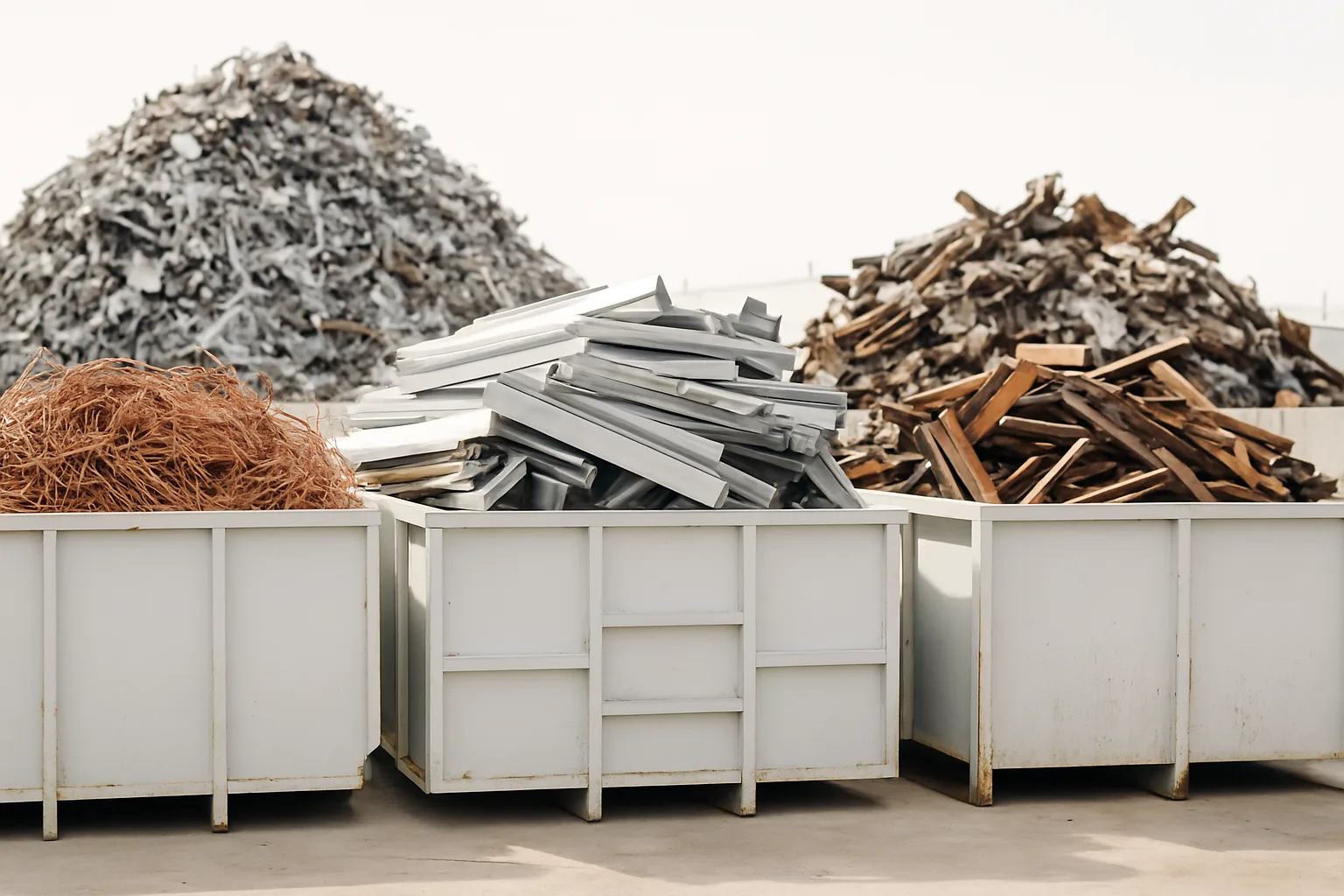
Most people hauling metal to a scrap yard treat it all the same — pile it in the truck, drive it over, take whatever they're offered. But the difference between ferrous and non-ferrous scrap metals isn't just a technical detail. It's the difference between leaving money on the table and actually understanding what you've got. If you're in Sydney or anywhere across Nova Scotia looking to sell your scrap metal at fair Canadian prices, knowing your metals is the first step to getting a fair deal.
This guide breaks it down clearly — no metallurgy degree required. Whether you're a business clearing out equipment, a contractor with leftover materials, or a yard looking to move inventory through a B2B scrap metal marketplace, understanding ferrous versus non-ferrous changes how you sort, price, and sell.
What Makes a Metal Ferrous or Non-Ferrous?
The answer is simpler than it sounds. Ferrous metals contain iron. Non-ferrous metals do not. That's the core distinction. But the downstream effects — on price, on demand, on how buyers evaluate your load — are significant.
The easiest way to sort on the spot: grab a magnet. Ferrous metals stick. Non-ferrous metals don't. It's not a perfect test (some stainless steel grades won't stick even though they're ferrous), but for most yard sorting, it works well enough to get you started quickly.
Here's a quick breakdown of what falls into each category:
- Ferrous: Steel, cast iron, wrought iron, carbon steel, stainless steel
- Non-ferrous: Copper, aluminum, brass, lead, zinc, nickel, tin, and precious metals
Catalytic converters sit in their own category of interest because they contain platinum group metals (PGMs) — palladium, platinum, and rhodium — all of which are non-ferrous and highly valuable. More on that below.
Ferrous Scrap: The Workhorse of Scrap Metal Recycling Nova Scotia
Ferrous metal is the backbone of most scrap loads. Steel beams, old appliances, car bodies, I-beams from demolition sites — it all adds up fast by weight. In communities like Sydney, where industrial history runs deep, ferrous scrap from old equipment, retired vehicles, and construction teardowns is a consistent stream.
The trade-off with ferrous metal is that it's priced lower per pound compared to non-ferrous. You're moving volume, not value. Steel typically trades at a fraction of what copper or aluminum fetches per kilogram. That doesn't mean it's not worth selling — a full truckload of steel adds up — but it does mean sorting matters. Mixing ferrous and non-ferrous scrap together typically hurts your payout on both.
Key characteristics of ferrous scrap that affect pricing:
- Contamination level — clean steel versus painted, coated, or mixed material
- Grade — heavy melt, #1 steel, busheling, shredded — each has a different value
- Weight and density — buyers care about what they can actually process
- Preparation — cut to spec or loose? This affects what a buyer will pay
Ferrous markets are closely tied to global steel demand. Mills buying recycled scrap as feedstock are the primary end market. When construction and manufacturing activity is high, ferrous prices follow. When it drops, so do your per-tonne rates.
Non-Ferrous Scrap: Where the Real Price Action Lives
Non-ferrous is where sellers pay close attention — and for good reason. Copper, aluminum, and brass command significantly higher prices per kilogram than steel. A few hundred kilograms of clean copper wire or bare bright copper can be worth more than a full ton of steel.
In Nova Scotia and across Canada, scrap copper and scrap aluminum are consistently among the highest-demand non-ferrous materials. Copper wiring from electrical demolition, aluminum extrusions from windows and doors, radiators, motors — these are the loads that savvy sellers sort carefully and sell strategically.
Common non-ferrous grades and what affects their price:
- Bare bright copper — the highest grade; clean, uncoated, unalloyed wire
- #1 copper — clean pipe and solid copper, no fittings or paint
- #2 copper — mixed, some oxidation or attached materials
- Insulated copper wire — valued based on copper recovery percentage
- Cast aluminum versus sheet aluminum — different grades, different prices
- Brass — plumbing fixtures, fittings, valves; priced between copper and aluminum
The pricing gap between a clean load and a mixed, contaminated load can be substantial. That's why documentation and accurate grading matter — especially when you're selling through a B2B scrap metal marketplace where buyers are evaluating your load remotely before bidding.
Want to understand how competitive bids work for non-ferrous loads in Canada? Get competitive bids for your scrap in Canada through a platform built for exactly this kind of transaction.
Catalytic Converters: The High-Stakes Non-Ferrous Category
Few items in the scrap world generate more questions — or more price variance — than catalytic converters. The steel shell is ferrous. The substrate inside is non-ferrous, containing PGMs that can be worth hundreds of dollars per unit depending on the make, model, and year of the vehicle.
A catalytic converter auction format exists precisely because of this price complexity. The spread between what a single buyer might offer and what competitive bidding reveals can be significant. PGM markets are volatile. Palladium and rhodium prices move sharply. A converter that paid one rate last quarter may pay differently today.
For anyone selling cats in volume — whether you're a recycler, a mechanic shop, or a salvage operation near Sydney — guessing or accepting a single quote isn't a strategy. You need market exposure and a buyer pool that's actually competing for your inventory.
Platforms like SMASH are built for exactly this. Serial number tracking, photo documentation, and vetted buyers mean you know what you're selling and who's buying. No more accepting whatever the one guy on the phone offers. That's the core difference between the old way and how things work now.
If you're unsure what your cats are worth before you sell, explore scrap metal selling guides that walk through how cats are graded and priced.
How Sorting Your Scrap Affects What You're Paid — Especially in Sydney
Here's the practical application of everything above: the better you sort, the better you get paid. A mixed load gets priced at the lowest common denominator. Buyers protecting their margins will discount heavily when they can't verify what's in a load. Clean, sorted, well-documented scrap gives buyers confidence — and that confidence shows up in higher bids.
For sellers in Sydney and across Nova Scotia, this is especially relevant if you're moving material to buyers who aren't local. Remote buyers rely entirely on your documentation: photos, weights, grade descriptions, serial numbers for cats. If your load looks clean and well-prepared on paper and in images, you attract more serious bids from a wider buyer pool.
Quick sorting tips for mixed scrap loads:
- Use the magnet test first — separate ferrous from non-ferrous immediately
- Don't mix copper grades — bare bright, #1, and #2 should stay separate
- Pull insulated wire out — it prices differently based on recovery percentage
- Separate aluminum by type — cast, sheet, extrusion, irony aluminum are all different
- Tag your cats — even a basic photo with a serial number visible helps buyers evaluate
- Remove iron and steel from non-ferrous loads — contamination kills your per-pound rate
This isn't just housekeeping. It's how you go from guessing at your payout to actually knowing what your material is worth before you sell it.
Using a B2B Scrap Metal Marketplace to Get a Fair Price on Any Metal Type
Whether you're moving ferrous loads by the tonne or non-ferrous material by the kilogram, the principle is the same: one buyer, one quote, no competition means you have no idea if you're getting fair market value. That's not a knock on any specific buyer — it's just how one-sided pricing works.
A B2B scrap metal marketplace like SMASH changes the dynamic. Your inventory goes in front of multiple vetted buyers. They bid. You see the results. The market sets the price, not the single buyer who happened to answer the phone.
SMASH handles the back-end work that makes this possible: inventory management tools, VIN lookup for vehicle-related material, photo documentation, auto-invoicing, and GST/HST handling. You're not managing a dozen different buyer relationships manually. The platform does the heavy lifting so you can focus on sourcing and sorting material.
For scrap operations in Nova Scotia — whether you're a small independent yard, a contractor clearing a job site, or a business with consistent material streams — this model makes pricing transparent and repeatable. You stop wondering if you could have gotten more. You know what the market said on that day, for that load.
Ready to find out what your material is actually worth? Get a fair price for your scrap today and stop leaving money on the table.
Note: Scrap metal prices fluctuate based on global commodity markets, metal grades, and local demand. Always check current rates before finalizing a transaction.
Frequently Asked Questions
Q: What is the easiest way to tell ferrous from non-ferrous scrap metal?
Use a magnet. Ferrous metals like steel and cast iron will stick. Non-ferrous metals like copper, aluminum, and brass will not. It's not a foolproof test — some stainless steel grades are non-magnetic despite being ferrous — but it works for most common yard sorting situations.
Q: Why does non-ferrous scrap pay more than ferrous?
Non-ferrous metals like copper, aluminum, and brass are rarer, harder to produce from raw ore, and have high demand across electrical, automotive, and construction industries. Ferrous metals are more abundant and lower-cost to produce, which keeps their scrap price lower per kilogram. Volume drives ferrous revenue; grade and purity drive non-ferrous revenue.
Q: How does a B2B scrap metal marketplace work for selling mixed loads?
A B2B scrap metal marketplace like SMASH lets you document your inventory — grades, weights, photos, serial numbers for cats — and put it in front of multiple vetted buyers simultaneously. Buyers bid competitively, and you see what the market will actually pay. It works best when loads are well-sorted and accurately described, because buyers bid with more confidence on documented material.
Q: Can I sell scrap metal in Sydney, Nova Scotia through an online platform?
Yes. Platforms like SMASH operate across Canada, including Nova Scotia. You document your material, list it, and connect with buyers who bid on your inventory. Logistics, including pickup or delivery arrangements, are worked out as part of the transaction. It's a practical option whether you're clearing a one-time load or moving material on a regular basis.
Q: Are catalytic converters ferrous or non-ferrous scrap?
Both. The outer shell of a catalytic converter is steel — ferrous. The ceramic or metallic substrate inside contains platinum group metals (palladium, platinum, rhodium) — all non-ferrous and highly valuable. That's why cats are priced based on the vehicle they came from and the PGM content, not just their weight. Using a catalytic converter auction format helps ensure you're getting competitive market pricing on what's inside, not just a flat guess.
If you're sitting on scrap metal — sorted or not — and want to know what it's actually worth in today's market, sell your scrap metal at fair Canadian prices through a process built for transparency. Request a pickup at sell-scrapmetal.ca and stop guessing at your payout.
Stay current on scrap metal market trends and industry insights — follow SMASH on LinkedIn for regular updates that help you sell smarter.