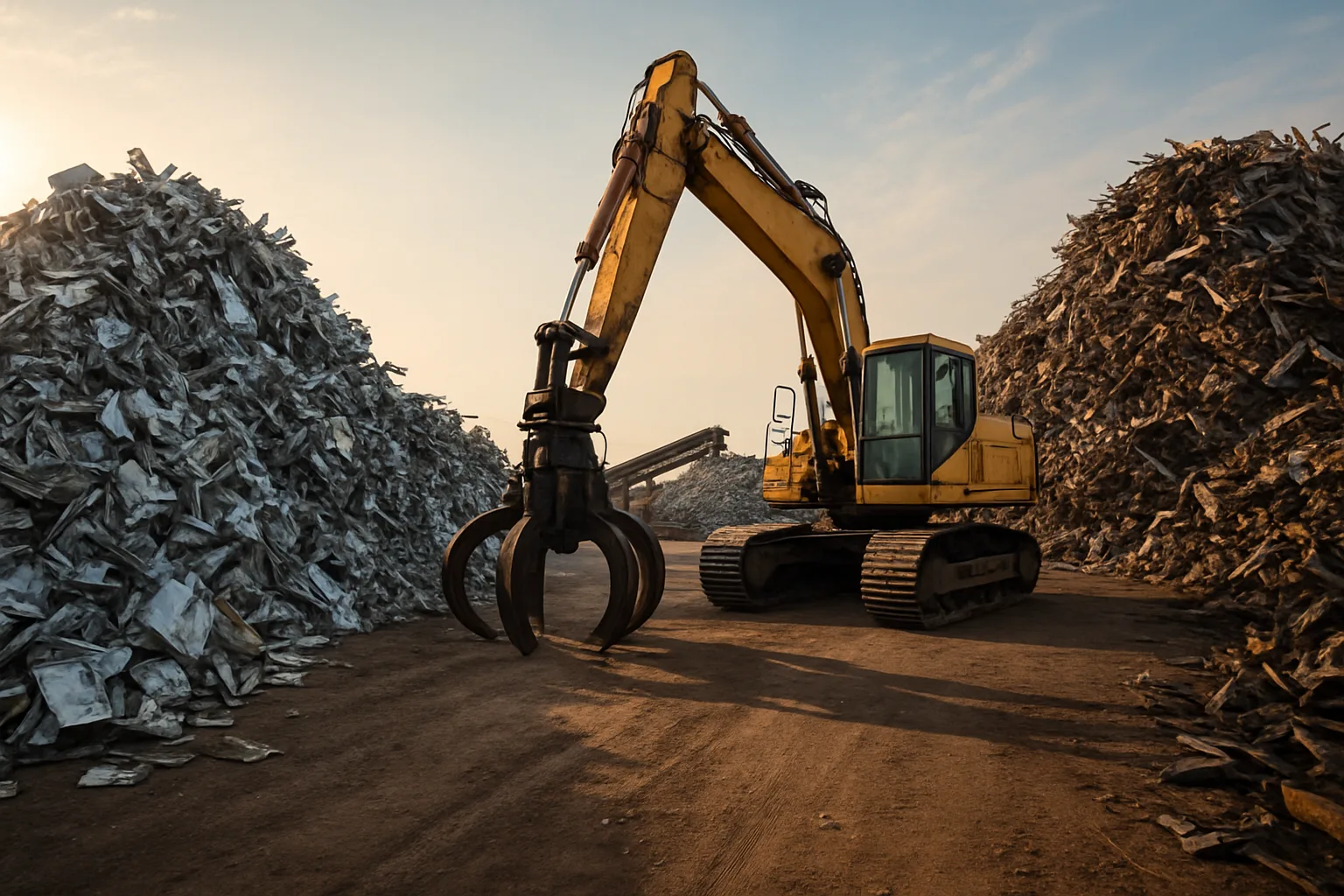
Most yards treat all aluminum the same. They don't. And that gap in knowledge costs sellers real money every single time a load goes out the door.
If you're hauling aluminum to a yard in London, Ontario and getting one flat price for everything in the bin, you're leaving money behind. Aluminum isn't a single commodity — it's a family of grades, alloys, and forms, each with its own market value. Knowing the difference between a clean aluminum wheel and a mixed-grade extrusion pile can change your payout by a significant margin. That's not an exaggeration. It's just how scrap metal markets work.
This guide breaks down aluminum scrap grades, explains what buyers actually look for, and shows you how to position your material — so you're not the seller guessing while the buyer knows exactly what they're holding. If you want to sell your scrap metal at fair Canadian prices, understanding grade separation is the first real step.
Why Aluminum Grade Separation Matters More Than You Think
Walk into any scrap yard without sorting your aluminum and you're handing the buyer a negotiating advantage. They'll call it "mixed aluminum" and price it at the bottom of the range. That's not dishonesty — it's business. Mixed loads carry more processing cost for the buyer. They have to sort it themselves, and they price that labour into the offer.
Clean, separated material tells a different story. It signals that you know what you have, that it's ready to process, and that you're not someone who takes a lowball without asking questions. Buyers notice. Documented, sorted inventory moves faster and attracts more competitive offers — especially on platforms like SMASH, where multiple vetted buyers are looking at the same load.
The difference between presenting a clean lot of 6061 extrusion versus a bin of mixed clips, coated wire, and dirty cast isn't just visual. It's the difference between spot price and spot price minus a significant processing discount. Separation is the cheapest improvement you can make to your scrap metal operation.
A Practical Breakdown of Common Aluminum Scrap Grades
Not every grade has a universally agreed-upon name across North America, but most buyers and sellers use a common shorthand. Here's what you'll actually encounter in the field:
- Clean aluminum extrusion (6061/6063): Window frames, door frames, structural profiles. No paint, no inserts, no steel. High-value when clean. One of the most common grades coming out of construction and renovation jobs in London.
- Aluminum wheels (rims): Cast aluminum, high demand, consistent chemistry. Buyers want them free of wheel weights and valve stems where possible. Relatively easy to keep clean at intake.
- MLC (Mixed Low Copper Aluminum): Auto sheet, siding, gutters. Clean of plastic, rubber, and attachments. Lower value than extrusion but still a solid grade when properly sorted.
- Irony aluminum / dirty extrusion: Extrusion with steel inserts, bolts, hinges still attached. Penalized heavily — often priced close to mixed aluminum.
- Cast aluminum: Engine blocks, transmission housings, manifolds. Heavier, denser, typically lower per-pound value than sheet or extrusion. Common in automotive recycling.
- Aluminum wire: Electrical wire stripped of insulation. Value depends heavily on purity. Insulated aluminum wire is a different grade entirely — don't mix them.
- Aluminum radiators: Aluminum/copper rads versus all-aluminum rads are priced differently. All-aluminum units command a better price. Copper-clad aluminum rads are often bought by weight as a blend.
- Litho / aluminum sheet: Printing plates, clean sheet material. Niche grade but high value per pound when you have volume.
That's eight distinct grades off a basic list. Each one has a different buyer pool, a different processing cost, and a different price point. If you're wondering about the steel scrap price today by comparison — aluminum consistently trades at a premium over ferrous material. That premium is worth protecting through proper grading and documentation.
How to Prepare Aluminum Loads to Attract Better Offers
Preparation isn't about perfection — it's about removing the excuses buyers use to discount your material. Here's what a well-prepared aluminum load looks like before it goes to auction or to the yard:
- Remove attachments. Steel bolts, hinges, inserts, and fasteners drop your grade fast. A clean extrusion load with 3% steel content by weight gets repriced. Ten minutes with a drill pays off.
- Separate by form. Cast, sheet, extrusion, and wire belong in separate containers. Commingling grades gives buyers one option: blend price everything.
- Document with photos. Before a load leaves your facility, photograph it. Multiple angles. Close-ups of any questionable material. Platforms like SMASH use photo documentation as a core part of the listing process — buyers bid with more confidence when they can see what they're getting, and that confidence shows up in the offers.
- Weigh accurately. If you're using your own scale, log it. Buyers respect sellers who track weights and don't exaggerate volume. Scrap metal inventory management starts with honest weight records.
- Note the source. Construction demo aluminum, automotive castings, and industrial extrusion come from different waste streams. Knowing the source helps buyers anticipate alloy chemistry. It's a small detail that signals professional operation.
None of this requires expensive equipment or software. Most of it is discipline and habit. For larger operations in Ontario processing regular aluminum volume, using an inventory management tool to track loads, grades, and weights creates a paper trail that supports better price negotiation over time. If you want to get a fair price for your scrap today, organized documentation is one of the highest-leverage moves available to you.
Why Competitive Bidding Beats a Single-Buyer Phone Call
Here's the old way: you call your one buyer, they give you a number, you take it or leave it — and leaving it usually means losing the relationship. Most sellers take the number. That's not price discovery. That's a negotiation with only one side doing the negotiating.
The better approach is getting multiple buyers competing for your material. That's what the SMASH scrap metal auction model does. Vetted buyers see your documented load — grades, weights, photos — and place real competitive offers. You see all of them. You decide. No subscription fee, no obligation on loads that don't meet your number.
For aluminum specifically, this matters because the buyer pool varies. Some buyers specialize in cast aluminum. Others target clean extrusion or wire. A buyer who moves a lot of automotive castings might pay a premium for what your competitor sees as low-grade material. You only find that out when multiple buyers are in the room. Visit smashrecycling.ca to see how the auction process works for sellers in London and across Ontario.
The principle here isn't complicated: more buyers means better scrap metal prices today because competition does what a single phone call never can. It reveals what your material is actually worth to the market — not just to one buyer on one morning.
Local Considerations for Aluminum Sellers in London, Ontario
London sits in a strong position for scrap metal movement. You've got manufacturing activity in the region, active construction and renovation work, and proximity to major buyers across southwestern Ontario. That means aluminum isn't traveling far to find a home — which keeps transportation costs competitive and turnaround times reasonable.
If you're looking for London scrap metal services, the local market is active enough that well-documented, grade-separated loads tend to move quickly. The challenge in any local market is that buyers know the sellers, and familiarity can work against you if you've always accepted the first number. Introducing competitive pressure — even just signaling that you're comparing offers — changes the dynamic.
Seasonal factors also apply. Construction activity in London typically peaks between late spring and early fall, which means extrusion, siding, and sheet aluminum flow is highest in those months. If you're accumulating material now in July, this is prime time to get clean lots moving rather than holding inventory. Aluminum prices fluctuate with global demand, Chinese production output, and energy costs — holding material is a bet on price direction, not a risk-free strategy.
For current market context, explore scrap metal selling guides that track trends and help you time loads more effectively. Knowing what's moving the market this week matters more than a general rule of thumb.
Disclaimer: Scrap metal prices fluctuate daily based on global commodity markets, local supply and demand, and material quality. Always verify current rates before committing to a sale.
Frequently Asked Questions
Q: What is the steel scrap price today in London, Ontario?
Steel scrap prices change daily based on commodity markets, mill demand, and regional supply. The best approach is to contact local buyers or list your material on a platform like SMASH where buyers submit current competitive offers. Checking multiple sources gives you a realistic picture of today's market rather than a single buyer's number.
Q: How do I know which aluminum grade I have?
Start with the source and form of the material. Extrusion (window frames, door profiles) is typically 6000-series alloy. Automotive castings are usually silicon-bearing alloys. Wheels are cast aluminum. If you're unsure, photograph the material and describe the source — experienced buyers can often identify grades from good photos. When in doubt, separate by form rather than guessing at alloy.
Q: Is it worth sorting aluminum before selling, or will the yard just re-sort it anyway?
Yes, sorting is worth it. Yards that re-sort charge for that labour through lower per-pound offers. Clean, separated material consistently commands better pricing because it reduces buyer processing cost. Even basic separation — extrusion in one pile, cast in another, wire separate — makes a measurable difference in what you're offered.
Q: How does scrap metal inventory management help me get better prices?
Tracking weights, grades, and sources creates documentation that buyers trust. When you can show a buyer that a load is 1,200 lbs of clean 6063 extrusion from a single construction site, you're giving them less reason to hedge on price. Platforms like SMASH integrate inventory documentation directly into the auction listing, which supports more confident — and often more competitive — bidding.
Q: Can I sell aluminum scrap in London without a subscription or upfront fees?
Through SMASH, there are no subscription fees. The model is straightforward — sellers list material, vetted buyers compete, and fees only come into play when a transaction happens. There's no cost to explore the platform or understand what your material might be worth in a competitive market.
---If you've been hauling aluminum to the same yard for years and never questioned the number, now is a good time to start. Grade your material, document your loads, and put them in front of more than one buyer. That's not complicated — it's just the smarter way to move scrap. Ready to stop guessing and start competing? Sell your scrap metal at fair Canadian prices — request a pickup at sell-scrapmetal.ca and see what your material is actually worth.
Stay current on scrap metal market trends and pricing shifts — follow SMASH on LinkedIn for regular industry updates and insights that help you make smarter selling decisions.